Mr. Freetail

Fiction from the Desert Vol. 3

It was on the evening of October 25th when we saw Mr. Freetail. He was on the city walking trail, not exercising but standing near the edge of the path, with a face that was indiscernible as we approached. The encounter wasn’t eerie by any other means than this, and possibly the way in which he had come down the slope as if gliding over the rocks. His shape was dark, like a void against the glowing Autumn scene.

A lonely desert bluff. Watercolor by Z.T.

Until now, I had been holding Megan’s hand, under the orange skyline, feeling the crisp breeze after a long summer. We had walked a mile and a half from the parking lot and there had been no one else around, which was very unusual for a night like this. While we never sought socialization, we were always friendlly to whoever we passed. But Megan insisted on stopping and talking with Freetail, because she recognized him as a regular customer at the deli where she worked. Before we reached him, she whispered that he came in each Tuesday morning for breakfast, without fail.

“Hello, how are you?” Megan said to Freetail. We had stopped in the middle of the trail. “How was your breakfast the other day?”

“Fine, thanks,” Freetail said in a soft, singing kind of voice. It wasn’t cold yet, but the sun had dipped below the horizon. Freetail stood with his arms folded and his hands touching his shoulders. His posture was strange and rigid, with his skin too low over his eyes, and his forehead longer and thicker than it should’ve been. His ears poked through his messy brown hair like Cypress roots in a swamp. He was overly lean but still had an element of power. “Do you live here in St. John then?” Megan asked.

It was a deep question for what should’ve been a brief exchange, but Megan must’ve felt an obligation to make the most of it. We were still in the middle of the trail. I was hoping for some reckless cyclist to speed by or anyone for that matter who could force us to separate.

“Yes, I actually live up there,” Freetail said, grinning and pointing toward a high ledge. We could see a cave about ten feet long and about the same deep. “It’s not ideal, I know. I’m hoping it’s only temporary, but you never can tell. I’m just getting used to it now. After five years on the streets of Milan, sleeping in alleys, up against hard buildings, it seems doable. You know, I played violin for petty change outside the Milano cathedral, which was not for the faint of heart. I got clothing out of trash bins. So this is nothing really.” I turned to see Megan’s face desperately holding a smile, like someone gripping the edge of a bridge.

“Well,” Megan said, trying to recover. “There’s no shame in that. My grandpa lived in his car for three months back in the day. He sold plug-in air fresheners door to door. And he ended up a millionaire.

“Sounds nice,” Freetail said. “Although I don’t have much need for money these days or air-fresheners. There are higher aims in life, anyway. When you mentioned your grandpa, I thought about mine. He lived in the Adirondacks for nearly fifty years. He never slept in a car, but he had a two-bedroom house and a horse that was only good for keeping the weeds down. He had other, superior, ways of traveling.” Freetail’s feet shifted a little, but the distance between them remained the same. Then his hands came out, almost in a stretch, and he lowered them slowly to his sides.

“You know, freedom is more important than wealth,” he said. “Some say you can’t have freedom without wealth, but freedom isn’t so narrowly confined. Mobility, pursuing unique tastes and seeing what no one else sees, now that’s true freedom. And observation goes right along with this, because it’s independent of any circumstance. So long as there’s consciousness, there can be observation, mobility and freedom.” The ideas seemed innocuous, but there was something more calculating.

“Believe it or not, I actually like the cave,” he continued. “The rocks stay warm well into the night. There’s about six inches of soft, clean sand on the floor, and you can see all around you from an elevated position. I tried sleeping on the grass in the park but couldn’t ever tell who was walking up on me. And there was dog shit everywhere. And I felt very vulnerable. The cave is more advantageous.” It was a strange choice of words. I had expected him to say it helped him feel “safe,” or “protected.” And the way he grinned through his wrinkled lips made me even more eager to leave. Besides, the daylight had turned blue now, and nighttime was coming fast.

“Well, it was nice to talk to you,” I said to Freetail, interjecting myself before he could expound further. Megan took the hint and began to turn away with me. “Yes, nice to see you,” she said. “Hopefully things will start looking up for you soon. I’ll try to remember to say hello the next time you stop in. And if you ever need help paying for things be sure to let me know. My manager is actually very nice and wouldn’t have a problem helping you out in that way. We sometimes have more food than we know what to do with.” She made a nervous laugh and began to walk away.

“I have plenty of food,” Freetail said, abruptly. “It’s usually more a matter of selection than anything. But that’s a story for another day.” He smiled and ran his long fingers through his hair, pulling it back so that the skin around his eyes stretched.

“For sure,” I said, nodding. I took Megan by the elbow and urgently pulled her. We continued south toward the river bridge. A few fallen leaves had gathered in yellow piles beneath the trees. Lizards scampered through the leaves, startled by the sound of our footsteps. A lone streetlight came on, near where the trail met the bridge and we paused underneath the pool of light. “It’s so weird we haven’t seen anyone else,” Megan finally said, nearly out of breath. It had been a light walk but we were drained.
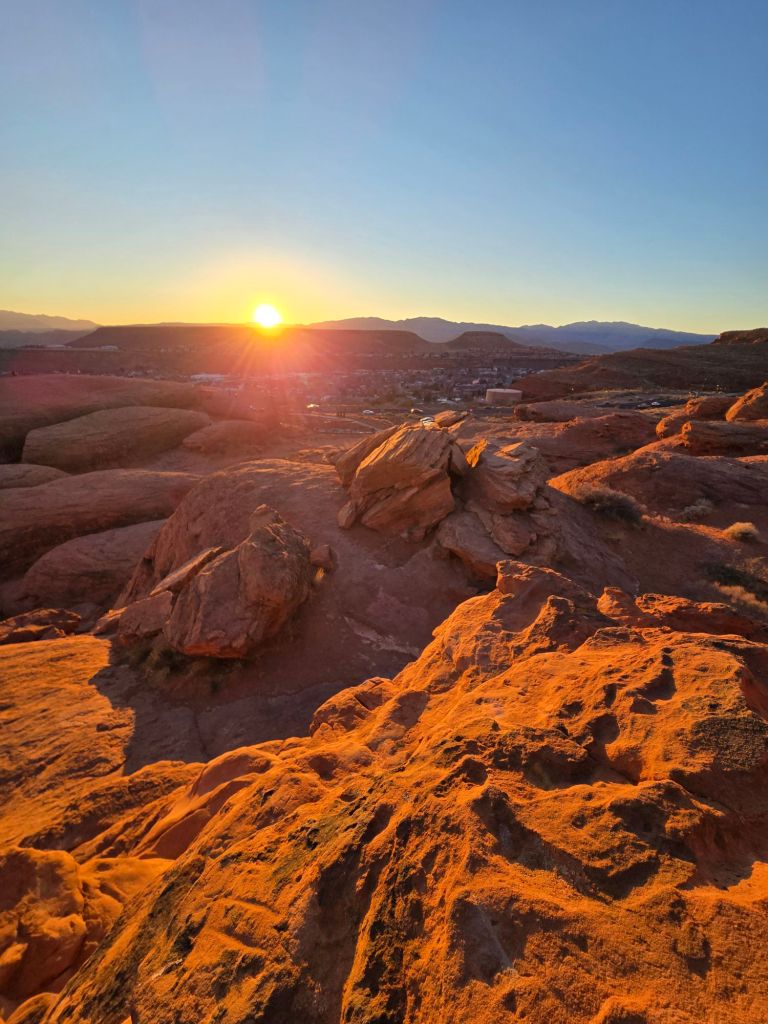
Sunset and redrocks. Photo by ZT.

“It’s incredibly weird,” I said. “How many times have we come here? Usually you can’t go 100 feet without someone zooming past on a bike or running up on you from behind. Where are all the old folks and the moms pushing strollers? It’s not even that late, and the temperature’s perfect.” I found it hard to keep my voice calm.

“I don’t know,” Megan said, with a tone of concern in her voice. “But the car is back that way. We’ll have to walk past him again.

“Which way did he go?” I asked insistently.

“I didn’t see,” Megan said, shrugging. “I thought he headed off toward the parking lot, but I was just trying to get away so I didn’t notice.”

“I never even heard him walking,” I said. “He was so quiet.”

“We’ve gotta decide soon,” Megan said. “I guess we could walk up to the interstate, and make our way back. It’ll take a lot longer.

“It’ll take an hour at least, and we’d probably get hit by a car,” I said.

“This is silly,” Megan said. “We know who he is. We even know where he lives now. What could he do anyway? If we see him again we’ll just say we can’t talk anymore.”

“Alright,” I said, thinking she was probably right. “Maybe he left to see someone. Maybe they were waiting in the parking lot.” We began to walk back, away from the pool of light, past the fallen leaves. “What if he’s up in the cave?” Megan whispered. I gave her a sideways look and raised my eyebrows. If the idea had been crazy it would’ve been easier to dismiss. But there was something that told me the possibility was there. And then I imagined Freetail grinning down through the darkness, watching us pass from his elevated “avantage” where he could observe everything and be surprised by nothing.

I shivered under my coat. The chill of the desert night crept through my collar, and the damp air from the river bottom smelled like metal and dust. I didn’t like how Freetail had never looked at me during the conversation, instead staying fixed on Megan, his black eyes and the tip of his nose lifting as he spoke so that his nostrils were visible. But I was probably taking liberties with my memory now. It had been just a normal meeting on a popular trail. Now I was imagining details I couldn’t be sure of. Freetail seemed like a nice enough person. There was nothing beside his unusual appearance and a couple of strange statements worth worrying about.

When we came nearer to where we had seen him, the view of the trail was washed out momentarily from bright lights in the distance. Thankfully there was a painted yellow line down the middle of the pavement, and we used it as a guide. The parking lot was still a mile away, and still no one had passed us. This had become the most disturbing reality. It was as if we were alone on the planet, in the middle of town. Even the sound of traffic on the interstate, usually a continual roar, had faded away.

As we began to pass below the cave again, I gripped Megan’s hand and she squeezed mine until I could feel her fingernails digging into my skin. Her breathing was louder, and I felt my pulse rising uncontrollably in response. There was nothing but darkness and dull forms above us. I resisted looking up there, instead focusing on the yellow line.

Then we could feel him watching. He was above us, on the ledge, looking down. There was no doubt. And when I did look, compelled by fear, there was no firelight or flashlight. There was only darkness, stillness, and a sudden terror that caused my mind to blur. Instinctively, our hands separated and we began to run.

“Look at all those bats,” Megan said, as we finally reached the parking lot, panting. Overhead, I could see the little forms flitting in and out of the streetlights. There were dozens of bats, probably hundreds, chasing through large swarms of bugs, divebombing over the rooftops of the cars. “They’re everywhere,” I said, not really thinking as I fumbled for the keys. “Everywhere and nowhere.”

“They’ve got all the food they could ever want here,” Megan said as she quickly slipped into the passenger seat. When she had closed the door, she looked at me as if to acknowledge the terrible relevancy of what she had said. We drove out of the parking lot and back across the glittering city. As we went, we could see other people again, doing what they do, the same as any other night.

But when we came to a red light on the outskirts of town, the shadows seemed darker and for a moment we seemed alone again. I turned on the high-beams and Megan checked to make sure the doors were locked. Then a shadow crossed over the hood of the car, dark and swift, from something passing above us. In an instant it was gone, somewhere into the night. And when the traffic light turned green, we were already rolling. “Did you lock the house before we left?” Megan asked, putting both hands on the dash and leaning forward.

“I don’t remember,” I said. “But we can’t go home if I didn’t.”
Hoodlums on Wings

Ravens and the dark side of nature

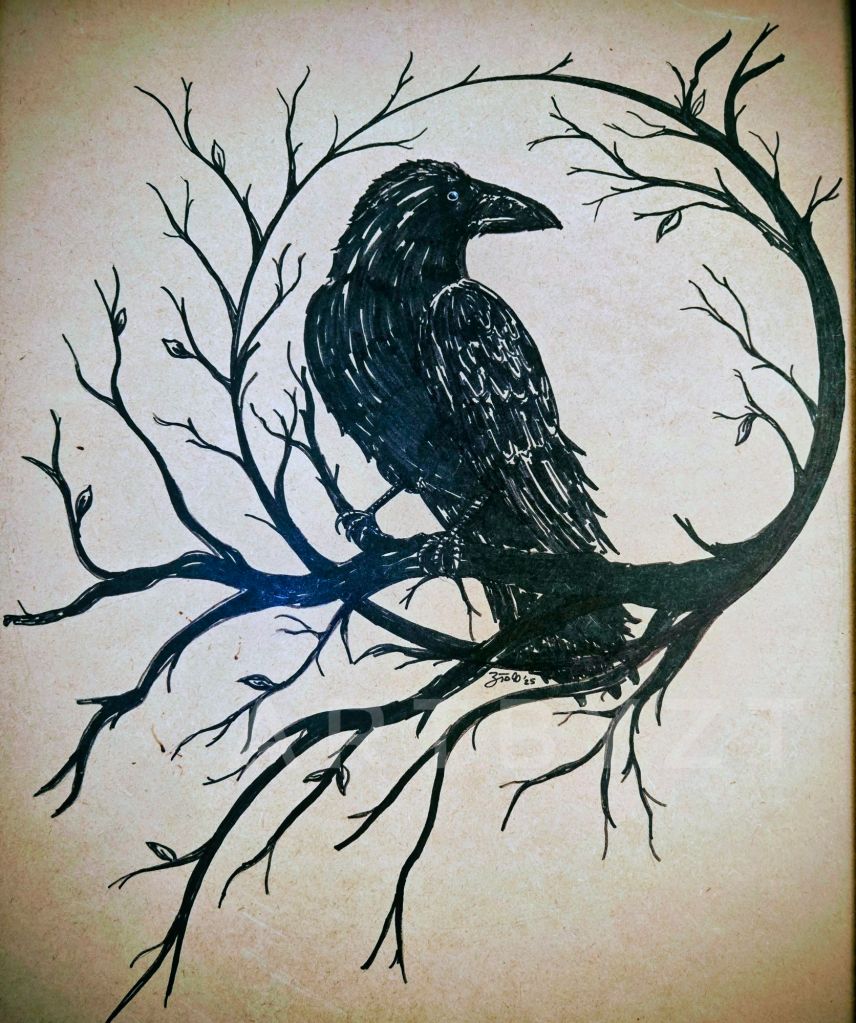
He was perched on a wooden fence post, croaking  “Tok, Tok” repeatedly and seemingly to himself. From across the road, I could see his beak opening and his crown feathers flaring with excitement. He was looking at the ground, with one set of claws on a wire and the other on the post, and there was something in the yellow grass that held his attention. Though I couldn’t see what it was, I knew it was more than likely dead or dying.

Evening Raven in Ink. Artbyzt.

Maybe this assumption came because it was October and spooky things were already on my mind. But it was more than just that. This was a raven after all, a bird who makes a living on death. I’ve spotted many of them over the years, but never with such stark contrast, set against the classic desert panorama–a landscape bathed in sunlight, full of browns and reds, distant plateaus overlaid by brilliant blue sky. The raven here seemed superimposed, like a black hole in the galaxy or a gash in a painting. He was a visual assertion that despite an abundance of warmth and light, the desert holds space for darkness.

Of course ravens are rarely just fixtures on the scenery. Always up to something, they can be brash and loud, like rocks thrown into a pond. Usually, when their attention is captured, it means some opportunity or advantage is about to be gained. I’ve never seen them as casual observers, but usually on some task, either scavenging roadside or making murderous forays into the trees, with desperate little birds hot on their tail feathers.

One day I saw a large raven steal a house sparrow chick from its nest at the top of a telephone pole. The chick’s parents were dive-bombing desperately at the raven’s head, but were finally forced to quit after the baby was pulled apart and devoured right in front of them. Adding to the savagery was the raven’s nonchalance, like a teenager eating a Big Mac.

This neighborhood bully image is supported by the raven’s size. I’m not sure if many people understand how big they really are, at least as big as a chicken, if not bigger. Ravens are similar in appearance to crows, but larger, and their beaks are more powerful and shades darker. They have feathers that are not just black, but jet black, with a bluish tint that can only be seen when the bird turns at certain angles in the sunlight. This glare creates a metallic, even spectral appearance.

Still, the raven is not just a plunderer, scavenger, murderer. Anthropomorphism aside, he is also intelligent, which adds another level of intrigue. When you observe a raven, he’s also observing and judging you. Scientists have said that ravens have the intelligence of a two or three year old child, and there is even documentation of ravens using tools (mostly sticks and rocks) to obtain food and water, which is unparalleled in the avian world. When it comes to vocalization, only parrots can outperform the raven.

A classic horror comedy: “The Raven” starring Vincent Price and Boris Karloff.

With all this, it’s easy to see why ravens have long been part of Halloween decorations, horror movies, scary stories and the darker side of folklore. The famous poem by Edgar Allan Poe depicts, in a masterful way, the perception of trickery and the feelings of dread that are possible when encountering the raven. Such moments can feel more like interactions as opposed to just mere “sightings.”

Then this ebony bird beguiling my sad fancy into smiling, By the grave and stern decorum of the countenance it wore,”Though thy crest be shorn and shaven, thou,” I said, “are sure no craven, Ghastly grim and ancient Raven wandering from the Nightly shore–Tell me what thy lordly name is on the Night’s Plutonian shore!” Quoth the Raven “Nevermore.”

One such experience took place when I was a child sometime in the mid 1980’s. I was on top of a houseboat on Lake Powell in Southern Utah. It was early morning, and the water in the high-walled cove where we had anchored was dark and still. The sky was just beginning to brighten, and we awoke to the smell of breakfast cooking on the lower deck. The owner of the boat, a friend of my father, had been coming up the stairs and back down, cleaning and organizing the boat. Suddenly we heard two ravens talking to each other on the cliffs above, with deep, gravely, voices that echoed across the canyon making them seem even more supernatural.

One little boy, still inside his sleeping bag, became quiet and began to stare into the sky. He was the boat owner’s son, and after a moment he couldn’t help but ask: “What are they saying Dad?” The innocence of the question was indelible.

“They’re saying, ‘Eat Johnny,” the father replied, with a mischievous smile. We all giggled, but little Johnny remained silent, his eyes fixed upward, his body frozen with fear. It was only later in life when I realized that “Eat Johnny,” was entirely within the realm of possibilites.

Edward Abbey depicted the raven’s adaptability as one of nature’s undertakers. In “The Dead Man at Grandview Point,” he described them rising  “heavily and awkwardly” from the bloated corpse of a man who had fallen victim to the wilderness.

Raven in Ink. Artbyzt

Despite my many observations, I had never actually handled a raven until just a few years ago. My kids had barged into the house one day, wide-eyed, to tell me there was a large bird in the garage. I went out and found a raven on the floor. She appeared to be an older bird, thinning, but still with vitality in her eyes. I couldn’t immediately tell if she had any injuries, but she’d obviously had her bell rung, probably from hitting a window, or the side of the house. She must have come in through the open garage door. I put on a pair of gloves and corralled her in a corner, scooping her up and holding her wings close to her body so she wouldn’t thrash. Then I took her out to the driveway, with open sky above us, and set her on the ground to see what she would do.

She looked at me for a moment, with those dark but shiny eyes that seemed to be sizing me up and drawing me in. Then, in an instant, she took off, lifting upward with big flapping wings toward a stand of nearby trees. Soon she had disappeared into a tangle of dead limbs and shadows. Never once did she look back to thank me. There was only a sense that she had made yet another escape and seized yet another opportunity.

The Understory

Fiction from the Desert Vol. 2

He reached the parking lot just before midnight, with the sound of traffic still humming in his ears and vibrating in the bones of his feet. The temperature was down to a simmer–-a mere 90 degrees in the darkness–while the city lights glowed like coals on the desert hills.

He never should’ve walked on the freeway, in dark clothes, with his back toward speeding death. But exhaustion had forced him to take the most direct path. Somehow, he had avoided the stern highway troopers and the teenagers taunting from inside their fancy cars.

He was soaked in sweat, and his clothes were covered in the grit that swirled up from the gutters and sidewalks. Exhausted, he put his blanket down on a park strip, beneath a tall Mesquite tree. Soon, he was curled up and falling asleep.

A desert scene. Photo by ZToad

Early morning brought the sound of car doors in the rising blue light. The Walmart workers were talking and laughing as they arrived. Two tractor trailers idled alongside the building, and a few old folks were talking outside a row of RV’s, having already found camaraderie.

He was stretched out near a pile of clothes he had dumped out of his backpack. He rubbed his eyes and propped up on his elbow, combing his fingers through his shaggy black hair. He straightened his creaky knees, thanking God his belongings hadn’t been stolen overnight. 

“You can’t camp here,” came a voice from behind him. A security officer approached. “I don’t care if you’re packing up. I won’t call the police yet. But don’t plan on staying again.” 

“Oh, I won’t,” the traveler said. “I just got in too late last night. Please don’t call the cops.”

“I’ll wait,” the officer said. “But don’t take advantage of me either. You’re loitering.”

Within an hour, the shoppers had begun to arrive, and someone pulled a big pickup close to him so that the chrome bumper was staring him in the face. He brushed his teeth in the reflection, spitting his toothpaste into the decorative rocks.

“Daddy, I don’t wanna go,” he heard a little girl scream, and he could see her squirming in the seat of a shopping cart.

He leaned against the tree, took a National Geographic out of his backpack, and began reading an article about the wildlife of the Carolinas. Nearby, a gang of grackles plundered beneath the cars with glossy black feathers and cadmium-yellow eyes. They were the Pirates of the parking lot, he thought, as they chattered in tones more fitting for the rainforest.


A Mesquite tree. Photo by Z. Toad

He had five dollars in his pocket, just enough for breakfast. And, while he wasn’t presentable enough to go inside the store, he was emboldened by his hunger. He ignored looks from other shoppers as he approached the McDonald’s counter. “I’ll take a sausage, egg and cheese Mcmuffin.”

“Will that be to go?” the cashier asked expectantly.

“Yes, please,” he said.

Back at his camp, he patted the tree as he ate.  The trunk was the color of dark chocolate, twisting upward, splitting into a thousand tiny limbs. The leaves were thin, allowing filtered sunlight down to the understory. He sat back and watched young families and old couples holding hands and young men with their chins up, locking sports cars. There were large, round people too–waddling along in flip-flops.

He eyed his lean, tanned arms and his tight stomach and strong legs from miles of hard walking. The past year had left him without a home or family and without a job. He was transient by every definition, and now his only occupation was survival, and his only hobby was noticing everything around him. In this way, he kept his mind inoculated against the constant threat of despair.

The branches above had darkened against the brightening sky. He was on his back again, thinking of the twists his life had taken, stemming from a happy beginning–-a healthy trunk that had been thriving before so many divergences and difficulties had come. He had seen so much in 45 years. He had felt pain, both inflicted and self-inflicted. And these experiences were his possessions, just as much as his backpack and socks.

Three weeks earlier, he had rejected the man with the blue pills at the motel, pushing him back by the throat when he wouldn’t take “no” for an answer. As uncommon as it was, he still had some pride despite his circumstances.

 “Do you really like sitting there?” came a voice again. The woman was standing next to a clean Toyota 4-Runner, with plastic grocery bags in both hands. He turned just as a grackle scurried out from under her car, racing away on skinny black legs.

“It’s not ideal,,” he answered. “But it works.” 

“Why don’t you go to a park or something?” the woman asked. “Why the Walmart?”

The traveler paused for a moment.

“Well, this is actually a beautiful tree,” he finally said. “The branches twist in all directions, but you can see them best from underneath.” The woman rolled her eyes, but he continued. “It makes me think of all the stories I know, the things I’ve seen–good and bad–and the people I’ve loved.” 

She said nothing but fumbled with her keys before climbing into her car. When she began to back up, someone honked. She jammed her brakes and yelled from inside the glass. The other driver raised a fist and yelled back. For a moment, he thought they would get out and fight.

When they drove away, he went down on his back again, resting his head as best he could on an old tee-shirt. The rocks were still hard beneath him, but now the view looked better than ever.  And while he still didn’t know what was ahead of him in the days and years to come, somehow, he knew it would be beautiful, as long as he kept looking up.

Chasing the Winter Sun

Nature can bring the most unusual combinations. It was late December, and I was walking along a city trail, sometimes seriously and sometimes with my hands in my pockets, following the path of the river as it cut through the canyon. Ahead of me, the asphalt was perfectly paved, hardly natural-looking but respectable, at least for the workmanship.

On the canyon walls, sunlight was setting fire to muted colors and warming up the stone, while even the dormant brush and bare trees seemed brilliant. Closer to the river, cattails were busting  open, sending a blizzard of fluffy seeds through the air.

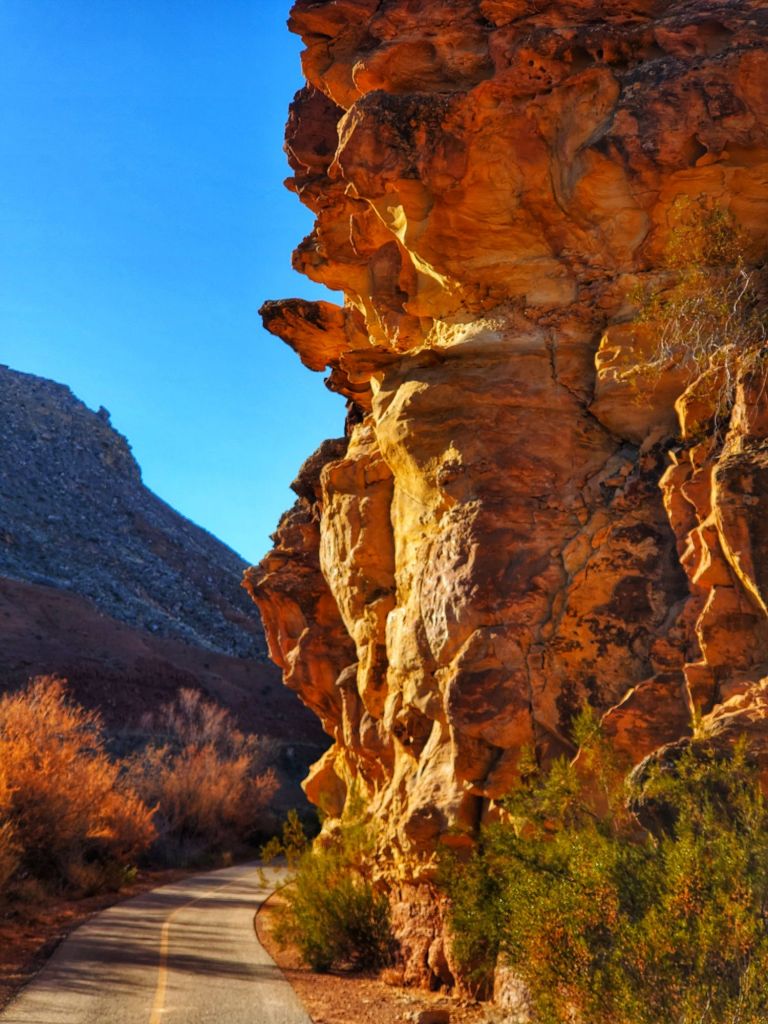
A canyon wall catches the rays. Photo by ZT.

It had been a long, hot summer–105 to 115 degrees for weeks on end and no rain for what seemed like months. The punishment was still fresh on my mind. It was hard to forget the dusty, often smoky air, and the profound sweating that would begin each day around mid-morning and last until midnight. The only refuge on those long days was an air-conditioner, in dark a bedroom, with the shutters closed tight.

The sun can be a brutal enemy, but a pretty good friend. Winter is mostly a pleasant season in the desert. Aside from the general lack of greenery (even the creosote seems faded), the temperatures allow for greater daytime exploration of open terrain. You’d need a death wish to take on certain desert trails during mid-day in summertime. But during the winter, a walk in the open can feel like taking a bath in sunlight–like intravenous Vitamin D. And, if that weren’t enough, the winter air is particularly crisp and invigorating.

Pinion pine and low winter sunlight. Photo by ZT

I passed over a wooden bridge, as long as a football field. A few cyclists raced by, their tires thumping rhythmically over the planks. In the distance, a couple of upscale houses stood at the edge of the sandy banks overlooking the river. Thankfully, they weren’t ostentatious enough to wreck the view. To my right, a white limestone cliff displayed colorful lichens and ground cover clinging delicately to the rock. Rusty streaks marked the little waterfalls that trickled down from some unknown source. A couple of stick nests, halfway up the cliff, were evidence the hawks liked the neighborhood too. From time to time, I could hear their chirps from the recesses and ledges above.

I rested my elbows on the railing near the boardwalk and looked over the path of the river, going Southwest in a golden meander toward Arizona.  The sky was cloudless, and a wedge of Canada geese glided down through the canyon on a low altitude approach toward the city pond. They obviously understood the appeal of the desert in winter better than anyone. Migratory birds always have, for that matter. Somehow, only humans need to be reminded.

When I Saw Holly

Fiction from the desert: Vol 1

It was a lonely freeway offramp, high in the foothills of the Mojave Desert, where I had pulled over to stretch my legs and let the dog take a piss. I was nearing the end of an eleven hour drive from Denver to Las Vegas, and I wanted nothing less than to be standing in that withering heat, eyeing mummified roadkill, diapers, empty beer cans and broken car parts.

The dog was taking his sweet time, sniffing at things he shouldn’t and wandering too far into the foxtails and prickly pears. Part of me wanted to let him go–let him learn from his mistakes. But I knew those “mistakes” would only end up smeared all over the interior of my car. 

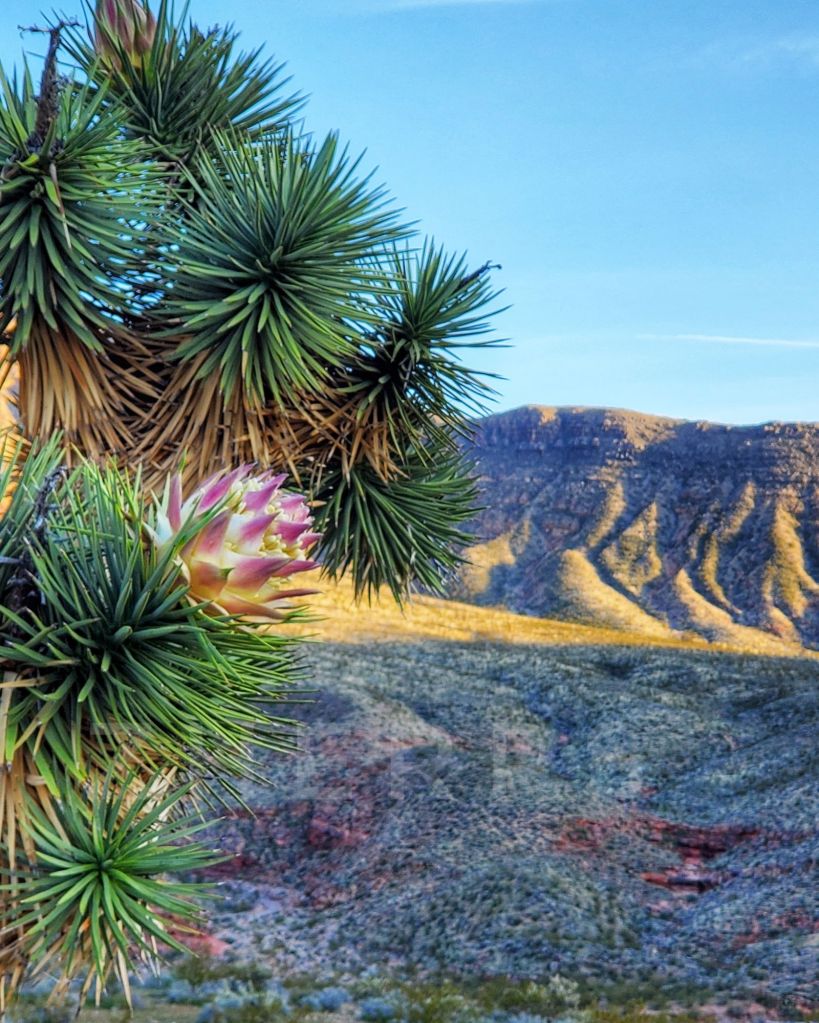
A Joshua tree blooms in the upper Mojave Desert. Photo by ZToad.

“Come on Bruno,” I said. “Get back here.” I pulled on the leash to get his attention. He’d been sniffing something despicable inside a sagebrush. “Do what you gotta do, and let’s get out of here.” He was the kind of dog who liked to stall. He must’ve known I was feeling pressed for time, and it was as if he wanted to make the most of it. At last, he found a decent clump of grass and casually lifted his leg. 

It’s hard to believe I didn’t see her at first. I must’ve been too focused on the menagerie of waste at my feet or too worried about the dog. She was probably watching us the whole time because I only caught a glimpse of her while I was loading Bruno back in the car. It was just the slightest movement from behind the bushes that caused me to turn and see her fierce, wild-looking eyes staring into mine. 

She appeared to be in her thirties, but they must have been hard years judging by the tired lines on her face. Her skin was baked, and she was wearing a stained gray sweatshirt with matching sweatpants. It wasn’t until later that I remembered she hadn’t been wearing any shoes, only black cotton socks. At the time, I was simply stunned to see another human being in such an extreme environment–without any outdoor gear or recreational intentions for that matter. There was no way of telling how she’d gotten there. I’d seen people just like her on the streets of Denver, but this was much harder to comprehend. 

We made eye contact only briefly before she quietly retreated behind the brush.  I looked around to see if there were any cars or homes nearby, but I could only see distant spires of rock, surrounded by a moat of forbiding vegetation.

I locked Bruno in the car and made my way back. “Hello,” I called, as I approached. There was no reply. Instead, I found her sitting on a boulder, with a small dusty backpack, not big enough for any real amount of food or clothing. “Are you okay? What’s your name?”

She said nothing but shook her head faintly from side to side. She had short, black hair, specked with dry grass. There were scratches on her forearms, more than likely from fighting her way through the scrub. 

“Can you tell me your name?” I asked again, trying to get her to say something. She didn’t answer but only looked at me. I could see the wool blanket she’d been sleeping on, tucked inside a cove of bushes that was completely hidden from the road. She was thin but not obviously malnourished. 

I went back to my car and retrieved a water bottle, but when I offered it to her, she only looked at me stone-faced and said “No.” My arm dropped in confusion. Here we were, in a place where everything was designed for either defense or survival–the grass was barbed, the cacti were vicious, the snakes were deadly and the ant hills teemed with nasty little pricks–and this woman, obviously and utterly alone, wearing clothes fit for a Saturday morning on the couch, was turning down my water bottle?

To the west, a long slope descended from the barren cliffs. All around us were impenetrable thickets of desert holly and bone-dry creek beds filled with ankle crushing rocks, the refuge of black widow spiders and rattlesnakes. It was nearly 108 degrees, and the dirt between the desperate plants was like powder. I wanted to grab her by the shoulders, look her in the eyes, and tell her she was going to die out here, under the orange sky, among the diapers and used condoms and empty bottles of antifreeze.

Manzanita on the rocks. Photo by Z Toad.

I stepped back to make sure my car was still where I had parked it. Sweat dripped into my eyes and down the middle of my back. In the light of early dusk, I could see Bruno inside the car, his eyes in a disinterested gaze. He wasn’t even panting, and his ears were fluttering softly in the cool air from the vents. 

“Can I at least give you a ride?” I said, becoming more insistent. “I can’t help you if you don’t want me too.” She was standing up now and facing me, with her arms at her sides and her fists balled up. I went back to my car, determined to call for help. She had to be rescued, even if it was against her will. She was obviously not in her right mind, and I wouldn’t have her death on my conscience, no matter how badly I wanted to get to Vegas. I waited for thirty minutes, just around the corner from her camp, not wanting her to know my plan. I kept a close eye on her blanket, the corner of which I could see clearly. 

When an officer arrived, we approached again but were shocked to find she was gone. Only her blanket remained. I looked around frantically, but there was nothing except the stillness of the desert and the sunset going down like the edge of a flame, slipping away beyond the high, dark crags.

“I don’t know where she went, ” I lamented. “I can’t understand it. She could die out here.”

“Maybe she will, ” the officer said bluntly. “But who knows. Maybe she wants it this way. Who are we to say?”

For the Love of Lizards: A World Lizard Day Tribute

Masters of terrain, they enliven the desert like no other animal can

On a bright summer morning, near the 4th of July, I was navigating foxtails and prickly pear cactus, making my way toward an outdoor amphitheater in a small community park in Southeastern Utah.

The heat was tolerable, partly thanks to a nearby canyon which still had shade, a small creek, and a latent pool of overnight air. After about 500 feet of meandering, the dirt path soon diffused across several big slabs of sandstone, speckled with patches of green and orange lichens.

Perhaps it was luck, or just that my eyes were already primed for color, but I happened to notice something especially vivid and alive, some 30 feet away. Whatever it was, it was perched near the back row of the amphitheater. 

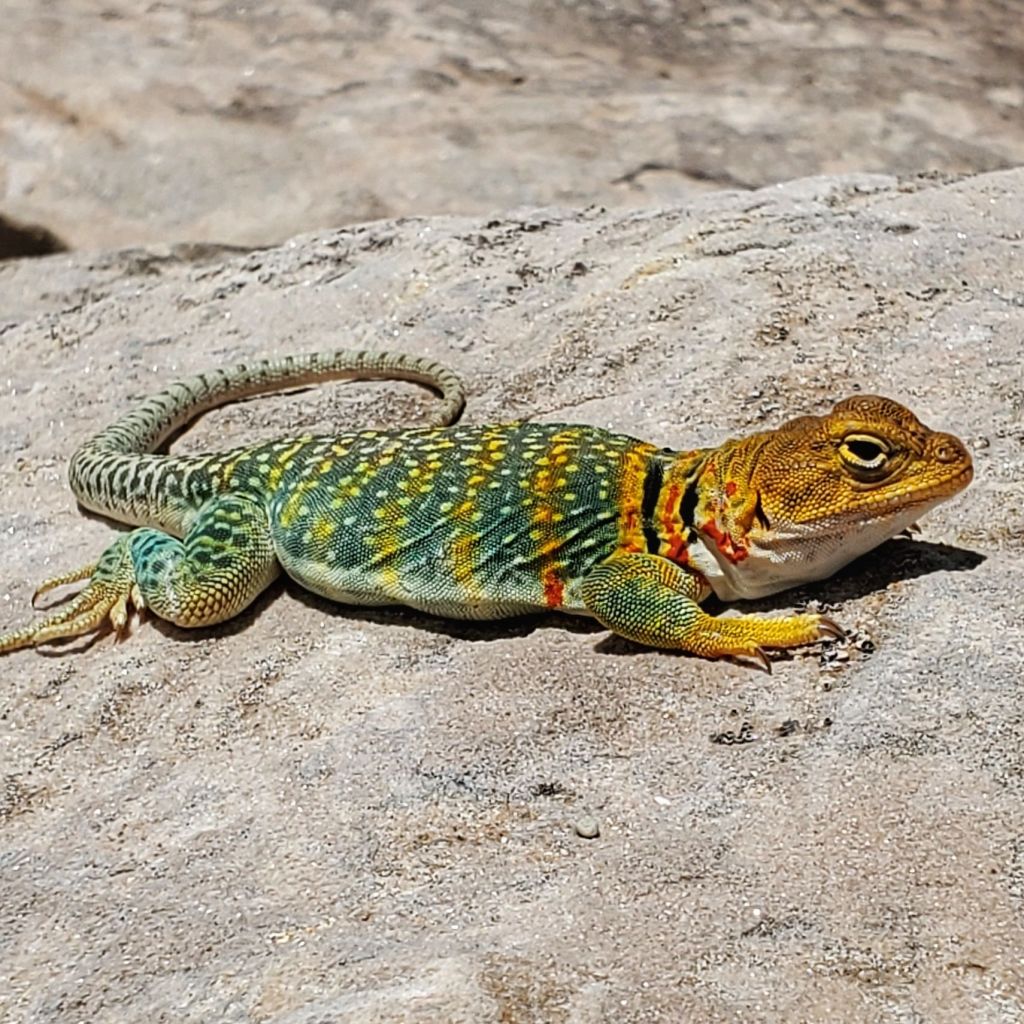
As I moved closer, I began to see the big collared lizard, warming himself in the sun.

The Eastern Collared Lizard. Photo by Z. Toad. (all rights reserved)

For a moment he watched me as I stood watching him. He seemed very self-assured, but as soon as he realized my presence he was gone in a blur, disappearing into a nearby crevice. It was as good a find as any reptile enthusiast could ask for. I was struck, perhaps more than ever, by the vibrancy of his markings that, in isolation, seemed more tropical than temperate.

I’ve had many such encounters with wild lizards over the years. It’s true that sometimes they can seem ubiquitous, commonplace or even pesky, but their prominence on the landscape has made them fine subjects for art and literature and historical accounts of all kinds.

John Muir, while following sheep through the Sierra, made sure to include lizards in his warm and detailed observations:

“Lizards of every temper, style, and color dwell here, seemingly as happy and companionable as the birds and squirrels…”

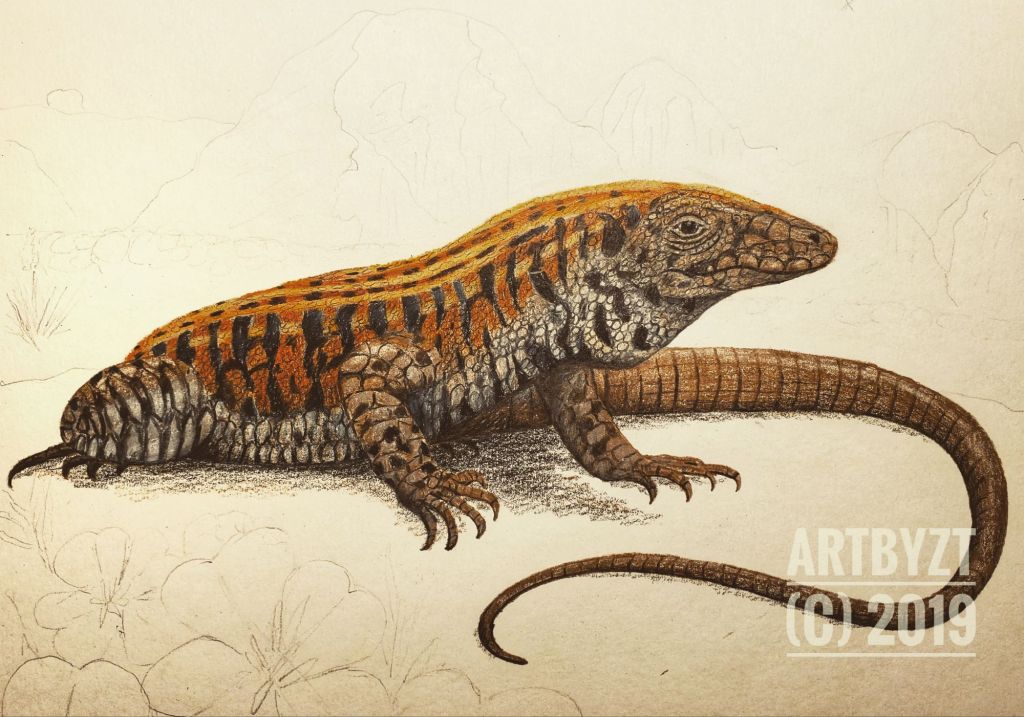
“The Whiptail” by Z.Toad, colored pencil.

Edward Abbey, too, seemed to find lizards philosophically useful, and as much a part of the wilderness as the rocks and sunshine:

“The lizard sunning itself on a stone would no doubt tell us that time, space, sun, and earth exist to serve the lizard’s interests; the lizard too, must see the world as perfectly comprehensible, reducible to a rational formula. Relative to the context, the lizard’s metaphysical system seems as complete as Einstein’s.”

As for Muir’s depiction of lizards as being “companionable,” I would say this is true, at least in my experience with Western species. Even the dreaded Gila Monster is mostly a gentleman, unless provoked. (Disclaimer: Do not attempt to prove this.)

In younger days, lizard catching was a regular part of my outdoor adventures. But it was a real challenge to actually get them in your hands. Most lizards seem to have speed woven into their DNA, and the hotter it gets, the faster they become.

Still, when captured, lizards usually relax dramatically, and only occasionally will they attempt to bite, and then for just a moment or two. Releasing a lizard back into the wild is easy, and sometimes they will even pause to say goodbye before jetting off.

A striped whiptail becomes docile after capture. Photo by Z. Toad.

As for hunting techniques, I started out catching lizards like a caveman would, using just my hands or maybe my hat. But after more failures than victories, I eventually learned to use tools, including butterfly nets and fishing poles with the line tied into little slip knots at the end. Bucket traps were an option too, but riskier and probably illegal.

Not all of it was fun and games, however. After several solid captures, I realized that many lizards detach all or part of their tails while trying to escape. And there was something about seeing an amputated lizard tail, bloodied and wriggling on the ground, that made the pastime seem less appealing.

These days, I mostly just capture photographs if possible. Lizards are very keen about spotting any movement, being always wary of predators, so it’s easier to get close to them if you move very slowly.

One of the hardest species to photograph are the whiptails, because they, in particular, are full of speed, and their movements are almost bionic. They rarely hold any position for long. Despite this, they’re probably my favorite desert lizard, because they look so much like bigger monitor lizards–or even miniature Komodo Dragons. In reality, whiptails are actually more closely related to the Tegu, a large lizard native to South America.

A blue-bellied plateau fence lizard oversees his kingdom in a Ponderosa forest. Photo by Z. Toad.

Whiptails occupy riparian areas, where willow, rabbitbrush and tamarisk are common. They are also the kings of dry riverbeds and trailside clumps of Gambel’s oak and Manzanita. Their presence can often be detected by their distinctive tracks in the sand, which consist of long continuous lines flanked by tiny claw marks.

As for the species at higher elevations (mostly the fence lizards) they can be more muted in color and athleticism, but they are respectable nonetheless. They can often be spotted on the tops of boulders, doing little push-ups as a type of signal to other lizards or even intruders.

One of the most amazing of the desert dwelling lizards is the Chuckwalla. It’s a species that was often considered food for native peoples in the Southwest. Chuckwallas are known for their ability to inflate their bodies inside rock cavities, wedging themselves inside and making it nearly impossible for a predator to remove them.

A fence lizard blends in with the surroundings, including fallen leaves. Photo by Z. Toad

With all the charming, and sometimes bizarre, antics that lizards can display, it’s easy to agree they deserve recognition. And this week, August 14th, is World Lizard Day, so it just made sense to write something about them. Ultimately, lizards are so admirable because they seem unwilling to go unnoticed, especially when compared to other reptiles, like bashful snakes.

As for the collared lizard, he certainly seemed to think he was something special that day. And how could he not when his territory included an amphitheater of all things? In retrospect, it was a perfectly poetic setting–the best of backdrops for one of nature’s true performers.

Song of a Mountain Morning

A long forest silence first broken 

By a robin in the pre-dawn.

His brave song brightens the darkness 

Before sunlight can,

Giving courage to his kind.

I lie awake in my tent listening, 

While the breezes still sleep, 

And the day delays its gleaming heat.

Trees hold their shadows,

But stars begin to yield, 

To a blue glow from the east,

Steadily crowning above the peaks.

Then morning comes 

To mountains, lakes and streams.

Who, but for a song,

Would stay in dreams.

By Z. Toad

Some Thoughts on Trail Running

Combining scenery and calculated self-torture

I was breathing hard, nearly gasping, when I reached the rim of the dry bluff, slowing a little after having powered up a steep hill for about 150 yards. Sweat was running down my forehead, into my eyes and down the sides of my face. It wasn’t even noon yet, but the red sandstone boulders had absorbed their fill of solar energy which was now radiating back into the sky and back at me. It felt like I was running on a stove top, and there was no shade in sight.

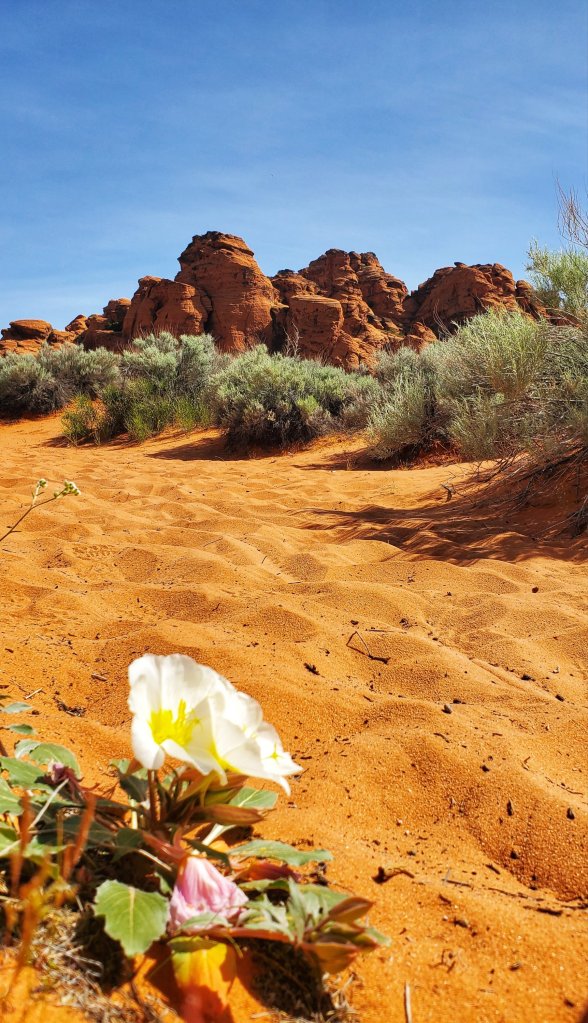
A Sandy Trail in Southern Utah. Photo by ZToad.

Under any other circumstance, the soft sand would have almost been fun to cross, but now it only dragged at my feet, sinking my strides instead of pushing them forward. My leg muscles were screaming. I began to feel a growing sense of futility and the bad kind of exhaustion.  

According to my All Trails app, the trail seemed like a good fit. The elevation gain was modest and the route was well-marked and straightforward. I had parked at the trailhead, tucked inside a well-to-do neighborhood on the northwest corner of the city, pausing for a moment to read the trailhead signs and adjust my CamelBak. I sucked a bit of water and started out at a mild trot to warm up the legs and knees. But as the trail began to dramatically steepen, I found myself with a choice: I could either slow to nearly a crawl, or I could try to power my way up, basically performing a series of box jumps on the boulders intermingled with sprints through loose sand. 

I’ve always believed that good fitness involves a certain determination to put oneself through controlled punishment, so of course I chose to power my way up the hill, thinking that it would probably level out soon. But by the time I reached the rim and found the conditions already described, my heart was pounding like crazy. While working my way through the sand, I came upon a group of mountain bikers who had paused for a view. One of them looked at me and smiled in a way that seemed out of admiration or pity, I couldn’t really tell. 

“Great Job,” she said. “You’re superman.” Unable to speak, I just smiled and gave a little wave with my right hand as I huffed my way past. Of course, I gave the sand hell for another half-mile or so, trying to hold in my mind the image of the Navy Seals running on the beach and telling myself that it was only making me stronger. It worked for a time, but when the rising heat and the sand combined their full powers against me it became more than just deciding not to quit. The little alarm bell that reminds you of your mortality began to sound. Finally, I slowed down and turned back, deciding to run back downhill and use the lowland trails to finish out my miles. 

This new plan worked for the most part, except now I was no longer familiar with the route. I soon got lost on the lower trails when they turned into a labyrinth. Finally, after a flash of panic, I found the trailhead again and went back to my car. I felt defeated. Yes, it was a crazy good workout, but there was something overarching that left me questioning.      

I used to think trail running was only what you did when you needed to get back to the car fast (for whatever reason, or for whatever might be chasing you). I was first introduced to the activity by an edition of Outside Magazine sometime in the 1990’s, which featured a trim-looking runner, smiling as he ran on a beautiful mountainside in Colorado. “What could be better or more brilliant than running in nature?” I thought.  

Hiking is, in and of itself, a great cardio workout, and my intention at the outset was not to replace hiking, but just to enhance the time I was already spending running by just doing it in nature. Afterall, one of the most unappealing aspects of running in general is how monotonous it can become. Slogging on a paved trail for mile after mile takes a considerable amount of mental focus and resistance to boredom. The adaptation to trail running seemed like a good solution. For the most part, it has been a good variation that has had some powerful fitness benefits. But, my experience on the bluff, among others, has taught me a few things that have kept me from thinking too highly about it.

So, if you’re considering incorporating more trail running into your routine, here are a few things I have learned: 

Disclaimer: Trail running is no joke. These are just ideas. I’m not a professional fitness expert. Consult your doctor first and use these tips at your own risk.

Have the right gear

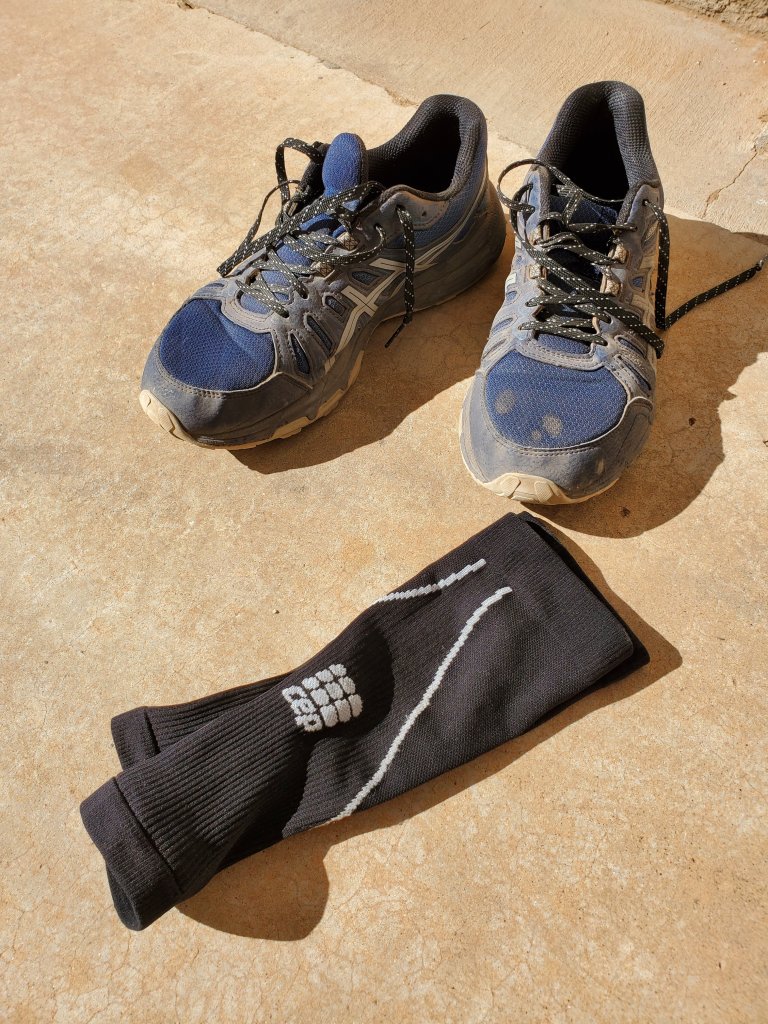
First of all, it’s essential to have a good pair of running shoes that have already been broken in, preferably with sturdy soles and thicker padding on the sides and tops of the toes. Asics has some good options that meet this criteria. You should also consider purchasing compression sleeves or compression socks which add a circulation boost and can protect you from scrapes and scratches while passing quickly through shrubs and trees. If the weather is cooler, consider wearing running pants. 

Good running shoes and compression sleeves or socks can make a big difference. The shoes should be sturdy but comfortable and already broken in.

Always carry your own water. A smaller CamelBak or similar product can help you stay hydrated, and the added weight is just enough resistance to support added gains. Most CamelBaks have pockets for carrying keys and cell phones which will otherwise bounce and jangle around in your shorts when you try to run, which is very annoying. 

Plan ahead

If possible, try to hike the trail beforehand on a separate day, so you’ll already know what it involves and you won’t have to think too much about navigation. Pick trails you’re familiar with. When you’re huffing and puffing, it’s easy to get carried away and forget where you’re going. Don’t rely only on trail apps or descriptions of elevation gains. Some trails seem straightforward online but they can actually get confusing very quickly, especially if you happen to miss any turn offs or cairns.

In general, avoid highly technical or rugged trails. Pick something with a considerable amount of flat land, gentle hills and smooth surfaces. Let’s face it, you just can’t run and scramble over rocks at the same time for very long. And even if you are in the amazing shape required to do so, the chance of injury will be high.   

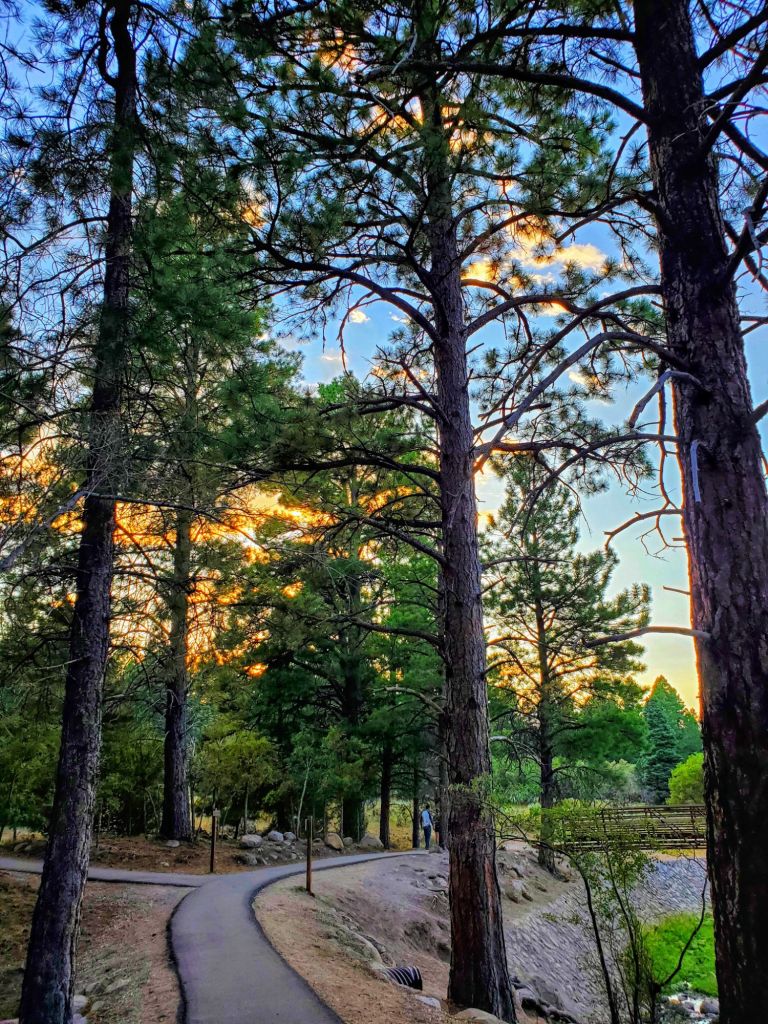
Don’t forget to enjoy the scenery along the way. Photo by ZToad.

Be safe

Run with a friend, carry GPS or tell someone where you’re going in advance. Trail running can be more physically demanding than regular running and can put your heart, limbs and joints under more stress. Sometimes just being at higher elevations can stress the body. Having a medical emergency while alone on a trail can be life-threatening.

A special word of caution: If you choose to go running in bear country (not sure that I ever would), be especially vigilant. Go with a group, make almost constant noise and carry bear spray. A quiet, solo run through a forest is a great way to surprise a bear, or trigger a predatory response and end up in a really bad situation. Pick an area with good visibility for the most part. 

If you do decide to run alone, leave a note on your windshield telling rescuers where you’re headed. You can also leave a voicemail or send a text to a friend with a map of the trail. If you get lost, stop running. Try to wear bright clothing which makes it easier to find you in wild terrain. 

Know the weather and prepare accordingly, just like you would for hiking. In desert climates, you should avoid going out mid-day (heat exhaustion will not make you any tougher). Get up early, or go at sundown. Always wear sunglasses, sunscreen and bug spray. Nothing makes you feel like quitting quite like bugs in your eyes, or biting flies and mosquitoes on your arms and legs. I also carry a pocket knife and sometimes a short walking stick which can be used in defense and also gives your arms a good workout during the run. 

Take it easy

Trail running can get intense very quickly so you don’t need to add much to it. Always warm up first, especially your ankles and knees.

My favorite running technique is to hike the inclines and declines and run the flats. But you should know your own limits. It’s best not to run at maximum exertion. If you can still talk, you’re still getting a good workout but not overdoing it. If the trail gets rocky, slow down and pay attention to your feet. Don’t get sucked into the scenery while traversing rough terrain. It only takes a moment of looking away to end up with an ankle sprain or a trip and fall.

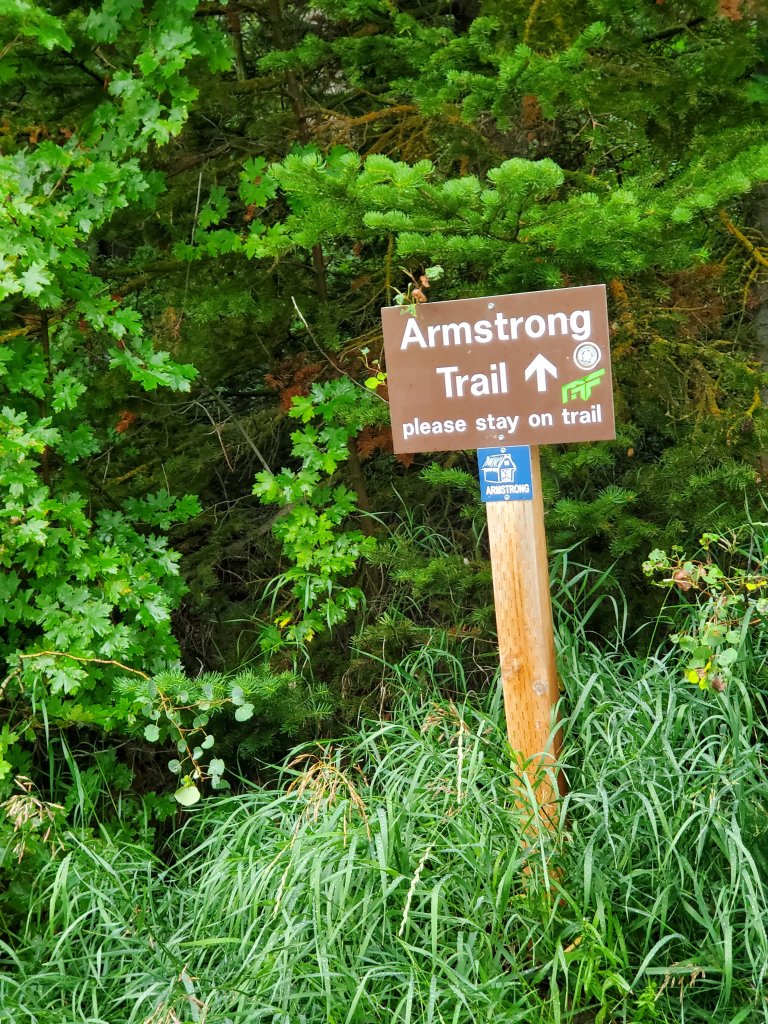
Pay attention to signs and be prepared for other hazards including slow hikers, fast mountain bikes and horse riders on blind curves. Stay aware of time. If you’re not running a loop, set a timer and give yourself equal time to get back. When you do reach your car, always take time to hydrate and stretch. Sitting in a driver seat right after running can make your muscles tighten and get you even more sore than you otherwise might have been.       

Trail signs can be easily overlooked while running. Don’t forget to look up.

Conclusion

Ultimately, trail running can be a fantastic exercise that can get you in pretty savage shape. But it’s not without real hazards and frustrations. No exercise goal is worth getting lost, broken, mauled, bitten or sick. A little pre-planning and preparedness will go a long way to make it a successful endeavor. And don’t forget to look up whenever you can to enjoy the scenery. Afterall, it’s really what makes trail running special. Whenever the punishment seems too much, it’s the view that just might keep you coming back.    

Ancient Trees and a Legendary Bear

Natural history and mythology share a landscape in common

I was standing beneath the branches of a centuries-old Limber pine, contemplating the accomplishment of its life and admiring its three main trunks, pointing like a trident into the sky. It was a clear August morning. Nearby, a ridgeline of knee-high grass flowed south, overlooking the azure shores of Bear Lake and the idyllic town of Garden City, where I had been staying with family for a couple of days. The contrast between the beachtown and the forest was sublime. 

The Ancient Limber Pine. Photo by ZT.

I had dropped my backpack at the foot of the tree, well aware that I was the first visitor of the day–a rare occurrence in this age of faddish recreation. While resting beneath the ancient tree, I watched the morning sunlight filter through the remaining forest, washing over treetops before percolating down to the understory. At the trailhead, I had learned that Clark’s Nutcrackers had done a lot of work here, using their wings and beaks to scatter an estimated 30,000 tree seeds across the surrounding range. 

I’d been wanting to do this hike for some time, not for physical fitness–the trail is barely over a mile long–but because the surrounding area had something in its history that called to me. This corner of the Uinta-Wasatch-Cache National Forest had a story to tell that went beyond ancient trees–it was a holdout of sorts, for the deepest kind of wilderness, where nature and mythology were intertwined.

“Old Ephraim” was the last known grizzly to roam the State of Utah. Standing ten-feet-tall on two legs and weighing over 1,100 pounds, the local shepherds called him “Three Toes,” after one of his forepaws was injured while tangled in a steel trap. Leaving his crooked print wherever he went, he wandered the mountains between Bear Lake and Logan for many years, eluding poisoned bait and bullets alike.

But the great bear finally met his end on an August night 100 years ago, when a trapper named Frank Clark, desperately looking to avenge the deaths of hundreds of sheep, finally found his chance. As Clark’s hound dogs assailed the trapped bear, he fired shots from an under-powered rifle, merely killing by degrees. Old Ephraim died slowly overnight while Clark listened and waited in the dark.    

In his story “The Bear,” William Faulkner beautifully encapsulates the simultaneous glory and emptiness of the trapper’s toil and the ferocity of his foe:  

He had already inherited then, without ever having seen it, the big old bear with one trap-ruined foot that in an area of almost a hundred square miles had earned for himself a name, a definite designation like a living man–the long legend of corncribs broken down and rifled, of shoats and grown pigs and even calves carried bodily into the woods and devoured, and traps and deadfalls overthrown and dogs mangled and slain, and shotgun and even rifle shots delivered at pointblank range yet with no more effect than so many peas blown through a tube by a child–a corridor of wreckage and destruction beginning back before the boy was born, through which sped, not fast but rather with the ruthless and irresistible deliberation of a locomotive, the shaggy tremendous shape. It ran in his knowledge before he ever saw it. It loomed and towered in his dreams before he ever saw the unaxed woods where it left its crooked print, shaggy, tremendous, red-eyed, not malevolent but just big, too big for the dogs which tried to bay it, for the horses which tried to ride it, for the men and the bullets they fired into it; too big for the very country which was its constricting scope. 

On the way to the Limber pine. Photo by ZT.

With my eyes overlooking this related country, and my mind thinking back, I felt the peculiar amalgamation of triumph and disappointment. It was still very much that ancient wilderness, but it had been changed forever, diluted and domesticated by the assault of good intentions.    

That doomed wilderness whose edges were being constantly and punily gnawed at by men with plows and axes who feared it because it was wilderness, men myriad and nameless even to one another in the land where the old bear earned a name, and through which ran not even a mortal beast but an anachronism indomitable and invincible out of an old, dead time, a phantom, epitome and apotheosis of the old, wild life which the puny humans swarmed and hacked at in a fury of abhorrence and fear, like pygmies about the ankles of a drowsing elephant,–the old bear, solitary, indomitable, and alone; widowered, childless, and absolved of mortality–old Priam, reft of his old wife, and outliving all his sons.

William Faulkner–“The Bear”

My surroundings made it easier to get lost in nostalgia. I imagined Ephraim chuffing and rooting as he might have passed beneath this same tree on a morning just like this. I was reluctantly grateful for the Boy Scouts who, at some point after Ephraim’s death, exhumed his remains and, more nobly, donated his skull to the Smithsonian and later the Utah State University. (https://en.wikipedia.org/wiki/Old_Ephraim) The donation likely helped the legend to go beyond just the back porches of sheep men and ranchers.  

My backpack still leaned against the base of the Limber at its widest point, as wide as a car. I saw other smaller and younger specimens of Limber, some “only” 200 to 300 years old, and a long-forgotten wooden railing which marked a spot where early forest managers had apparently attempted a makeshift viewing platform, probably an effort to protect the roots of the old tree, which were now partially exposed and thick as railroad ties. 

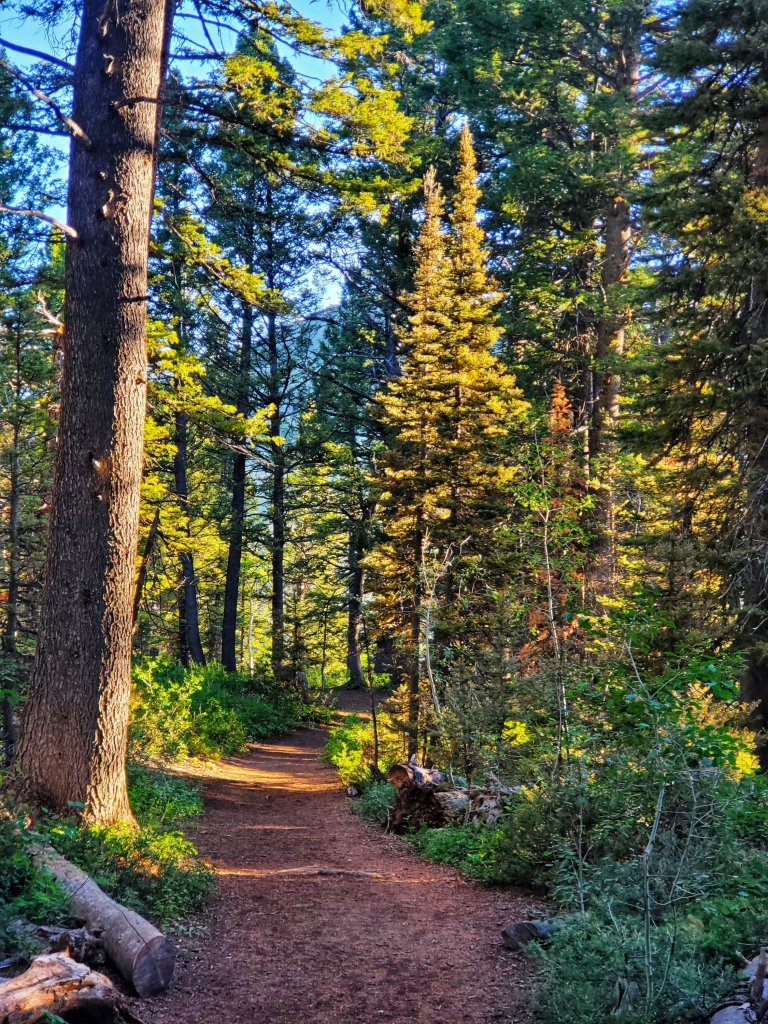
The trail leading up to the Limber had been well-groomed. I had entered the forest to the sounds of squirrels and birds echoing into the still warming air, taking the left-fork first and then climbing a fairly steep incline through shimmering fir and aspens, alternated with clumps of mountain mahogany and gamble oak.  

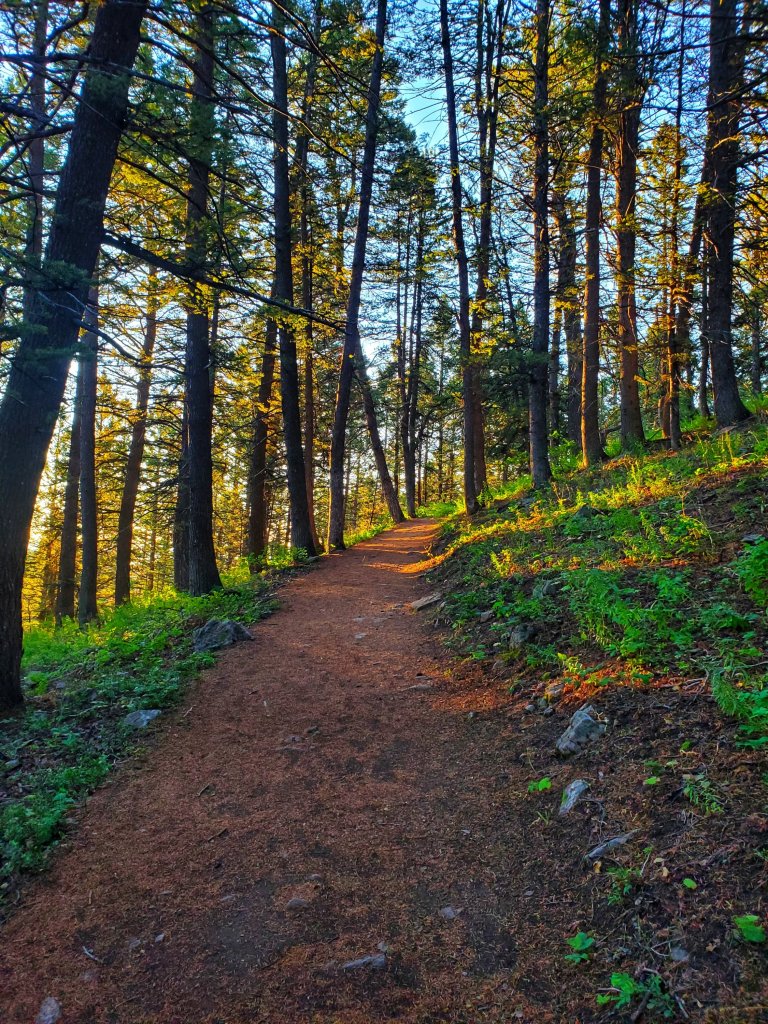
The trail going back held more of the same beauty. To the west, was a mosaic of treelines and clearings–good bear country that was now filled with summer sun. The trail was bright and cheerful and the rockless dirt underfoot was full of organic material, giving it a sort of sponginess that returned energy and made my footsteps light. I passed a few pines bent from years of heavy snows, one at nearly a 90 degree angle, like a chair. 

A Morning View on the Limber Pine Nature Trail. Photo by ZT.

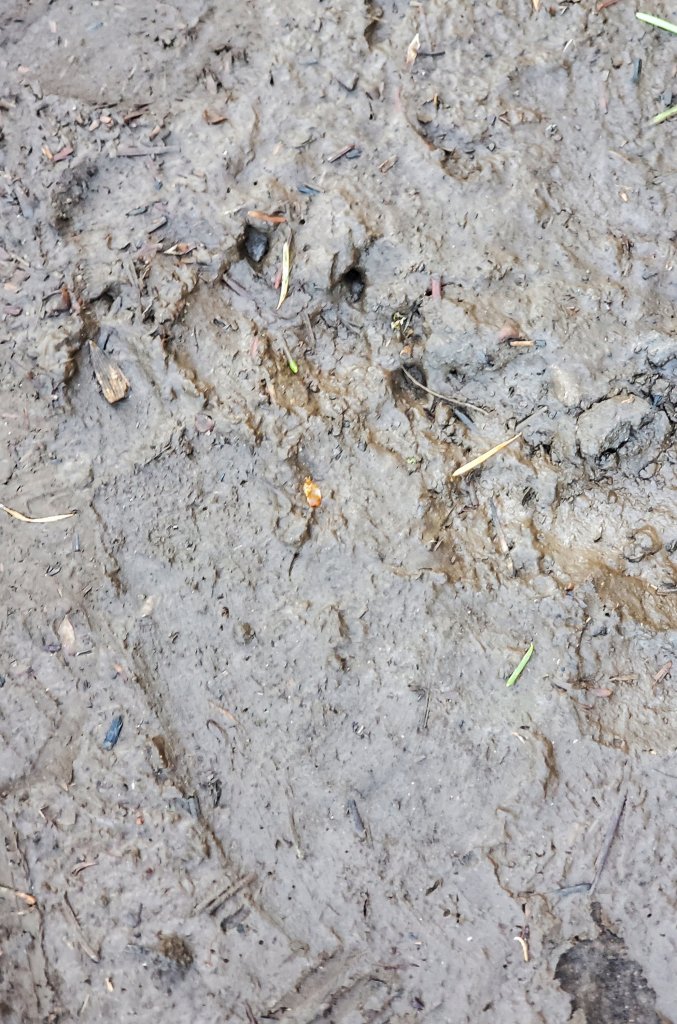
As I rounded a bend on the western section, I came into a small clearing with a good view. Recent rains had left mud puddles and it was in one of these that something caught my eye. It was a fresh black bear track transecting the path, headed back to the east toward the Limber. By the looks of it, the bear was small, maybe even a cub from last year. But it was definitely on top of the other tracks and had likely been made within the last couple of hours. I got some photos, looked around anxiously (more so for the mother than for the cub) and continued on. 

A black bear track on the trail. Photo by ZT.

It had been a poetic, even ironic discovery. The bear print was a reassurance that the wilderness here, while profoundly changed from Ephraim’s time, was not completely lost. There was still continuity, flowing like a river between the ancient and the modern. The old tree was still holding this line in both time and legend. And it appeared that the bears, in their own way, were holding it too. 

Will El Niño end the Southwest’s megadrought? | Live Science

https://www.livescience.com/planet-earth/weather/will-el-nino-end-the-southwests-megadrought

The remnant of a Pacific hurricane roared up the Baja a few weeks ago, soaking much of California and parts of Nevada with record rainfall and leaving mud-slides and flooding in its wake. This comes on the heels of an exceptionally wet winter.

For the past two nights a powerful storm system, packing drenching rain and a lightning show that would’ve made Zeus proud, crashed and strobed its way through parts of Nevada, Arizona and Utah. It’s been a healthy monsoon season.

This pattern is beginning to appear sustained and could be part of a larger “mega-drought” busting event. Only time will tell, but so far the difference is real.