Into the Heart of the Great Basin

A road trip to a land of surprising variety

Not long ago, we climbed into an old pickup truck and went west along one of America’s loneliest roads, passing over a roller coaster of desolate mountain ranges and endless sagebrush valleys–the forgotten floors of an ancient sea.

We were headed deep into The Great Basin, a destination that had been on my mind for some time, but not yet seriously. The goal was to spend a day or two camping and hiking in the area, to see if it was worth braving the mind-numbing travel I had heard of.

We first crossed through the small railroad town of Milford, Utah, along Highway 21, stopping briefly near a summer-vacated high school to rest in the shade. Feeling rested again, we drove on, following a ridge that quickly descended into the first of a series of deep valleys.

I wasn’t really sure what to expect, to be honest. I’d heard about the isolated west desert and could imagine it in my mind, being no stranger to arid places. But I couldn’t believe how long and straight some of the miles were, and it made the little nap at the school seem like more of a fortunate strategic decision rather than any sort of luxury. This was definitely not the place for a fatigued driver.
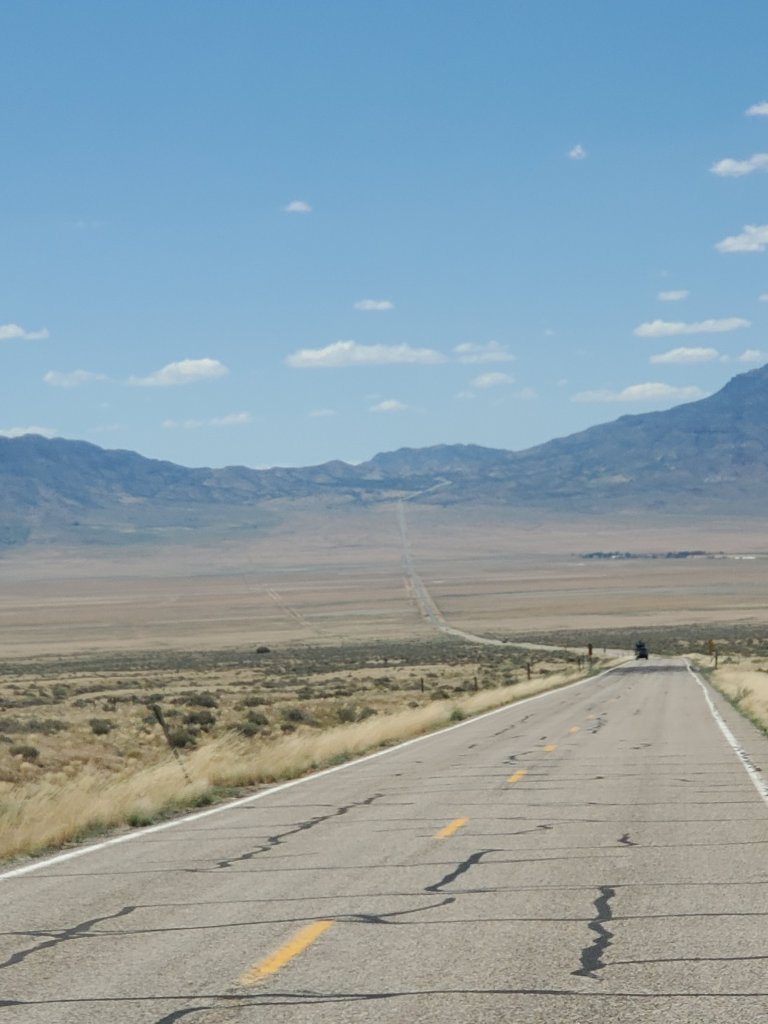
Highway 21 stretches west toward Baker Nevada. Photo by ZT. All rights reserved.

The bed of the truck was loaded with camping gear, and I was thankful that the air- conditioner was still working because the temperatures were pushing close to 100 degrees. Mirages floated like specters on the asphalt ahead and, at times, the simmering air made the distant trajectory of the roadway hard to discern.

While passing a place called Garrison, near the Utah state line, a lone pronghorn antelope grazed on the outskirts of a few patchy green fields, lined with clumps of ragweed. And within the next few minutes, we began to see the beacon of Wheeler Peak in the distance, standing at 13,063 feet in elevation, the second highest mountain in Nevada.

It was an incredible thought, but if Wheeler Peak were shifted a few miles east across the state line, it would still be the second highest mountain in Utah. There was something inspiring about this relatively small mountain chain standing alone, the highest for 180,000 square miles, and completely unattached to either the Sierras or the Rockies. As for the peak itself, it was named, climbed and surveyed in 1869 by Lt. George Montague Wheeler and his men. (https://www.nps.gov/grba/learn/historyculture/why-wheeler.htm)

Reaching the Park

After nearly 90 miles across the sagebrush, we reached the small town of Baker, Nevada and for the first time saw the gateway to Great Basin National Park. The scenery so far had been full of repetiton but ended with this–a close-up view of one of the most dramatic “sky islands” I had yet to experience.

We passed a single gas pump and a couple of restaurants beside a small collection of frontier homes. One restaurant had a surprising number of customers (either because it had really good food or the only food in town, I couldn’t be sure which). We saw only a few side streets that quickly trailed off into the desert, not surprising for a town with a population of less than 70.

Meanwhile, looming behind the town’s main drag, the treeless summits still harbored patches of snow. I thought about the glacier inside the park, on a protected slope– one of the southernmost of its kind in the U.S and reachable by trail. From our perspective down on the desert floor, it was hard to imagine anything like it.

The scenery so far had been full of repetition but ended with this--a close-up view of one of the most dramatic "sky islands" I had yet to experience.

At the west end of town, near the turnoff leading to Wheeler Peak, we found the first of two National Park Service visitor centers. Stopping here, we were greeted by a collection of maps and brochures along with a few freshly picked apricots leftover in a cardboard box. I learned that there was a second visitor center in the park, at nearby Lehman Caves, where the settler Absalom Lehman first planted the orchard in the 1800’s, later donating the land to the park.

An apricot tree shows off an abundance of fruit near the Lehman Caves Visitor Center. The orchard was planted in the 1800’s and has been here ever since. It is now maintained by the park service. Photo by ZT. All rights reserved.

The visitor center was cool inside, which was a welcome change. Two NPS employees worked behind plexiglass (presumably Covid precautions) at the gift counter. They confirmed to me that the park has no entrance fee, making it one of only a few in the West allowing access to whoever is willing to make the trek to see it. And it’s open 24 hours a day, 7 days a week. As for lodging, there are campsites for reservation only inside the park and limited lodging in Baker. Services in general are sparse.

After browsing some souvenirs, I glanced at a wall-sized map of the surrounding Great Basin itself, realizing just how big the overall area is–a whopping 200,000 square miles stretching across several states. The waters of the basin drain internally, creating a sort of island in its own right, not in terms of elevation, but in a hydrological sense.

“All precipitation in the region evaporates, sinks underground or flows into lakes (mostly saline). Creeks, streams, or rivers find no outlet to either the Gulf of Mexico or the Pacific Ocean.

https://www.nps.gov/grba/planyourvisit/the-great-basin.htm

While the visitor center beckoned us to stay, we weren’t here for just peripheral trivia. It was time to head up into the park and see it in a more intimate way.

Once back on the entrance road, we took the actual turnoff and began a nearly 5,000 foot ascent toward the Wheeler Peak Campground. Thankfully, despite some treacherous drop offs, the road was well-maintained and the old truck had little struggle reaching the top. While ascending, I was able to better appreciate the big skies, which were richly blue, with clouds seemingly larger than life.
Discovering an Alpine World

When we arrived at the base of Wheeler Peak, we settled into a campsite, taking some time before bed to stand in a lush meadow with a stunning view. As the light faded, we watched the high slopes trade patches of gold for a wash of blues and violets. At one point a mule deer crossed through a clearing nearby, pausing for a moment to survey the scene. It was a stunning end to a long day and we turned, reluctantly, back through the pines to our camp.

Wheeler Peak towers over a meadow at dusk. Photo by ZT. All rights reserved.

We awoke in the morning to chilly air, a distinct change from what we were acclimated to. After breakfast in the pines, we packed up camp and drove a short distance to the Alpine Lakes Loop trailhead. I’ve always had an affinity for mountain lakes and was excited to take this relatively short hike to see some of them.

We started out on the trail, crossing over a wooden bridge and taking the right fork leading to Stella Lake. The temperature was warming, but it was still perfect for hiking and the trail was well-used, but not crowded by any means.

We wandered through a series of meadows and stands of spruce, crossing over several small rivulets that flowed across the trail. The smell of pine was rich, but the climb was surprisingly steep at times and, in the high-altitude air, we had to pause often to catch our breath. Still, the best hikes are the unhurried kind, and while standing in the open areas we could feel the mountain sunlight and see the high peaks curling around us like a giant amphitheater. 

Because of this terrain, however, Stella Lake was hard to see on approach and we were just beginning to wonder if we were still on track when an older gentleman appeared from the opposite direction. By the looks of his outfit and gear, long pants, sturdy boots and a hat, he was an experienced hiker. 

“Hello,” I said, aware that not everyone wants to talk on the trail, but hoping he would. “Do you know if we’re close to Stella Lake or do we have a ways to go still?” 

“It’s actually just right there,” he said, pointing behind him and smiling.

“Okay, great. Does the loop keep climbing from there or does it level-off and head back down? I’m just wondering if we should keep going afterward or turn around and go back down.”

“You should definitely keep going,” he replied. “It mostly levels off and loops back down to the trail head, and there’s another nice lake on the way. The hardest part is behind you.” 

It’s sometimes rare to find good news on the trail. Often it seems that unexpected difficulty just has to be part of the experience. In this case, I was grateful to hear we were close and that the full loop would be the better choice. I thanked our trail friend for the intel and we continued on. 
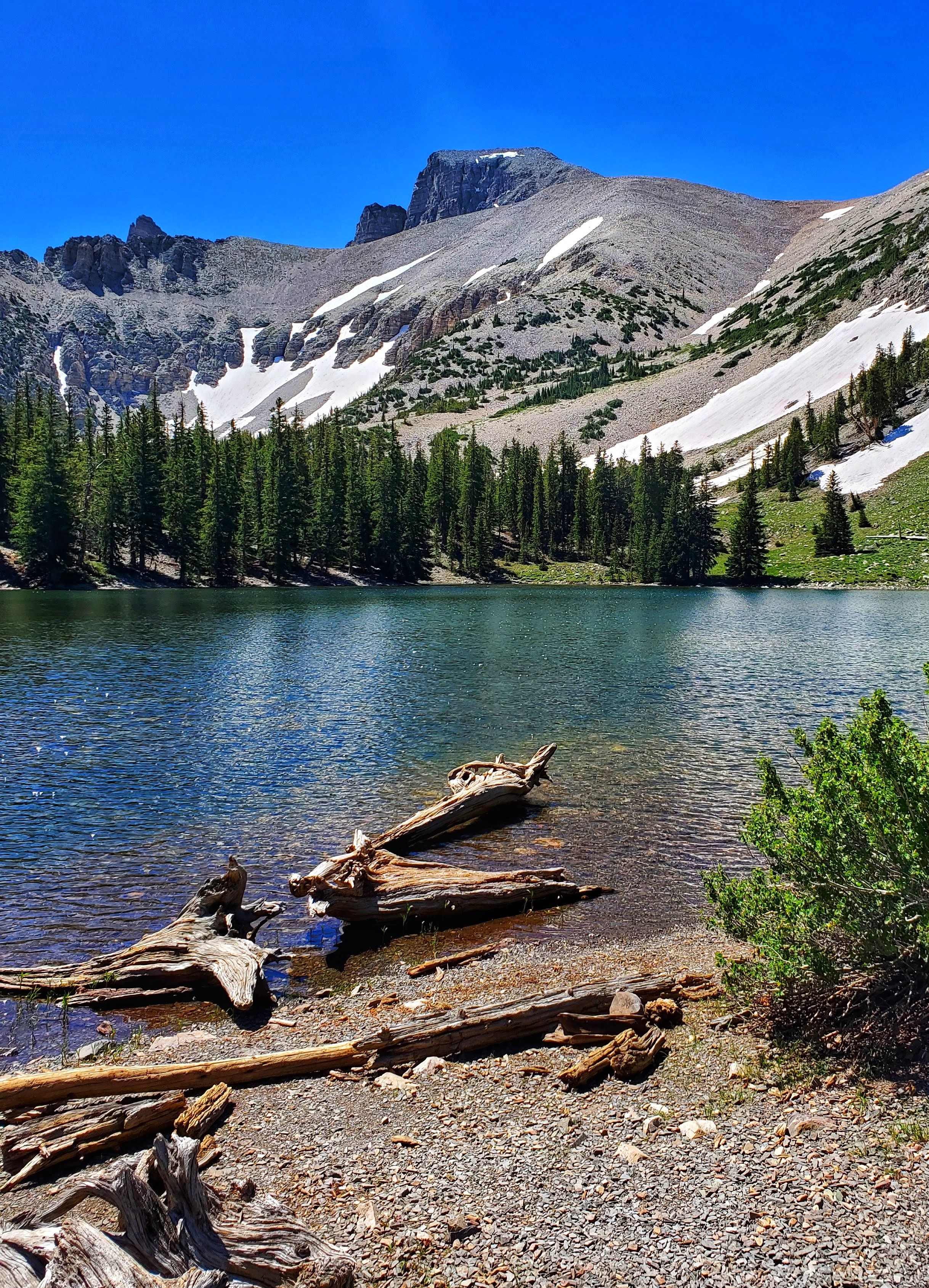
Sure enough, after about 150 yards, we came over a hill-crest to find Stella Lake at last, hiding like an emerald, in the trees and shale. The fish were jumping and a Limber pine stood, tall and trunk-twisted, nearby. We lingered here for some time, skipping pebbles, admiring chipmunks and contemplating what a short but sweet introduction this had been. 

There was no longer any doubt that the Great Basin was full of surprises and hidden charms–small roadside towns, towering peaks still holding late summer snow, a glacier, apricot orchards, deep caves, magical alpine lakes, clear night skies and even an ancient grove of Bristlecone pines that we unfortunately had to bypass (until next time).

Even though our experience was brief, there was an overall feeling about this place that stuck with us–a beautiful consistency of contrast that was tangible enough to carry home.  
Fires and Felling: A New Cause for Debate

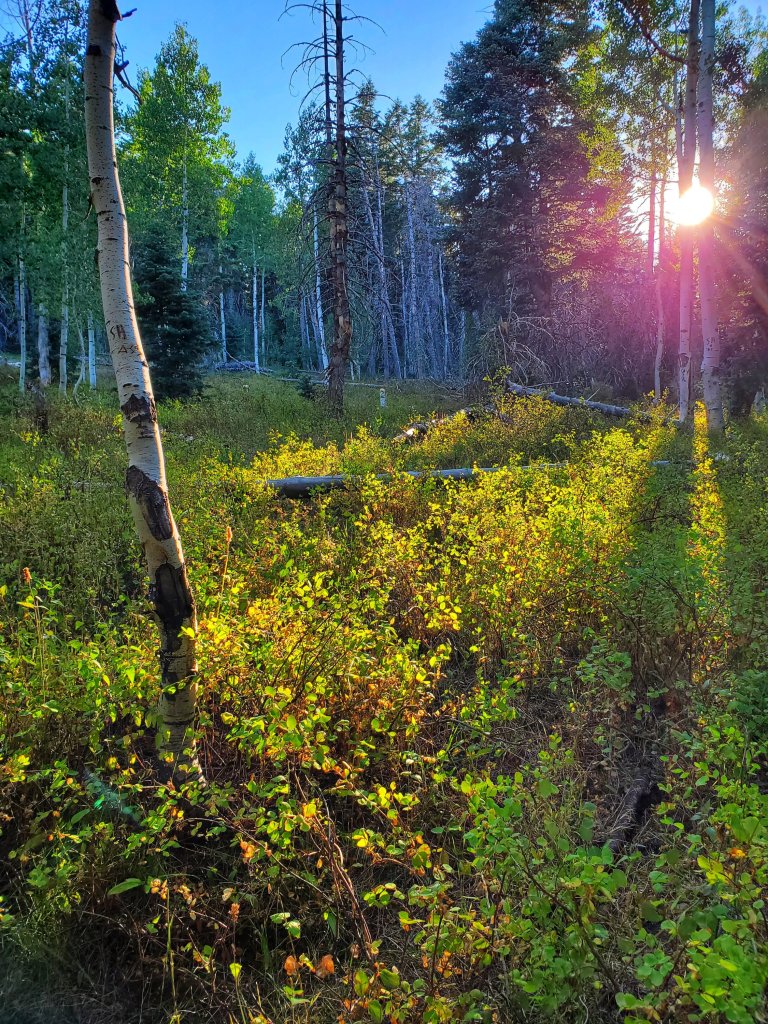
Sunlight in aspen forest. Photo by ZT. All rights reserved.

On a high plateau near Cedar Mountain in Southern Utah, a vast stand of quaking aspen stretches eastward. Rounded, bright green, leaves shimmer and flutter in the slanting light of dusk and paper white trunks line the dirt road on its way to Kolob Reservoir. 

From the vantage of the road, this forest seems nearly devoid of any other tree species except a few scattered pines. The aspens are kings here, with many of them part of singular gigantic organisms connected by roots underground. 

An article from the Salt Lake Tribune reveals how aspen is taking center stage in the quest to protect wild lands from catastrophic fires. But, like so many issues in the West, reality can be complicated. 

Utah State study shows pros, cons of “roller felling” forests

https://www.sltrib.com/news/environment/2023/07/14/lawmakers-gave-millions-support/

Clowns in the West

A story about Tonopah illuminates a strange connection between disappointment and entertainment

It was the mid-1980’s inside the cavernous and smoke-shrouded Salt Palace Arena in Salt Lake City.  The smell of candy and popcorn was overpowering, except for occasional  breezes from the fanning of folding seats beneath rows of restless children.  

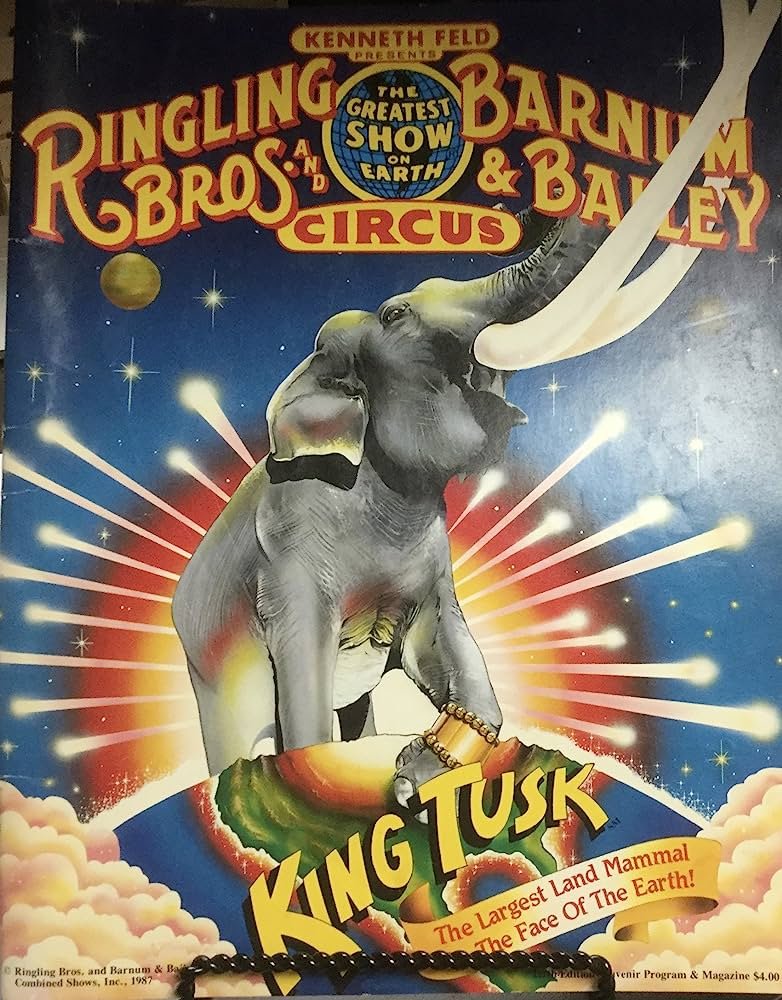
Down in the ring, Gunther Gebel-Williams paraded alongside two tigers.  With his beach blond hair, flashy costume and tanned skin, he was the grandmaster of “The Greatest Show on Earth,” part of the Ringling Brothers & Barnum and Bailey Circus.

King Tusk, and The Greatest Show on Earth. 

Until now, the crowd had been awaiting the arrival of “King Tusk,” a bull elephant who was set to make a dramatic debut.  In the meantime Gunther kept onlookers fixated on his tiger act.

When the last set of stripes had jumped through the last fiery hoop, the lights dimmed and the crowd hushed.  Was this the moment when King Tusk would finally arrive…?

After what seemed enough time for even an elephant to prepare, the lights came back up.  And there, from the right side of the ring, it appeared: a small cartoonish car, overflowing with clowns.  Disappointment swept the crowd.

A different kind of clown.

It could have been an unforgivable programming blunder, yet somehow, the clowns managed to quickly regain control.  They were amazing professionals, with captivating energy.  Soon people were laughing and forgetting about elephants. 

In his article for New Lines Magazine, Andrew Chamings writes about another seemingly impossible clown diversion.  The desert–with its great, silent distances and crushing scarcity–can drive people to disillusionment.  It’s a recurring story line in Western lore.  Clowns might never have been considered to be part of this scene until now.

And so, here’s a story that shows us where tragedy, history and isolation combine into one of the strangest juxtapositions imaginable…           

https://newlinesmag.com/first-person/in-the-american-west-a-clown-motel-and-a-cemetery-tell-a-story-of-kitsch-and-carnage/

A Simple Kind of Toad

Hallucinations…shamans…intense spiritual awakenings…out-of-body experiences…week-long retreats in the desert and drug addiction therapy…

When starting out on a blogging journey, it’s too easy to become grandiose about it.  Pomposity can be a pitfall of writing in general, whether it’s the first piece you’ve written or the 10,000th.  While establishing a sense of self and purpose, a writer can get wordy, big-headed, overly intellectual, even reaching into the clouds for ideas.  

I picked the title of this blog partly because “toad” was a nickname of mine in high school, and partly in an attempt to keep myself from floating too far from the ground while creating content.  I figured it might be useful to have an animal avatar to help anchor down whatever I wrote–keeping with stories that were digestible and relatable.  

“What better reminder,” I thought, “than the humble toad?”   

So when I recently heard about the Sonoran Desert Toad I’ll admit I was troubled.

I’ve long known about toads and their secretions, which can be poisonous to other animals.  It’s a natural defense mechanism, basically something that keeps the toad from being eaten.   

But apparently the Sonoran Desert Toad has an especially “trippy” secretion that humans have been using to escape reality.  Basically, like mushrooms or other hallucinogens, toad poison can be used to get high.  And, in this age of fads and self-help fanaticism, toad licking has actually become a thing.  

There are now a few places even offering special retreats where you can experience toad ecstasy in a controlled and “supportive” environment. 

Admittedly this is probably good, because toads can often be found in remote and dangerous terrain, and it’s not hard to imagine that getting stoned in a slot canyon could easily result in a medical helicopter ride.        

Abstinence in this case seems like a no-brainer, but the risky business of wild toad licking has been spotlighted recently in the media, with organizations like the National Park Service finding themselves in the strange position of having to tell people not to do it.  

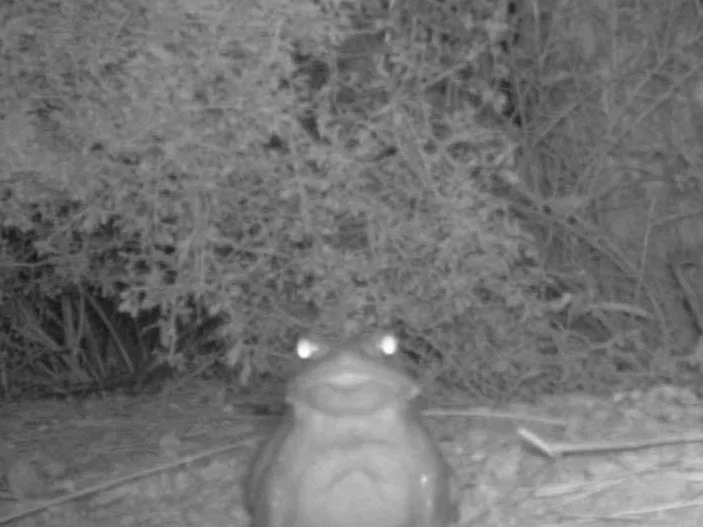
The situation was described in a recent NPR story, featuring an ominous looking Sonoran Desert Toad, with glowing eyes, staring hypnotically into a night-vision camera. 

The Sonoran Desert Toad on a motion sensing camera. Image from NPR article cited below. Photo by NPS.

The National Park Service wants humans to stop licking this toad  – Kim,Juliana NPR, Nov 6, 2022 https://www.npr.org/2022/11/06/1134615997/the-national-park-service-wants-humans-to-stop-licking-this-toad

While its psychedelic effects are pretty hard to overstate, there are, not surprisingly, divisions about whether the toxin is beneficial or not. According to an article in The New York Times, some even see it as a matter of life or death.

“The effects of the toxin depend on your perspective. Some call it a dangerous poison that can make people sick and can even be deadly. Others call it the “God molecule,” a hallucinogenic so potent it is often compared to a religious experience.”  

From an animal welfare and conservation point of view, there are other concerns, which might be partly why the park service saw the need to intervene.  Extracting the toxin involves bothering the toad.  

“People collect the substance by stroking under the toad’s chin, initiating a defensive response. It then releases a substance that can be scraped, dried and smoked.”  – Victor,Daniel, National Park Service Asks Visitors to Please Stop Licking Toads, The New York Times, Nov 7, 2022.  https://www.nytimes.com/2022/11/07/us/licking-toads-toxic.html

Regardless of whether it actually causes harm, this kind of manipulation seems extreme and unnatural, but so is a lot of what we do for supposed “health reasons.”  Other animal derived products are used for a variety of human ailments. 

I’m not really interested in telling people what they should or shouldn’t be doing for their health.  But, whether it’s the toads of Arizona, the bison of Yellowstone, or the manatees of Florida, maybe we should just leave wild animals out of it.   

These digressions aside, it’s probably no longer possible to disassociate this blog from the Sonoran Desert Toad, at least not in the mind of anyone familiar with its special powers.  For a time I thought about changing the name, but at the end of the day it just didn’t seem like the right thing to do. Afterall, I didn’t want all toads to be stereotyped that way, myself included.

There’s just more to toads than the psychedelic.  For instance, I first caught a regular old toad in a field of zucchini plants as a boy, and I held it for a few moments.  It was the kind of novel childhood experience that was hard to forget.  I marveled at the bumpy skin that was cool to the touch–not slimy, but not really dry either–and the fat little belly that squished around like a hacky sack. 

When I was done, I put the toad back down in an irrigation row and watched him wriggle his way into the damp soil until he had completely disappeared, like magic, beneath the surface. This wasn’t a hallucination, just real life.

Of course, I’ve also caught other toads since.  After accidentally leaving a garden hose running, I found a spadefoot toad paddling around in the bottom of a window well behind our house.  I put him on a wet paper towel and got a few pictures before letting him go.  

Great Basin Spadefoot Toad, photo by ZT

Toads often emerge from unexpected places after periods of heavy rain or flooding. When they’re above ground, they can eat a lot of bugs and do a lot of good for the environment in short order. Otherwise, they just stay dormant for long periods underground.

To be fair, the title of toad is also not just restricted to the amphibious kind.  I’ve occasionally caught “horny toads,” officially known as Desert Horned Lizards. Some of these interactions I’ve already recounted in blog form. 

Yet despite the odd capture here and there, I’ve never kept any wild toads and don’t really intend to.  Even though they appear to be humble and hardy, they’re not ideal pets.  

Either way, they can be admired and emulated to some extent.  That’s ultimately why I decided to keep the blog name, knowing that it would still provide me with a needed reminder to keep thoughts down to earth and away from any “tripping.”

Simple thoughts, simple writing.  In order to stick with this, and stay true to the people who’ve done the kind of writing I admire, I’ll need to stay focused. 

I’m talking about writers like Edward Abbey, Thoreau, Russell Baker, E.B. White and Anne Lamott.  Keep it simple, stupid, they’d say.  Write like you mean it.  Don’t float around or hallucinate too much.  

And so I’ll just remind myself to embrace (not lick) my own toad ideal. On the ground and out of the clouds.  

In the Lynyrd Skynyrd song Simple Man, a mother tells her son to be “…something you love and understand.”  So, even if the toad lickers carry on, I’ll carry on too, writing words to the best of my ability, trying to keep plain and simple thoughts at the forefront, while hoping to provide a little surprise or some deeper insight from time to time.  

I know it won’t always be easy.  Writing can be like an alternate universe where gravity pulls you up instead of down.  But with the simple kind of toad as an example, and with some dedication to the craft, I just might have a chance.                     

The Problem with Cats

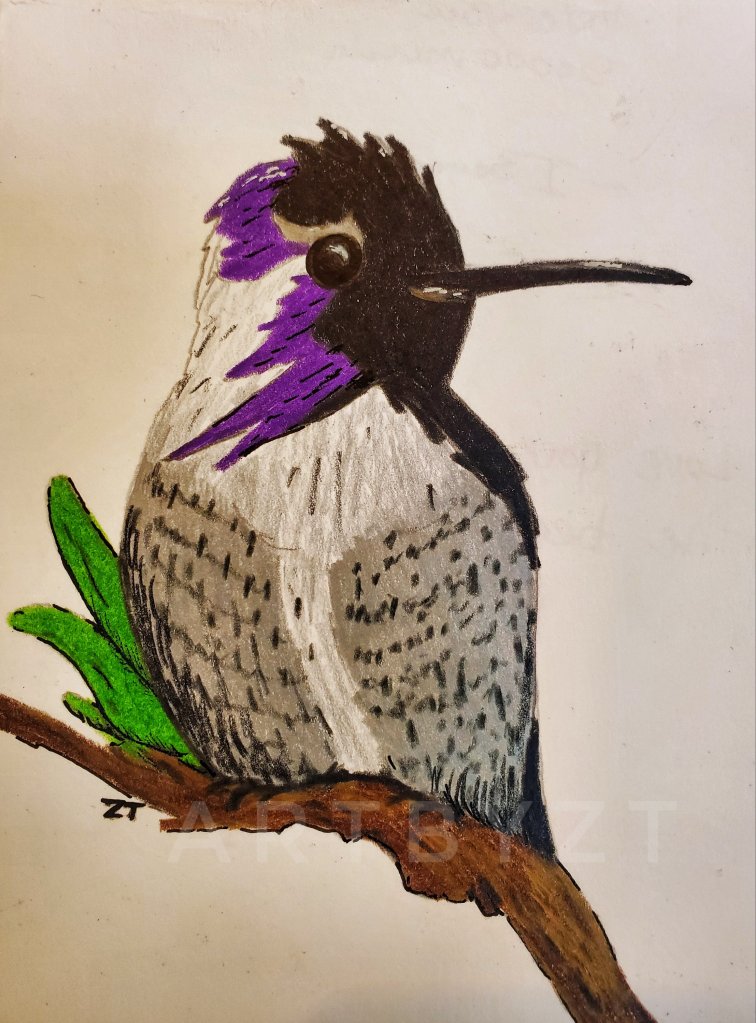
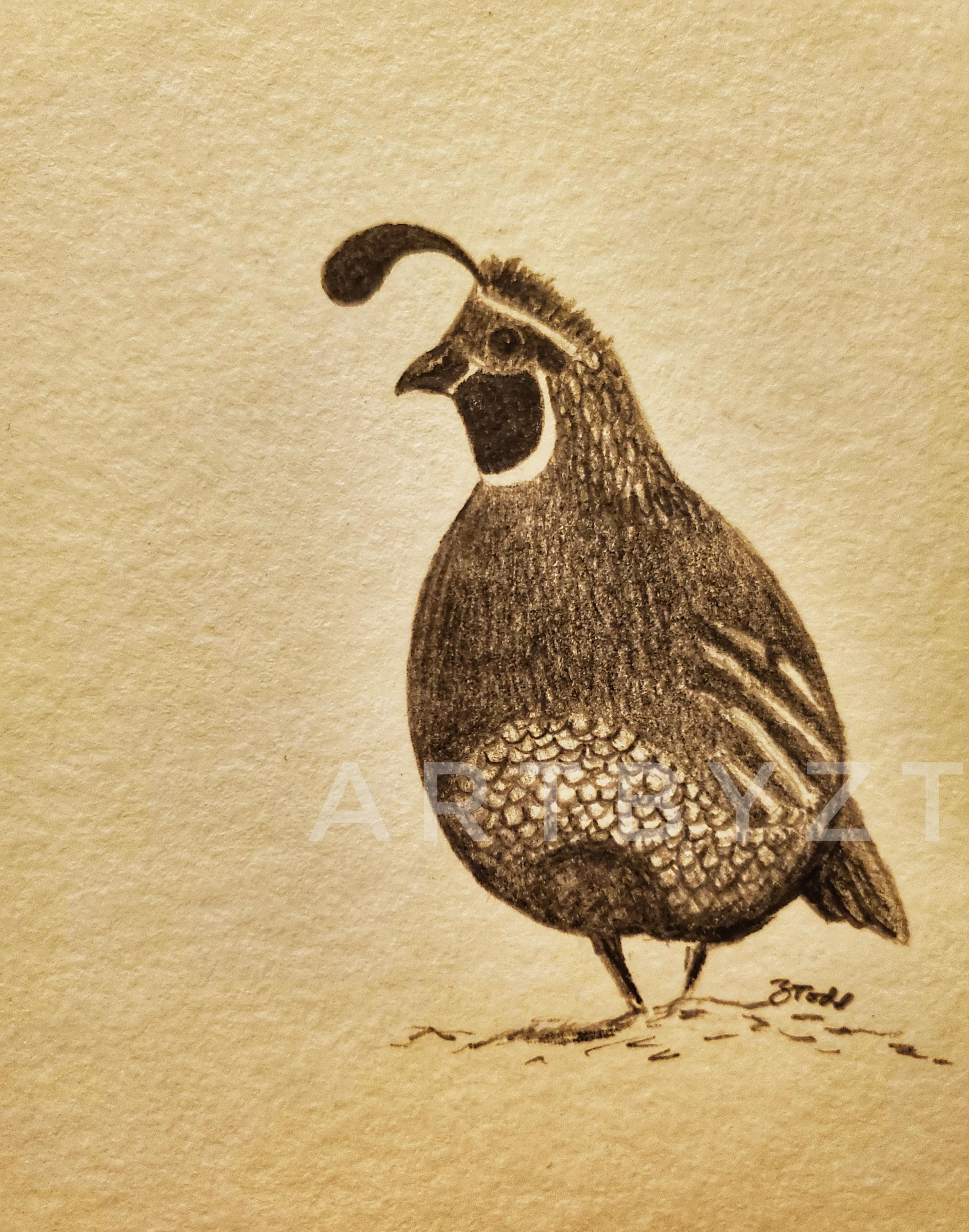
Free-roaming cats kill an estimated 2.4 billion birds in the U.S. each year. Drawing – Artbyzt.

Writing about wildlife, natural history, ecology or anything like it, will eventually bring you to the shores of conflict.  I’ve had professional experience with the TNR effort.  Individually, cats are amazing, endearing creatures.  But when left to their own deadly devices and powers of reproduction they are a grave threat to the biodiversity of the planet. Here’s a fine article by Carrie Arnold to address this difficult issue…

Cat-astrophe

“Outdoor cats are considered one of the worst invasive species by ecologists. And humans are bitterly torn over how to respond.”

Cat-astrophe

Hand Over Heart for Wildflower Season

Near Willow Beach, Arizona, along U.S. 93, the basin and range transforms into a series of rolling hills gently cascading to the Southwest.  In mid-March we found ourselves passing these hills, on a trip from Las Vegas to Phoenix, and were blessed to see the beginnings of one of the most amazing payoffs of a rainy season in the desert: yellow wildflowers were popping up all over, giving a rich accent to already green grasses.

It was like a scene from a Dr. Seuss book, a rare sight during these past few years of brutal drought.  As the rains have soaked deep, many long-dormant seeds have been revived.  The result has been a wildly more colorful desert landscape, with visuals that are exceptionally bold and captivating.

Petals and volcanic rock.  Photo by ZT.

When it comes to finding a scientific explanation for all this, however, the view starts to get a little more subdued, even dusty.  As if driven by some unspoken imperative, some have rushed to define it: 

“A superbloom is a rare desert botanical phenomenon in California and Arizona in which an unusually high proportion of wildflowers whose seed have lain dormant in desert soil germinate and blossom at roughly the same time.  The phenomenon is associated with an unusually wet rainy season.”

(https://en.wikipedia.org/wiki/Superbloom#:~:text=A%20superbloom%20is%20a%20rare,an%20unusually%20wet%20rainy%20season.)

These categorizations often seem too obvious and even hopelessly subjective.  So much of it depends on where you happen to be and when you happen to be there.  And there’s been a fair amount of debate as to whether this wildflower season actually constitutes a “super bloom” at all.  To be sure, it can be more “super” in some places than others.

Ultimately, any hard definitions fall short. The simple truth is there’s just a lot of wildflowers out in the desert right now, and every minute spent worrying about what the phenomenon is or isn’t, is a minute lost to see them while they last.  And they won’t last forever; that’s not how the desert works.   

Wildflowers at dusk. White Dome Nature Preserve. Photo by ZT.

Thankfully, the act of viewing wildflowers these days requires minimal effort.  Under usual conditions, they are subdued, often hidden between larger, less colorful plants.  Because of this, they aren’t always readily visible from roadways.  But this year, the volume is cranked up so much that it’s possible to get a good view, even while staring lazily out the windows of a car.  

To help matters even more, roadsides often provide even more water to the soil because rainwater runs off the edges of the pavement where it soaks into more concentrated areas of disturbed soil.  This is why some roads have thicker vegetation (wildflowers included) along pavement edges than might be growing even five or ten feet out into the landscape.     

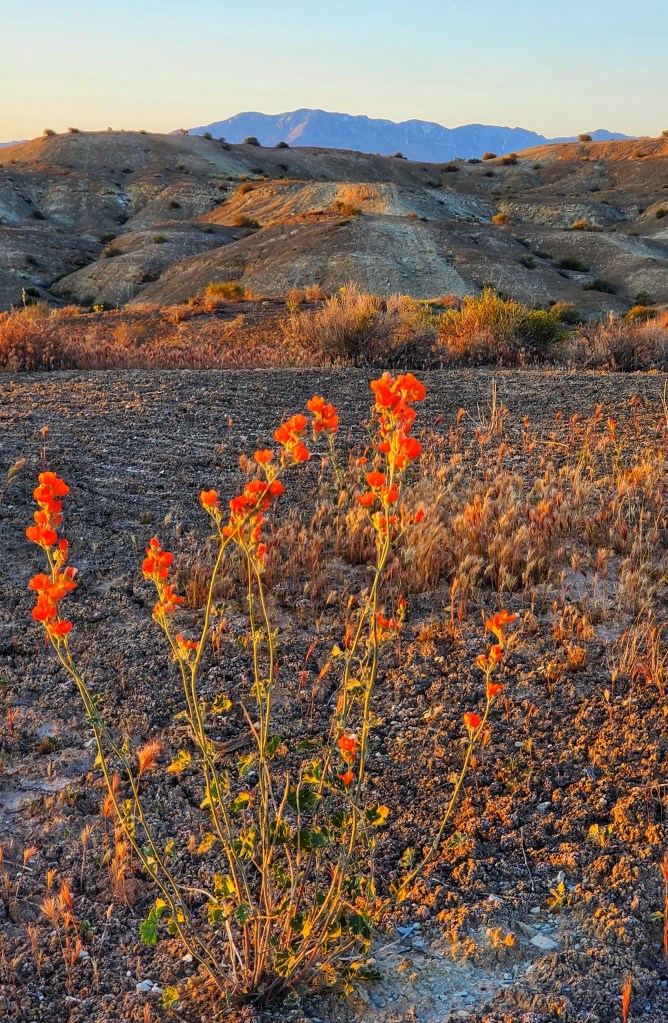
Globemallow, in particular, is making a solid showing along roadsides this year.  Of course, it’s equally at home between backcountry boulders, and along footpaths, with its delicate looking pale stems and orange, cup-shaped blossoms that close at night and open toward the rising sun.  Globemallow’s height, compared to other flowers, gives it more prominence on the landscape like a highway construction sign.  

Globemallow in the desert.  Photo by ZT.

Along U.S. 191, near Canyonlands National Park, there are currently great fields of globemallow, stretching across the horizon like orange reflections on a sea of green.  Try as you might, casual photos won’t do it justice.  You can only hope to enjoy the scenery in the moment and maybe, if you’re lucky, capture some of it in memory.

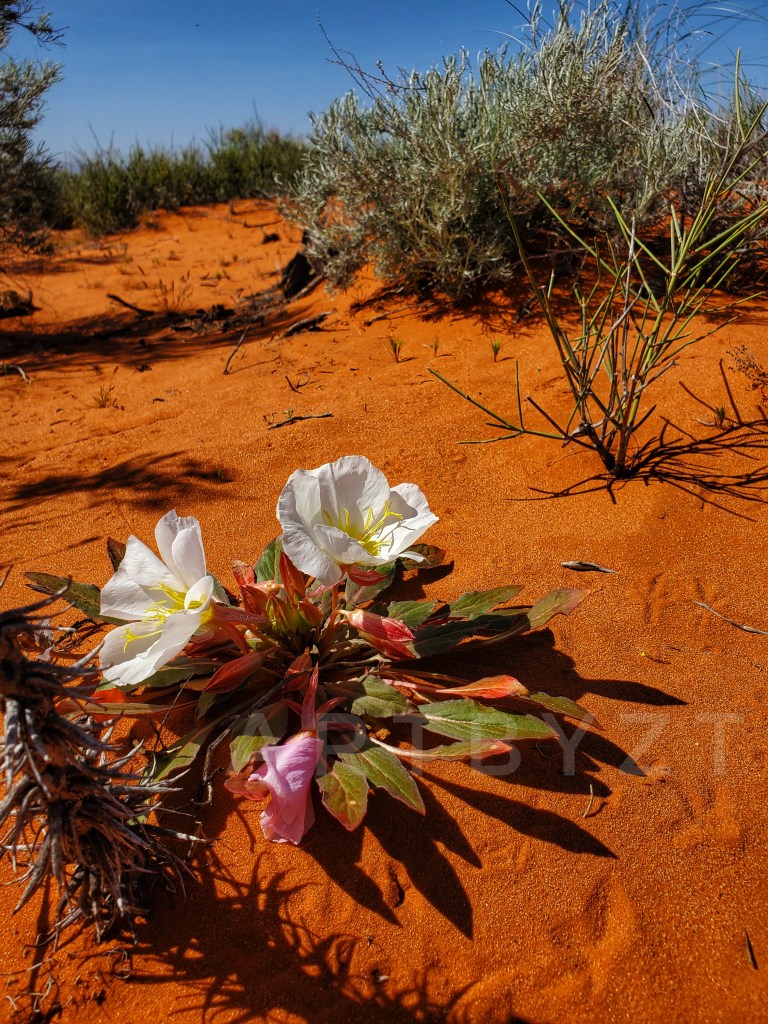
As for the hiking trails, it’s easier to spot shorter specimens like the evening primrose which stands out like a champ–showing white blossoms that look more like they belong in grandma’s garden than on the slopes of any canyon rim or sand dune.  The primrose is a dignified, important looking flower that won’t easily be ignored.  

Evening Primrose.  Photo by ZT.

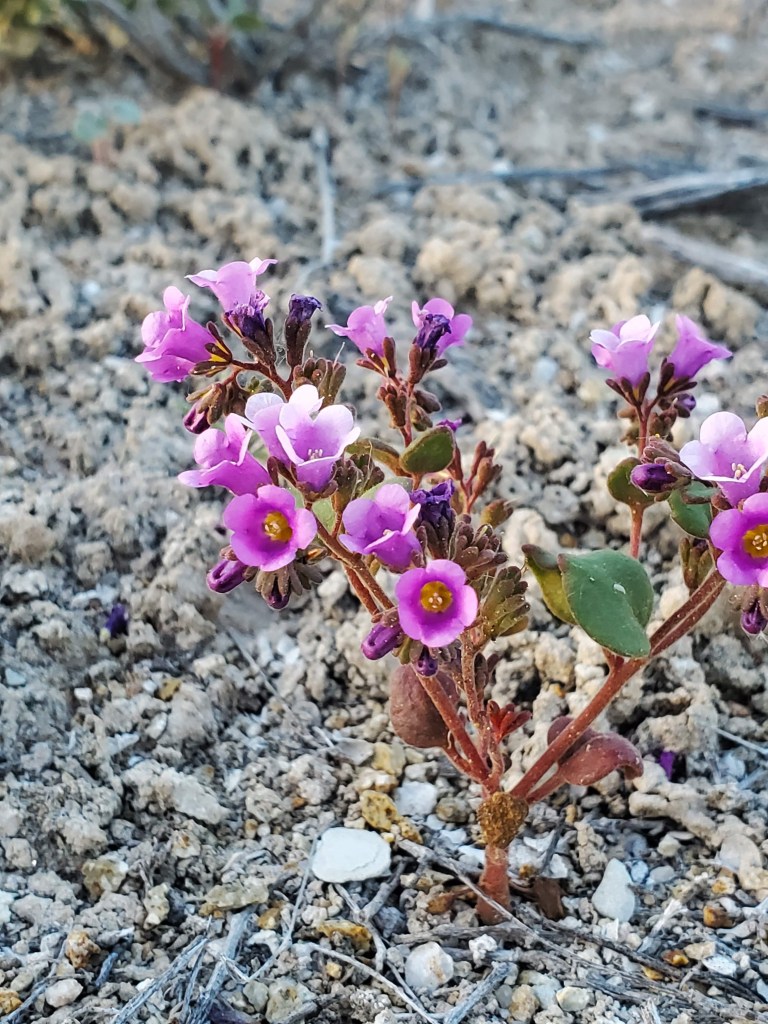
Picking a favorite among all these is tough, but there are few wildflowers more admirable to me than the California Blue Bell, Phacelia campanularia.  This little annual has rich, brightly colored blue buttons fixed on an attractive array of military green foliage.  Like the globemallow, it has rounded petals, but they splay out more than globemallow, giving the blossoms a star-like rather than cup-shaped form.  The blue bell is much shorter than globemallow and has a bushier outline, but it can brave some of the toughest soils in either the wilds or the garden.         

California Blue Bell. Photo by ZT.

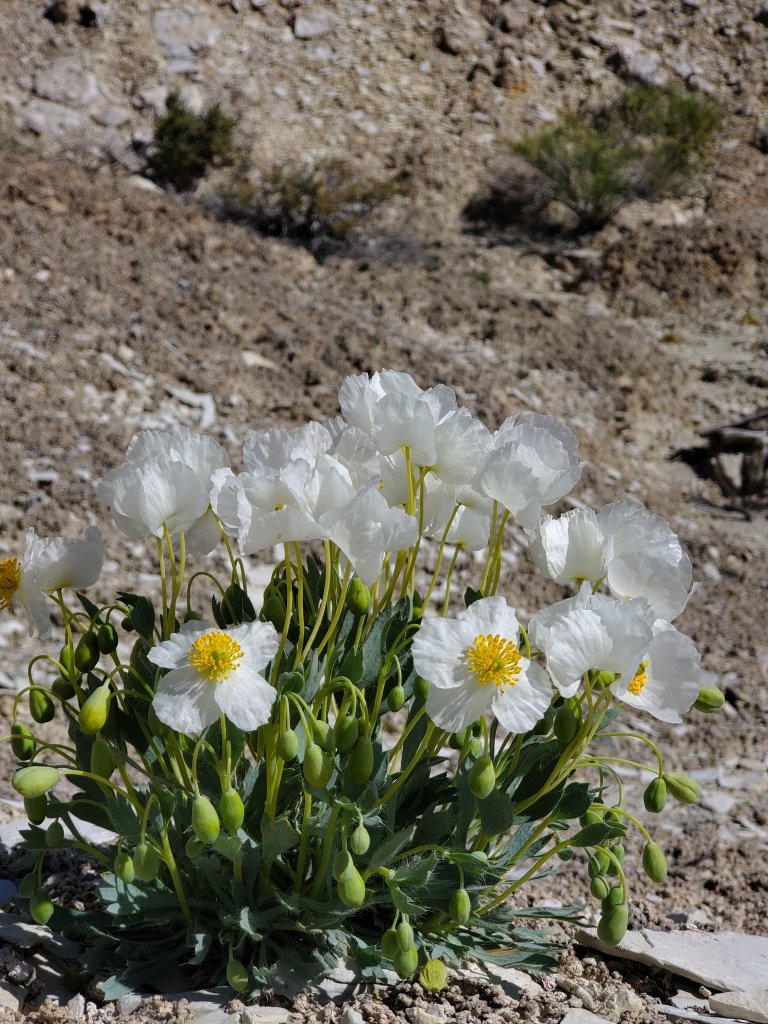
Near the border of Utah and Arizona, there’s a place operated by the Nature Conservancy called the White Dome Nature Preserve.  Here is the home of a special wildflower called the dwarf bear poppy and it’s the only place in the world where it can be found in the wild.  The dwarf bear poppy stands out magnificently on the harsh landscape, conjuring up the closest thing to what it might look like if there were flowers on the moon.  

Dwarf Bear Poppy. Photo by ZT.

I took a short hike through the preserve a few weeks ago.  Small patches of poppies could be seen here and there, not in large quantities and spreads, but metered out, with each plant having its own generous amount of personal space.  As I walked, the white blossoms and bright green stems seemed to both complement and contradict the surrounding gypsum hills.  And the rains had brought blessings here too, with more poppies on display than I had ever seen.    

Once again I was grateful for this melding of contrast and consistency so common in nature.  It was another landscape paradox, with the poppy as a defining feature–a kind of mascot for what makes wildflower season so special. 

The People I Admire

Daily writing prompt
List the people you admire and look to for advice…

In this age of technology and distraction, I admire the noticers and listeners the most.

I admire those who are busy and successful beyond belief, but can still take a moment for the person in the corner of the room. I admire those who can halt an engaging conversation for someone else to speak.

I admire the kid who can stop playing to help another kid who’s hurt; the professor who can stop professing to accomodate another viewpoint or the anxious words of a student. I admire a senior who can step away from years of experience to learn from a youth, and a youth who can appreciate experience.

I admire those who can take a walk in nature to see that life isn’t about noise and desperation, but about stillness and perseverance–who can consider the weight of the natural world compared to the thinness of modern life.

Someone who can take time to pet an attention-seeking dog. Someone whose ears perk up when quiet ones finally speak, who drop their phones when their children tell stories.

I admire someone willing to protect those who can’t protect themselves. Someone who can hear the quiet cries. Someone who looks for wildflowers; who can confront danger in a Walmart parking lot or go bird watching with equal proficiency. Someone who can hit hard and hug hard too.

These are the people I would look to for advice. The people who know how to put down the world and look away from it. Who can step out of their minds and lives long enough to look around and bring in. They are the ones who can fight and love and notice…and listen. They are the ones I admire.

“The real heroes anyway aren’t the people doing things; the real heroes are the people noticing things, paying attention.” – John Green.

Longing for Goblin Land

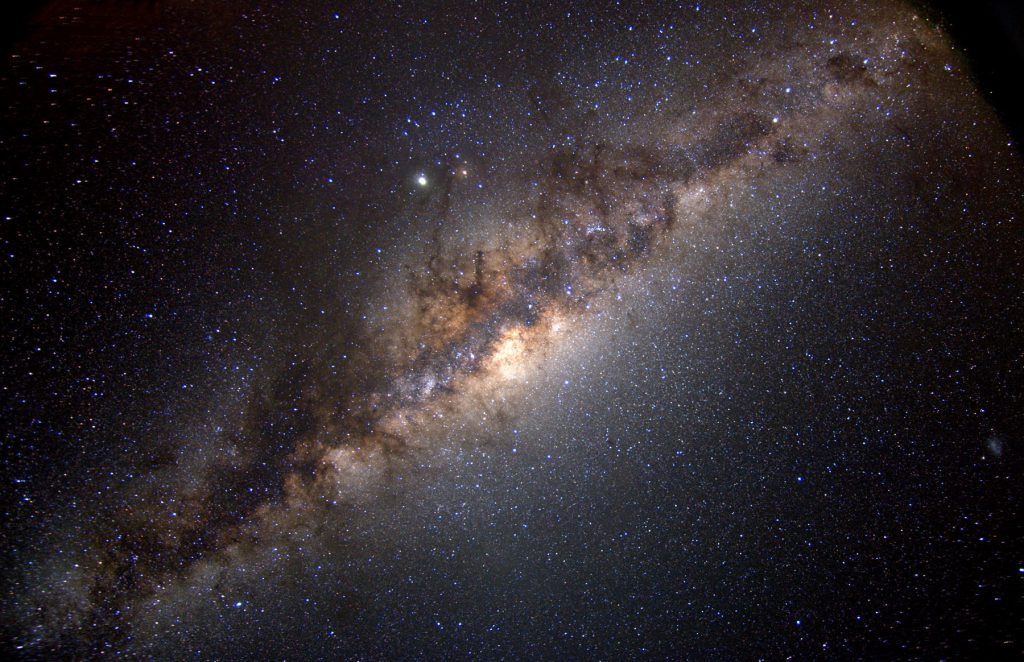
The stars never shined so bright as they did on that summer night more than 30 years ago.  Lying on my back in a sleeping bag, on the sandstone and without a tent, I stared up into a vast black sea, with floating diamonds, and for the first time felt hopelessly small in the universe and yet somehow still important.  

I was exhausted but couldn’t let myself fall asleep just yet–not with The Milky Way, Orion’s Belt, Ursa Major, the Big Dipper, hovering over me like an open book.    

While never much of an astronomer, I could still appreciate a sky without light pollution, especially compared to the washed out skies I knew from the big city.  I had learned about the constellations during field trips to Hansen Planetarium in Salt Lake.  But that dark, domed theater, made for city-slickers, was just a figment compared to the view of the galaxy before me now–layer upon layer in 3D.    

Milky Way, astronomy.com/news. NASA

Our Boy Scout troop had stopped here as part of a week-long trip to the San Rafael Swell in Southeastern Utah.  For dinner we had chili and salad, significant because, like the night sky, it was the first time I had truly appreciated vegetables.  It wasn’t easy for a teenage boy to admit, but that crisp lettuce, straight out of the cooler, was the remedy to a long day of parched travel. 

We’d been riding in a white Ford passenger van, pulling a trailer of float-tubes, mountain-bikes, Cheetos and sodas for about two days.  The van looked similar to the one neighborhood moms had warned us about back home–always driven by some scraggly, bearded man looking to lure kids with candy and then whisk them away forever.  But the stranger probably would’ve jumped out of this van at highway speeds, because it was already overloaded with loud and dusty boys, tweaked out on sugar.  

Looking back, I marvel at the planning and logistics that must’ve gone into this trip.  The real ones driving the van–those beleaguered scout leaders–had done a lot of thinking.  They were just part-time adventurers, willing to leave desk jobs in the city to take unruly boys into potential danger.  They’d have to endure terrible scrutiny these days to even try it.  Maybe rightly so.  

Of course none of it could’ve been considered “high adventure,” but such travel shouldn’t be underestimated.  Although I was young and naive, I questioned the trip myself.  Was there a plan to keep gas in the van when service stations were so few and far between?  Was there a medical plan?  Did we have enough water?  And, probably the most important question, did anyone really know where we were going out in this vast and fiery place?  

One of the leaders had experience traveling the area–something about riding around in a Jeep with his father, a geologist for the Bureau of Land Management.  I took comfort in this, but also considered how badly the rest of us would suffer without him.  What if he fell off a cliff or was taken by a rattlesnake?  No one had phones back then.  We could be stranded for days before someone found us.  In some ways I feared it.  In other ways I hoped for it…          

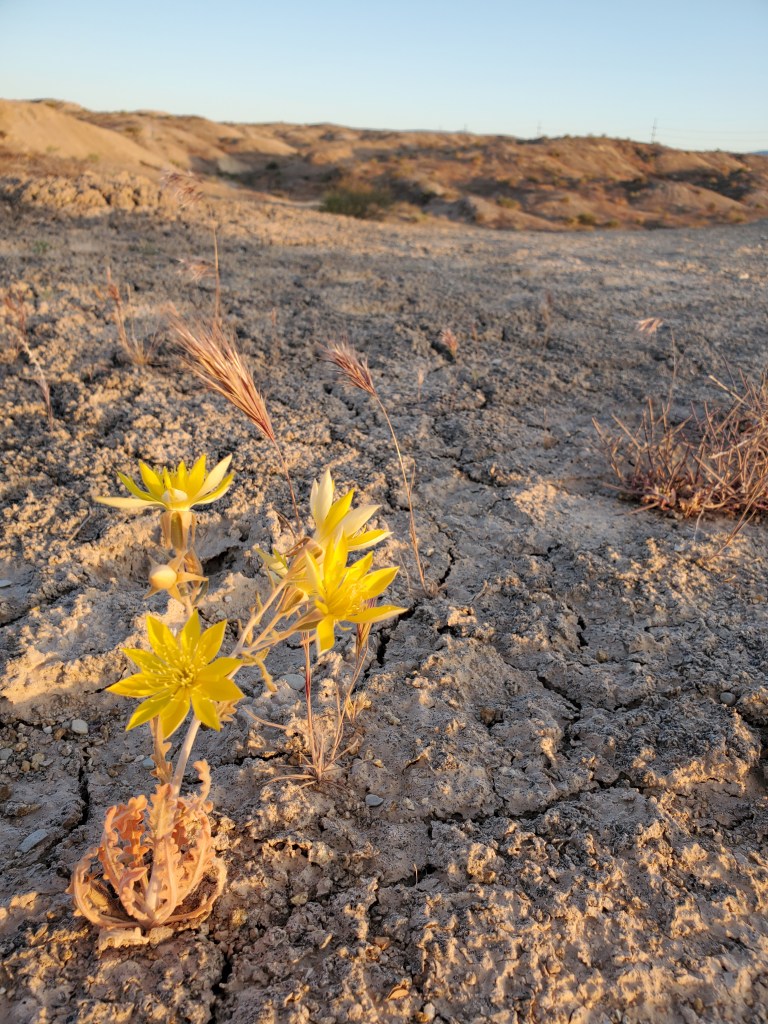
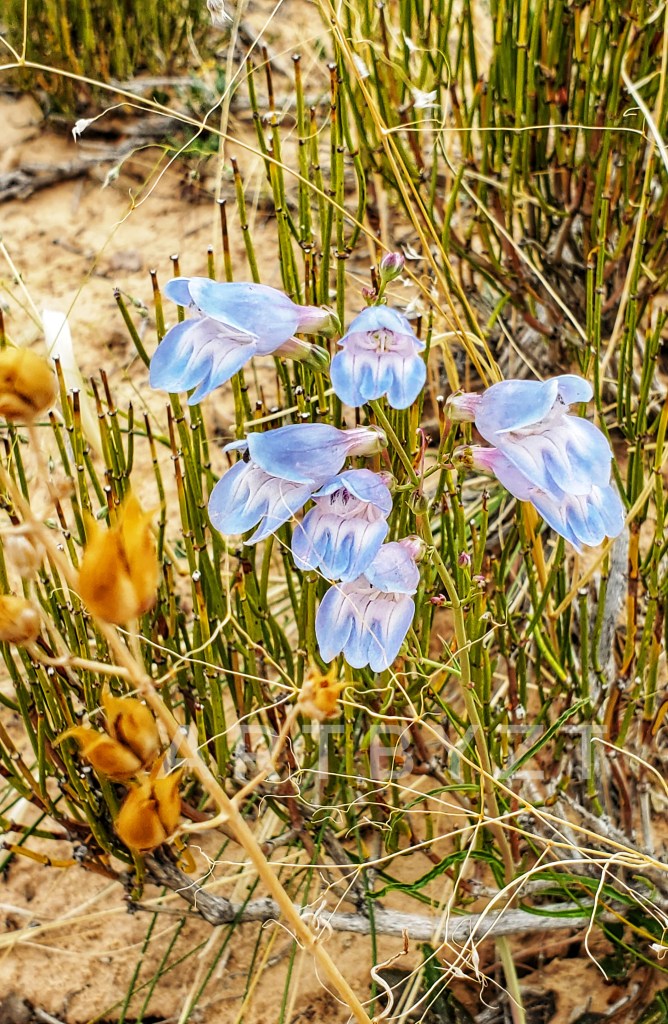
A desert wildflower. Photo by ZT.

The dirt road was part of a web of backcountry trails in Southeastern Utah, some of the most remote wilderness in the U.S, located near Capitol Reef National Park.  Dusty and washboarded, it had taken us parallel with the Swell and, if I can recall, toward the town of Hanksville.  

At one point we passed near the Muddy River, more of a creek actually, which meandered through a respectable pattern of hidden grottos and alluring canyons.  We’d spent the afternoon float-tubing here, at times walking on our hands while our legs trailed behind.      

I remember the water was cold (from June runoff) and sand went everywhere–up our shorts, between our toes and into our ears and hair.  We’d spent more time in the water than was probably smart, only crawling out when it seemed we were just short of hypothermia.  

Once out of the creek, however, we found sun-soaked boulders along the bank.  Lying on these, shivering and wet, it was possible to experience one of the greatest warming sensations known to man, enough to make us envy the lizards we’d sent scattering to get there.    

After drying off as much as possible, we were back on the road, singing songs, eating junk food and telling stories and jokes until we grew hoarse.  Sometimes we were forced back out of the van and compelled to ride our bikes ahead of it.  Something had been said among the adults about us needing fresh air and a “more direct experience with nature.”  

We complained, of course.  But any sense of punishment quickly vanished.  While riding our bikes, out from behind van windows, the spectacular views came to life.  

All along the plateau we could see the Swell–that long spine of cream-colored rock, rising up like a dragon from a desert ocean.  At times there were small groups of pronghorn antelope in the foreground, grazing on patches of grass between sagebrush.  Next to the road, we saw globemallow and sego lily and could hear the calls of meadowlarks nearby.  All of this was hard to capture in memory.  Yet one thing was certain: the Swell had caused my heart for the wilderness to swell.  

Pronghorn near the San Rafael Swell. Photo by ZT

Being the remnant of a giant rock dome some 75 miles long and 40 miles wide, the bulk of the Swell was formed by tremendous geologic pressure.  This upturned sandstone was then subjected to the subtle carvings of wind and water for millions of years.  

Because the region is more inaccessible than many of the national parks in Utah, the scenery is not just uniquely carved, but carries with it a real sense of solitude and distance.  Some of these wilderness areas are now more protected than they were back then, a contentious issue at times, but the reality of a world that is increasingly overrun.      

In 2019, Congress designated the San Rafael Swell Recreation Area (approximately 217,000 acres), as part of the John D. Dingell Jr. Conservation, Management and Recreation Act.  According to the BLM, the region features “magnificent badlands of brightly colored and wildly eroded sandstone formations, deep canyons, and giant plates of stone tilted upright through massive geological upheaval.”  (Bureau of Land Management, San Rafael Swell Recreation Area https://www.blm.gov/utso/grd/san-rafael-swell-rec-area )  

A few miles southeast of the Swell is a valley of hoodoos, called “goblins” because of the creature-like shapes they take under changing light.  It was here in Goblin Valley that we spent one of the last nights of the trip.   

Goblin Valley, Utah. Photo by ZT

After dinner, we played a game of “steal the flag.”  What could be wrong with eight boys turned loose into a labyrinth, guided only by the moon–to run through, climb over, fall from or even be crushed by boulders?  Despite the risks, this daring permission kept us running and hiding until well after sundown.     

When “quiet time” arrived in the park, we took a head count and then staggered and giggled our way back to camp–an open slab overlooking the valley.  From this moonlit viewpoint, I could see just how many goblins lived here, clustered together in a mass of gnarled stone like a geological mosh pit.  

Now that the party had died down, the stillness that descended was heavy and sublime.  Wearily, we unrolled our sleeping bags.  I was puzzled at first, maybe even troubled, to see that we didn’t have tents; I’d never slept out in the open before.  What about snakes, spiders, scorpions…thunderstorms?  

Too tired to care for long, I unzipped the sleeping bag and wedged myself inside.  Thankfully I rolled onto my back before finally closing my eyes.  And there it was, the night sky that would eventually send me into sleep and into dreams that could be no more vivid than all I had already seen.

Sunset and Outstretched Arms

The path along the Virgin River was flooded a few nights ago as we surveyed the route from the top of the trailhead. Ample rains had left mud and about eight inches of water for nearly a hundred yards along the trail.  

It wasn’t exactly an impasse, just cause for pause.  We decided to press on, knowing that hiking isn’t just about sightseeing and meandering.  Sometimes there should be some struggle–some challenge to overcome.     

And, despite the mud and a few dangerous looking Chollas close to the trail, it was settling down to be a beautiful evening.  The surrounding canyon walls reflected the lowering sunlight which sparked colors among a few patches of early wildflowers and whitewashed the log jams and snags of deadwood along the floodplain.     

Joshua blooms in the Virgin River Gorge

Soon we were making our way around the dirty puddles, over higher ground, sidestepping carefully at times between creosote and a barbed wire fence.  Once back on the BLM trail headed south, my eyes raised from my feet to the skies.  All around us was the settling peace of the desert at dusk.

As I often do while hiking, I thought about the natural (and unnatural) history of the scene.  The Virgin River Gorge descends on a fairly steep grade from Southwestern Utah through the Arizona Strip and toward Las Vegas.  It’s mostly known as a route for Interstate 15, whose footprint was blasted out of the rocks in 1973 as one of the costliest projects in the history of the Interstate system. 

“The Gorge,” as it’s often called, is notorious among locals for having steep curves, brainless drivers and a seemingly never-ending barrage of construction projects.  The highway has claimed many lives over the years and has witnessed some of the most catastrophic vehicular events imaginable.  That narrow stretch of sky between canyon rims has too often ushered the passing of both smoke and souls.    

Yet, for all its treachery, the highway is nestled inside a respectable display of desert beauty.  The canyon walls, some of them hundreds of feet high, are supported by steep sloping foothills peppered with fallen boulders and hemmed by long deep ravines.  

The Gorge lies on the upper reaches of the Mojave Desert at its eastern border with the Colorado Plateau.  Accordingly, it has some of the typical vegetation of the Basin and Range Province of Nevada and California merging with the scrub and forbidding rockscapes of the higher elevations.  This meeting of biomes, as is true in other places on earth, leads to an array of biodiversity.

On this night the young grasses were greener than perhaps I’d ever seen them, thanks to several “atmospheric rivers” that have brought record amounts of rain.  Yucca, creosote, willow and the occasional barrel cactus all punctuated the slopes.  

Yet the tallest and most prominent plants were the Joshua trees, which happened to be in bloom.  Often in clusters, with spiny leaves on “outstretched” branches, they could be seen as sentinels over the landscape–that is if attaching such human characteristics can be tolerated.  

I’m not the first one to do so.  As the early pioneers described, the Joshua trees and their outstretched branches were like arms open in supplication to weary travelers of which there have been many.  For 10,000 years, in fact, people have been traveling and inhabiting the gorge.  The first were Mammoth hunters and later the Desert Culture people who lived a nomadic hunter-gatherer lifestyle here.  

Between 200 A.D. and 700 A.D., the Anasazi, part of the pueblo culture of the Colorado Plateau, carried on farming in the area.  Later the Paiutes settled and returned to a more Desert Culture lifeway.  

In 1776 two Franciscan friars, Fray Francisco Atanasio Dominguez and Sylvestre Velez de Escalante, entered the region with a small party searching for a route between New Mexico and the California missions.  Their effort fell short and they turned back to Santa Fe.

Later, in the early 1800’s, the route sought by the friars became a reality for fur trappers and Mexican traders who blazed what became known as the Old Spanish Trail.  The famous explorer Jedediah S. Smith passed through the gorge in September of 1826, followed by others like him. 

From 1830 to 1848, Mexican traders from Santa Fe and Taos took annual caravans through the area.  However, it appeared they usually made a more manageable crossing using the Beaver Dam Mountains (now the route for Old Highway 91) some 15 miles to the north.  

At about the same time as the trader caravans, the Mormons began to use the same route to connect growing communities in Utah with goods in Los Angeles.  (Courtesy BLM kiosk at Virgin River Gorge Recreation Area “A Thoroughfare of History”)  

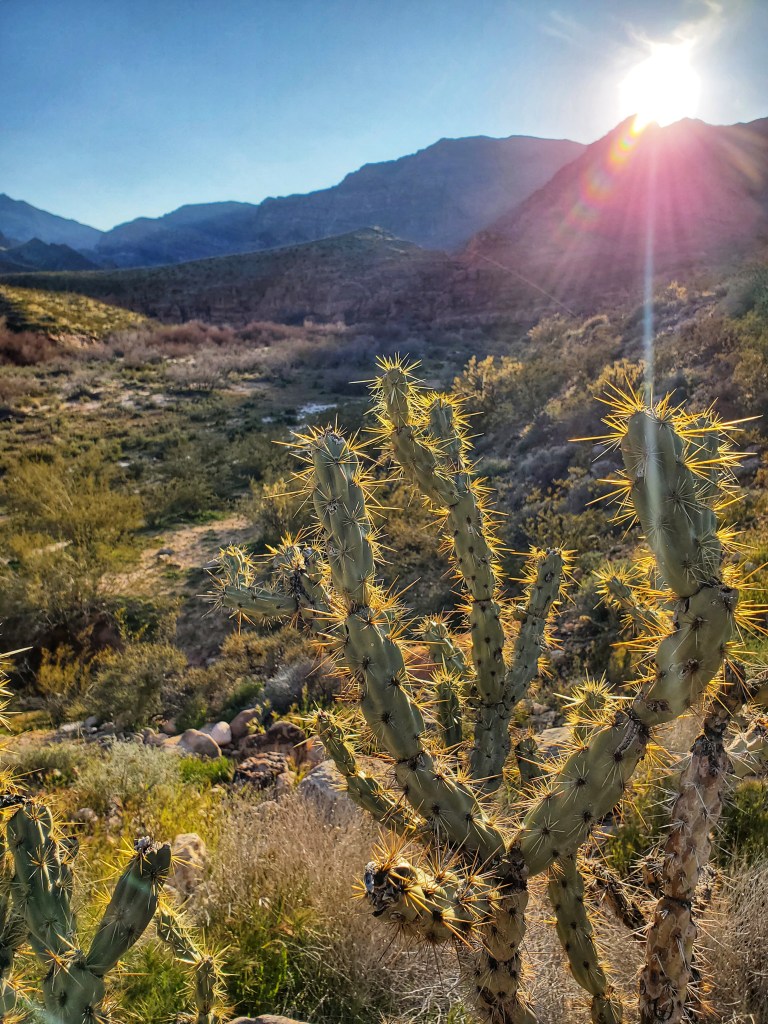
A trailside cactus filters sunlight

There was no sign of pioneers or Franciscan friars this evening.  And thankfully we were down below the highway where modern day traders and vacationers now rumbled past.  Like hobbits sneaking toward Mordor, we pressed on while the automotive orcs marched on the pass above us.  

Sometimes we could hear the traffic, which undoubtedly diminished our peace.  But it was still possible to ignore the sounds and focus more on what the canyon really is and has been all along: the home of a river, a stairway of sorts from the high tables of red rock into the frying pan of the Mojave–a place where wildlife displays its fortitude against the elements and man.       

When we reached the riverbank, we found the trail impassable due to spring runoff.  Swift currents of brown silty water rushed downward toward Lake Mead.  While not very deep, the speed with which the water passed was enough to prevent any further travel.  

This time turning back, we followed a sandbank to the East, through stands of willow still bare from the long winter.  In the sand we saw the tracks of insects and animals.  Stink bugs, centipedes, the long rear paws and small forepaws of jackrabbits.  There was the occasional lizard track mingled with the doodles, love notes and sand castles from children who had come before.    

After returning to the trailhead, we decided to take one more hike to the top of the hill above the campground.  The blooms on the Joshua trees were more ornate here and from this vantage we could see just how tightly the highway and surrounding rock had been fit together.  

As the sun dipped below the horizon, it cast a purple light over the canyon rim.  The bats were beginning their nightly flittering, hopefully, to eat their fill.  It was an open and glowing ending to a muddy and obstructed start.  A reminder that journeys, like places, can change.  And sometimes they can be entirely different all at once.    

An Ode to Quail

Out of failure comes a greater appreciation

We weren’t always on good terms.  I tried to shoot one once, during a boyhood attempt at being a hunter.  Gripping the stock of my Daisy lever-action BB gun, I went down on my stomach into the dry grass. 

The little covey was pecking through sunlit fallen leaves, like miniature rhinos, with their thick necks and plump gray bodies moving in sync.  It was a beautiful autumn afternoon in the foothills of the Wasatch Mountains.  After about five minutes of crawling, stopping, and squinting down the gun sights, I was getting closer.  

It’s a strange thing about hunting.  The adrenaline.  Even though the prey wasn’t dangerous, it somehow still felt dangerous.  My pulse was up as I pulled myself along, trying not to snap a twig.  So far, they seemed oblivious to my presence.  

Gambel’s Quail at Phoenix Zoo. Photo by ZT.

When quail get startled, they flush from cover into the sky and branches above, sending a wave of surprise back to the observer.  I’d felt it a few times before, while hiking along, just enjoying the scenery, or daydreaming about girls.  Suddenly there would be a burst of beating wings from the understory in front of me, and it would be some time before the hair on the back of my neck returned to normal.   

I was getting closer now.  My long sleeve shirt was damp at the elbows, and it was getting harder to keep quiet.  Both arms were aching from holding up the gun and alternately pushing it through the grass ahead of me.  

And they were constantly moving, these crazy quail, with bobbing heads and a quick, almost robotic, movement that made it very hard to keep sights on them for long.  I wanted to take a trophy male if possible, as most hunters do.  With black and white face markings, head plumes (topknot), and reddish feathers fading into gray, the males were unique.  They were also bigger, of course, which meant more to eat.  I was planning to take one home and cook it up, while my family watched in awe.  

Finally, I got my chance.  One of the males paused in the sunlight.  I’d already chambered a BB, so I snicked off the safety and pulled the trigger.

“Didn’t even flinch,” I thought.  I worked the lever-action again as quietly as possible and chambered another round.  Plank, I fired again.  Nothing.  

“Was my aim really that bad?”  I knew I could easily shoot a camouflaged grasshopper from 20 feet.  These birds were much bigger.  I tried again, this time firing directly into the tightest group in hopes of hitting one of them, any of them, trophy be damned.  To my amazement, nothing again.

Although I was inexperienced, I knew that chances come and go quickly for hunters.  It was no different now.  Just one of them caught a sound of me and up into the sky they all went.  There was no raised heartbeat now, only sinking disappointment.  I got up and checked the ground where they’d been, just to be sure.  

During the walk home, I questioned what I’d been doing anyway, and began to worry that I might’ve just wounded one of them and it would now be left to a slow death, gasping in the dirt until some lucky predator could come along.  

I didn’t want to be that kind of hunter anyway, causing unnecessary suffering.  But there was no way to follow them up, no blood trail or tamped-down grass.  When quail are gone they’re just gone.  And I wasn’t even sure I’d hit one.  Maybe, after all that crawling and squinting, I was just a bad shot.  Or maybe the gun had failed me, lobbing the BB like a grenade instead of sending it straight, which it had been known to do occasionally.  Regardless, I had failed.

Seeing them better

A few years later I learned that using a BB gun to hunt quail (as opposed to a shotgun with birdshot) would’ve been difficult to say the least.  And eating them probably wouldn’t have been the delicious experience I had hoped for, certainly not with my prehistoric cooking skills.  There was no guarantee it would’ve tasted good at all, being so exotic.  I tried eating pickled quail eggs on a salad once at a fancy Brazilian restaurant, and the experience left me questioning whether I’d ever eat eggs again.

The California Quail

There are two subspecies of quail that have very similar appearances in the West.  The California Quail occupies the coastal regions including Oregon and Washington, with range stemming into parts of northern Nevada and Utah.  The Gambel’s Quail, its southwestern cousin, ranges through southern Utah and Arizona into Mexico.  The Gambel’s has a lighter gray plumage with more reddish tones on its wings and less distinctive black scales on its belly.          

While there are many scholarly descriptions of quail, I found the Cornell Lab’s to be the most eloquent:  

“The California Quail is a handsome, round soccer ball of a bird with a rich gray breast, intricately scaled underparts, and a curious, forward-drooping head plume. Its stiffly accented Chi-ca-go call is a common sound of the chaparral and other brushy areas of California and the Northwest. Often seen scratching at the ground in large groups or dashing forward on blurred legs, California Quail are common but unobtrusive. They flush to cover if scared, so approach them gently.”  

(The Cornell Lab,https://www.allaboutbirds.org/guide/California_Quail/overview#)  

Making Amends

Nowadays quail are just for watching.  Their distinctive presence occupies some of the best types of habitat–where cleared land meets shrubs or treeline.  It could be said that quail announce where the wilderness begins.  Somehow their calls reassure me there’s still variety in the landscape.  

But they aren’t just ambassadors of the chaparral.  They’re, thankfully, a backyard and garden bird too, often seen scuttling across roadways or patios from one shrub to another on those blurred legs and sometimes blurred wings.  Like special warfare operators, quail can utilize both terrestrial and aerial environments. 

One thing for sure is they like to move quickly, and they often can’t be watched for long without binoculars. 

Either way, it’s just enough time to be satisfied with the sight, and to be reminded of how life rolls on, from old failures to new understandings.