For the Love of Lizards: A World Lizard Day Tribute

Masters of terrain, they enliven the desert like no other animal can

On a bright summer morning, near the 4th of July, I was navigating foxtails and prickly pear cactus, making my way toward an outdoor amphitheater in a small community park in Southeastern Utah.

The heat was tolerable, partly thanks to a nearby canyon which still had shade, a small creek, and a latent pool of overnight air. After about 500 feet of meandering, the dirt path soon diffused across several big slabs of sandstone, speckled with patches of green and orange lichens.

Perhaps it was luck, or just that my eyes were already primed for color, but I happened to notice something especially vivid and alive, some 30 feet away. Whatever it was, it was perched near the back row of the amphitheater. 

As I moved closer, I began to see the big collared lizard, warming himself in the sun.
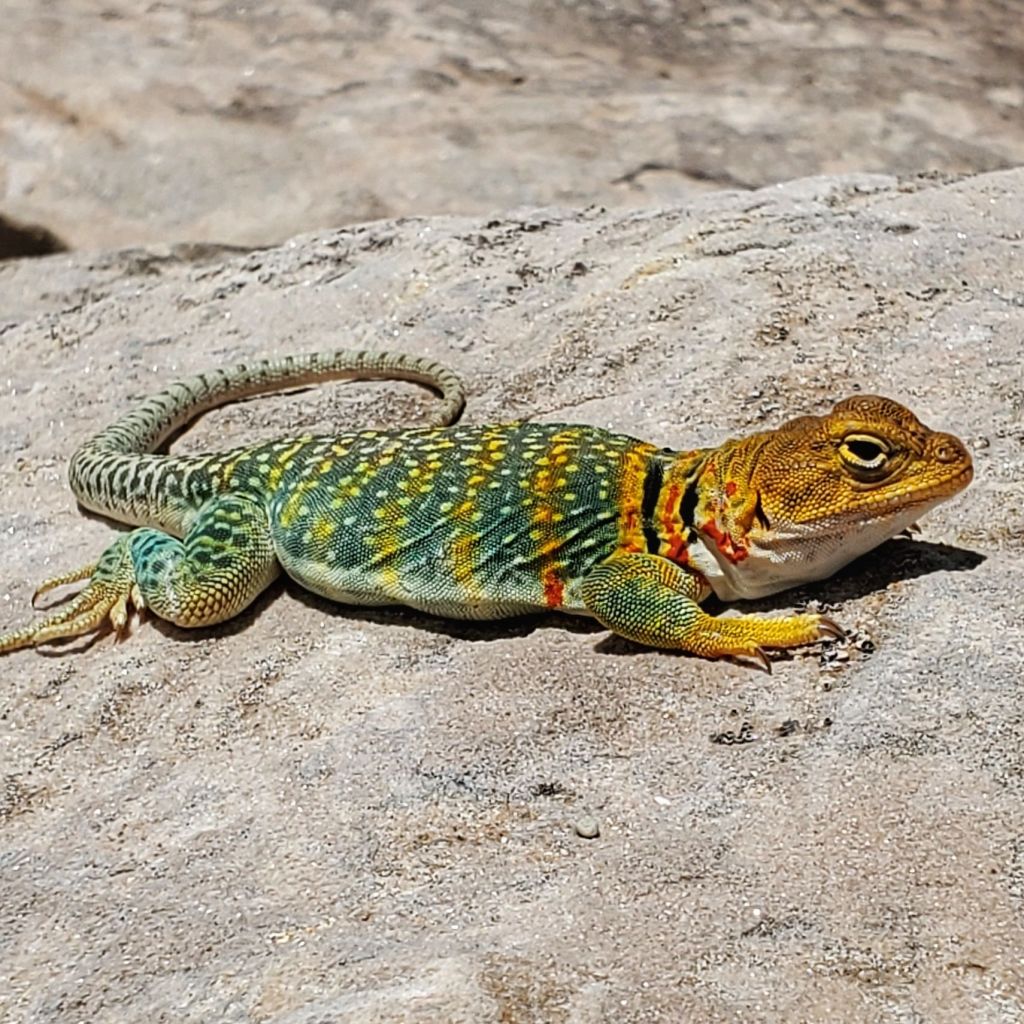
The Eastern Collared Lizard. Photo by Z. Toad. (all rights reserved)

For a moment he watched me as I stood watching him. He seemed very self-assured, but as soon as he realized my presence he was gone in a blur, disappearing into a nearby crevice. It was as good a find as any reptile enthusiast could ask for. I was struck, perhaps more than ever, by the vibrancy of his markings that, in isolation, seemed more tropical than temperate.

I’ve had many such encounters with wild lizards over the years. It’s true that sometimes they can seem ubiquitous, commonplace or even pesky, but their prominence on the landscape has made them fine subjects for art and literature and historical accounts of all kinds.

John Muir, while following sheep through the Sierra, made sure to include lizards in his warm and detailed observations:

“Lizards of every temper, style, and color dwell here, seemingly as happy and companionable as the birds and squirrels…”
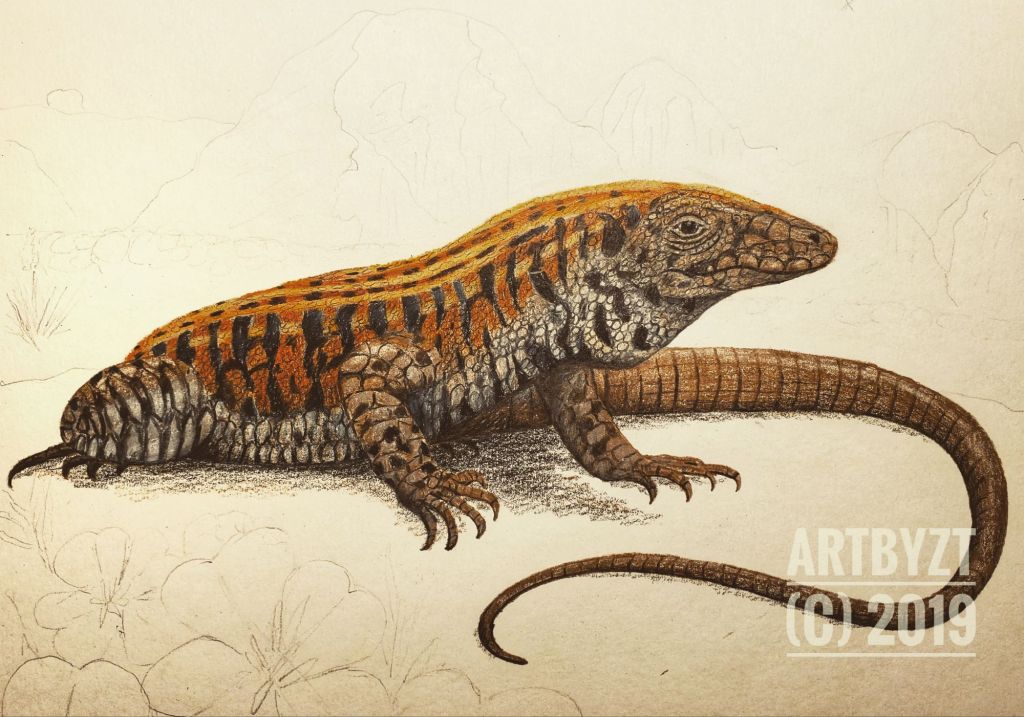
“The Whiptail” by Z.Toad, colored pencil.

Edward Abbey, too, seemed to find lizards philosophically useful, and as much a part of the wilderness as the rocks and sunshine:

“The lizard sunning itself on a stone would no doubt tell us that time, space, sun, and earth exist to serve the lizard’s interests; the lizard too, must see the world as perfectly comprehensible, reducible to a rational formula. Relative to the context, the lizard’s metaphysical system seems as complete as Einstein’s.”

As for Muir’s depiction of lizards as being “companionable,” I would say this is true, at least in my experience with Western species. Even the dreaded Gila Monster is mostly a gentleman, unless provoked. (Disclaimer: Do not attempt to prove this.)

In younger days, lizard catching was a regular part of my outdoor adventures. But it was a real challenge to actually get them in your hands. Most lizards seem to have speed woven into their DNA, and the hotter it gets, the faster they become.

Still, when captured, lizards usually relax dramatically, and only occasionally will they attempt to bite, and then for just a moment or two. Releasing a lizard back into the wild is easy, and sometimes they will even pause to say goodbye before jetting off.

A striped whiptail becomes docile after capture. Photo by Z. Toad.

As for hunting techniques, I started out catching lizards like a caveman would, using just my hands or maybe my hat. But after more failures than victories, I eventually learned to use tools, including butterfly nets and fishing poles with the line tied into little slip knots at the end. Bucket traps were an option too, but riskier and probably illegal.

Not all of it was fun and games, however. After several solid captures, I realized that many lizards detach all or part of their tails while trying to escape. And there was something about seeing an amputated lizard tail, bloodied and wriggling on the ground, that made the pastime seem less appealing.

These days, I mostly just capture photographs if possible. Lizards are very keen about spotting any movement, being always wary of predators, so it’s easier to get close to them if you move very slowly.

One of the hardest species to photograph are the whiptails, because they, in particular, are full of speed, and their movements are almost bionic. They rarely hold any position for long. Despite this, they’re probably my favorite desert lizard, because they look so much like bigger monitor lizards–or even miniature Komodo Dragons. In reality, whiptails are actually more closely related to the Tegu, a large lizard native to South America.

A blue-bellied plateau fence lizard oversees his kingdom in a Ponderosa forest. Photo by Z. Toad.

Whiptails occupy riparian areas, where willow, rabbitbrush and tamarisk are common. They are also the kings of dry riverbeds and trailside clumps of Gambel’s oak and Manzanita. Their presence can often be detected by their distinctive tracks in the sand, which consist of long continuous lines flanked by tiny claw marks.

As for the species at higher elevations (mostly the fence lizards) they can be more muted in color and athleticism, but they are respectable nonetheless. They can often be spotted on the tops of boulders, doing little push-ups as a type of signal to other lizards or even intruders.

One of the most amazing of the desert dwelling lizards is the Chuckwalla. It’s a species that was often considered food for native peoples in the Southwest. Chuckwallas are known for their ability to inflate their bodies inside rock cavities, wedging themselves inside and making it nearly impossible for a predator to remove them.

A fence lizard blends in with the surroundings, including fallen leaves. Photo by Z. Toad

With all the charming, and sometimes bizarre, antics that lizards can display, it’s easy to agree they deserve recognition. And this week, August 14th, is World Lizard Day, so it just made sense to write something about them. Ultimately, lizards are so admirable because they seem unwilling to go unnoticed, especially when compared to other reptiles, like bashful snakes.

As for the collared lizard, he certainly seemed to think he was something special that day. And how could he not when his territory included an amphitheater of all things? In retrospect, it was a perfectly poetic setting–the best of backdrops for one of nature’s true performers.

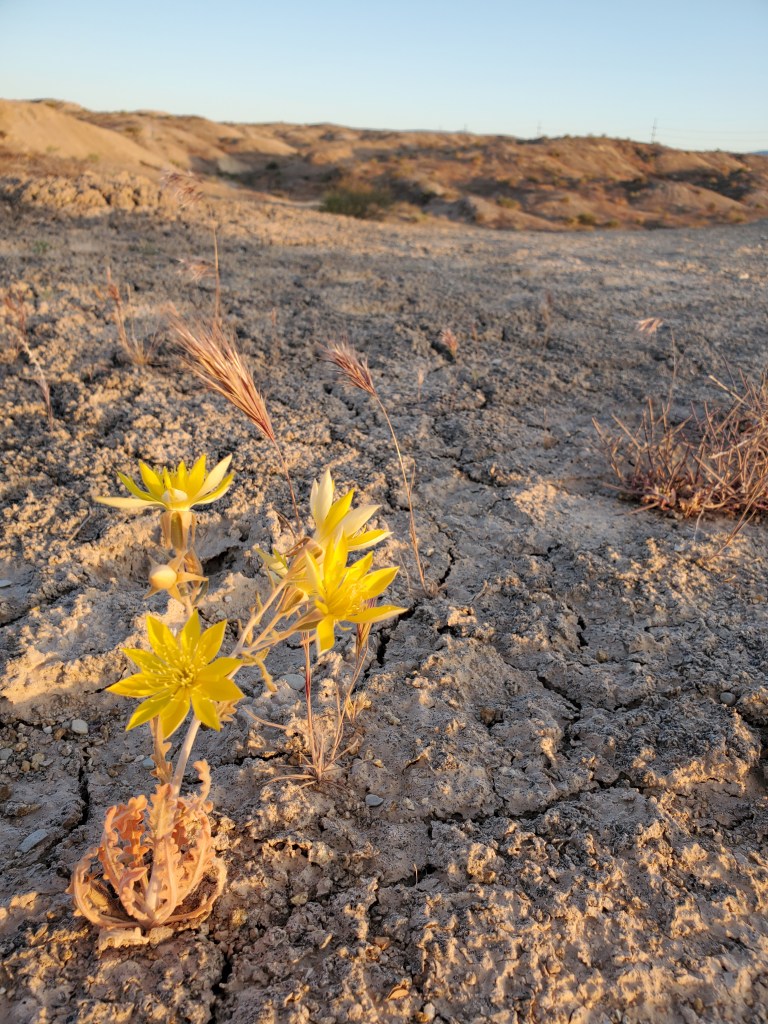
Will El Niño end the Southwest’s megadrought? | Live Science

https://www.livescience.com/planet-earth/weather/will-el-nino-end-the-southwests-megadrought

The remnant of a Pacific hurricane roared up the Baja a few weeks ago, soaking much of California and parts of Nevada with record rainfall and leaving mud-slides and flooding in its wake. This comes on the heels of an exceptionally wet winter.

For the past two nights a powerful storm system, packing drenching rain and a lightning show that would’ve made Zeus proud, crashed and strobed its way through parts of Nevada, Arizona and Utah. It’s been a healthy monsoon season.

This pattern is beginning to appear sustained and could be part of a larger “mega-drought” busting event. Only time will tell, but so far the difference is real.

Hand Over Heart for Wildflower Season

Near Willow Beach, Arizona, along U.S. 93, the basin and range transforms into a series of rolling hills gently cascading to the Southwest.  In mid-March we found ourselves passing these hills, on a trip from Las Vegas to Phoenix, and were blessed to see the beginnings of one of the most amazing payoffs of a rainy season in the desert: yellow wildflowers were popping up all over, giving a rich accent to already green grasses.

It was like a scene from a Dr. Seuss book, a rare sight during these past few years of brutal drought.  As the rains have soaked deep, many long-dormant seeds have been revived.  The result has been a wildly more colorful desert landscape, with visuals that are exceptionally bold and captivating.

Petals and volcanic rock.  Photo by ZT.

When it comes to finding a scientific explanation for all this, however, the view starts to get a little more subdued, even dusty.  As if driven by some unspoken imperative, some have rushed to define it: 

“A superbloom is a rare desert botanical phenomenon in California and Arizona in which an unusually high proportion of wildflowers whose seed have lain dormant in desert soil germinate and blossom at roughly the same time.  The phenomenon is associated with an unusually wet rainy season.”

(https://en.wikipedia.org/wiki/Superbloom#:~:text=A%20superbloom%20is%20a%20rare,an%20unusually%20wet%20rainy%20season.)

These categorizations often seem too obvious and even hopelessly subjective.  So much of it depends on where you happen to be and when you happen to be there.  And there’s been a fair amount of debate as to whether this wildflower season actually constitutes a “super bloom” at all.  To be sure, it can be more “super” in some places than others.

Ultimately, any hard definitions fall short. The simple truth is there’s just a lot of wildflowers out in the desert right now, and every minute spent worrying about what the phenomenon is or isn’t, is a minute lost to see them while they last.  And they won’t last forever; that’s not how the desert works.   

Wildflowers at dusk. White Dome Nature Preserve. Photo by ZT.

Thankfully, the act of viewing wildflowers these days requires minimal effort.  Under usual conditions, they are subdued, often hidden between larger, less colorful plants.  Because of this, they aren’t always readily visible from roadways.  But this year, the volume is cranked up so much that it’s possible to get a good view, even while staring lazily out the windows of a car.  

To help matters even more, roadsides often provide even more water to the soil because rainwater runs off the edges of the pavement where it soaks into more concentrated areas of disturbed soil.  This is why some roads have thicker vegetation (wildflowers included) along pavement edges than might be growing even five or ten feet out into the landscape.     

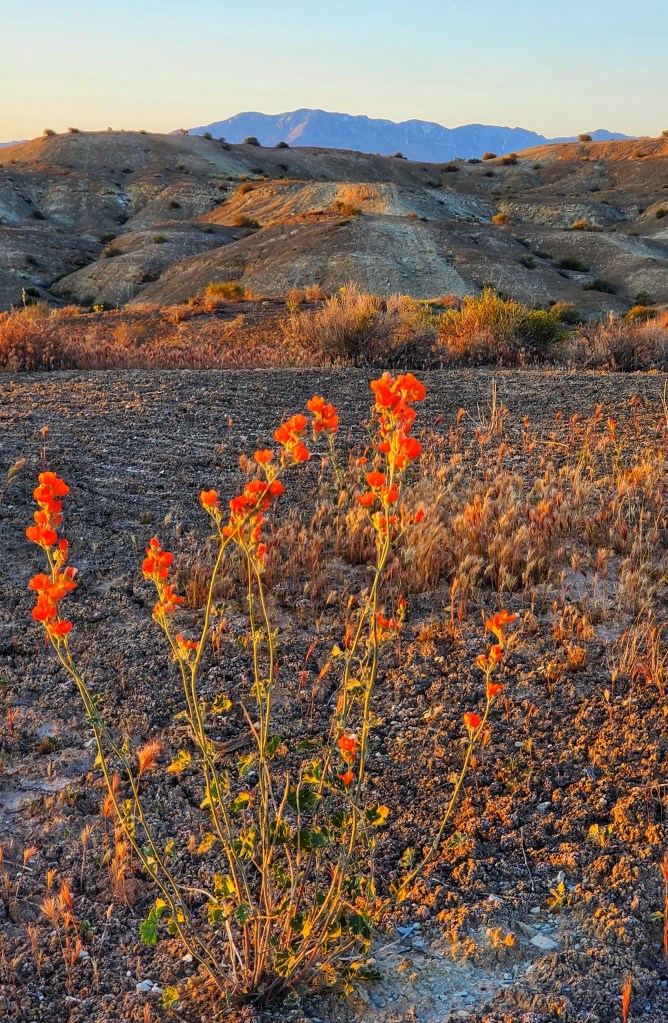
Globemallow, in particular, is making a solid showing along roadsides this year.  Of course, it’s equally at home between backcountry boulders, and along footpaths, with its delicate looking pale stems and orange, cup-shaped blossoms that close at night and open toward the rising sun.  Globemallow’s height, compared to other flowers, gives it more prominence on the landscape like a highway construction sign.  

Globemallow in the desert.  Photo by ZT.

Along U.S. 191, near Canyonlands National Park, there are currently great fields of globemallow, stretching across the horizon like orange reflections on a sea of green.  Try as you might, casual photos won’t do it justice.  You can only hope to enjoy the scenery in the moment and maybe, if you’re lucky, capture some of it in memory.

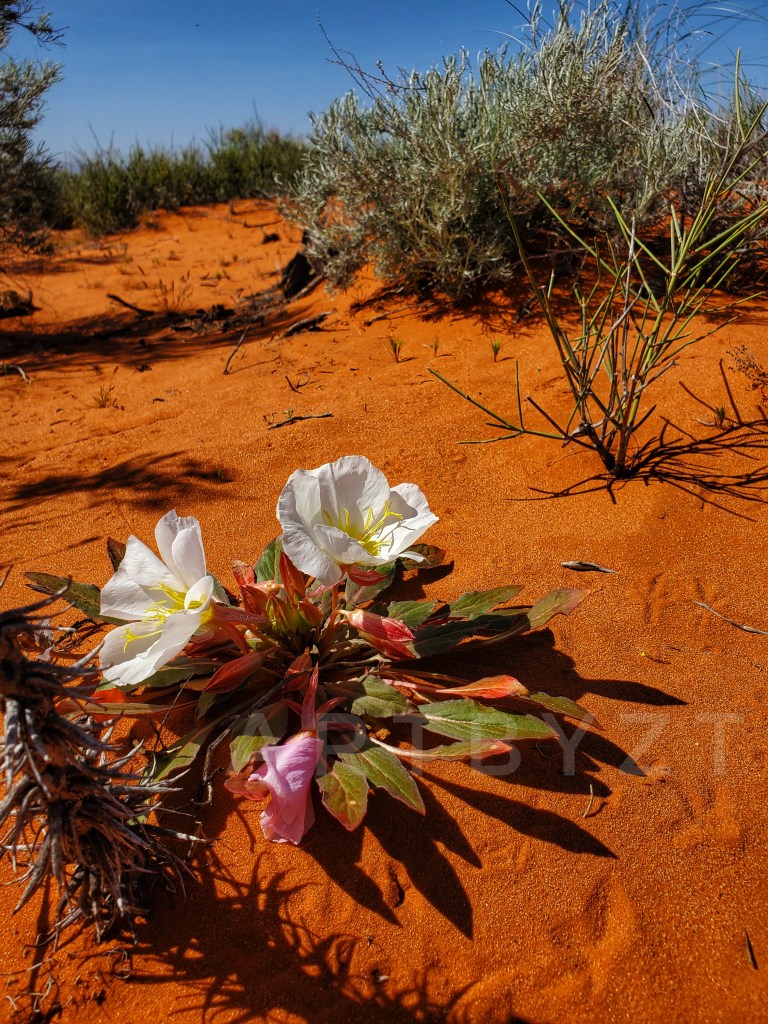
As for the hiking trails, it’s easier to spot shorter specimens like the evening primrose which stands out like a champ–showing white blossoms that look more like they belong in grandma’s garden than on the slopes of any canyon rim or sand dune.  The primrose is a dignified, important looking flower that won’t easily be ignored.  

Evening Primrose.  Photo by ZT.

Picking a favorite among all these is tough, but there are few wildflowers more admirable to me than the California Blue Bell, Phacelia campanularia.  This little annual has rich, brightly colored blue buttons fixed on an attractive array of military green foliage.  Like the globemallow, it has rounded petals, but they splay out more than globemallow, giving the blossoms a star-like rather than cup-shaped form.  The blue bell is much shorter than globemallow and has a bushier outline, but it can brave some of the toughest soils in either the wilds or the garden.         

California Blue Bell. Photo by ZT.

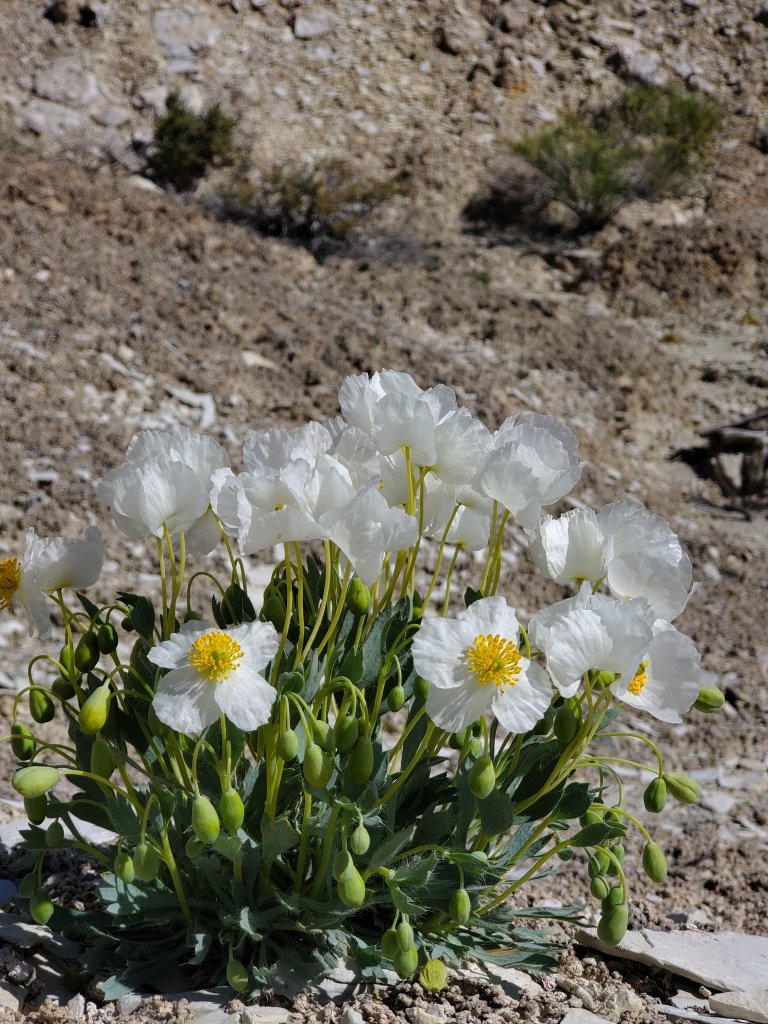
Near the border of Utah and Arizona, there’s a place operated by the Nature Conservancy called the White Dome Nature Preserve.  Here is the home of a special wildflower called the dwarf bear poppy and it’s the only place in the world where it can be found in the wild.  The dwarf bear poppy stands out magnificently on the harsh landscape, conjuring up the closest thing to what it might look like if there were flowers on the moon.  

Dwarf Bear Poppy. Photo by ZT.

I took a short hike through the preserve a few weeks ago.  Small patches of poppies could be seen here and there, not in large quantities and spreads, but metered out, with each plant having its own generous amount of personal space.  As I walked, the white blossoms and bright green stems seemed to both complement and contradict the surrounding gypsum hills.  And the rains had brought blessings here too, with more poppies on display than I had ever seen.    

Once again I was grateful for this melding of contrast and consistency so common in nature.  It was another landscape paradox, with the poppy as a defining feature–a kind of mascot for what makes wildflower season so special. 

Longing for Goblin Land

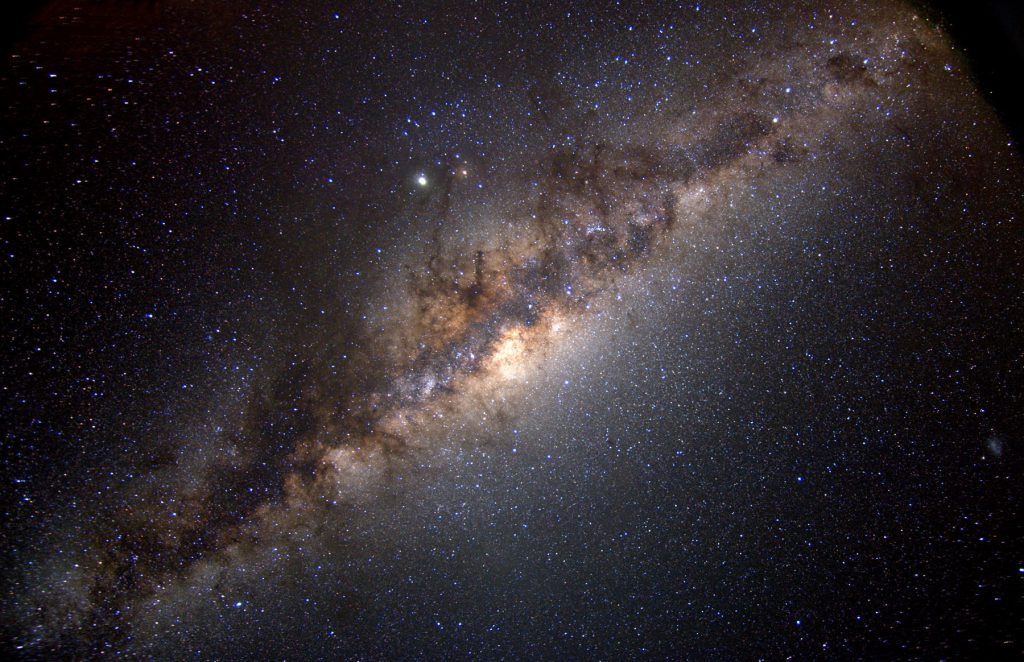
The stars never shined so bright as they did on that summer night more than 30 years ago.  Lying on my back in a sleeping bag, on the sandstone and without a tent, I stared up into a vast black sea, with floating diamonds, and for the first time felt hopelessly small in the universe and yet somehow still important.  

I was exhausted but couldn’t let myself fall asleep just yet–not with The Milky Way, Orion’s Belt, Ursa Major, the Big Dipper, hovering over me like an open book.    

While never much of an astronomer, I could still appreciate a sky without light pollution, especially compared to the washed out skies I knew from the big city.  I had learned about the constellations during field trips to Hansen Planetarium in Salt Lake.  But that dark, domed theater, made for city-slickers, was just a figment compared to the view of the galaxy before me now–layer upon layer in 3D.    

Milky Way, astronomy.com/news. NASA

Our Boy Scout troop had stopped here as part of a week-long trip to the San Rafael Swell in Southeastern Utah.  For dinner we had chili and salad, significant because, like the night sky, it was the first time I had truly appreciated vegetables.  It wasn’t easy for a teenage boy to admit, but that crisp lettuce, straight out of the cooler, was the remedy to a long day of parched travel. 

We’d been riding in a white Ford passenger van, pulling a trailer of float-tubes, mountain-bikes, Cheetos and sodas for about two days.  The van looked similar to the one neighborhood moms had warned us about back home–always driven by some scraggly, bearded man looking to lure kids with candy and then whisk them away forever.  But the stranger probably would’ve jumped out of this van at highway speeds, because it was already overloaded with loud and dusty boys, tweaked out on sugar.  

Looking back, I marvel at the planning and logistics that must’ve gone into this trip.  The real ones driving the van–those beleaguered scout leaders–had done a lot of thinking.  They were just part-time adventurers, willing to leave desk jobs in the city to take unruly boys into potential danger.  They’d have to endure terrible scrutiny these days to even try it.  Maybe rightly so.  

Of course none of it could’ve been considered “high adventure,” but such travel shouldn’t be underestimated.  Although I was young and naive, I questioned the trip myself.  Was there a plan to keep gas in the van when service stations were so few and far between?  Was there a medical plan?  Did we have enough water?  And, probably the most important question, did anyone really know where we were going out in this vast and fiery place?  

One of the leaders had experience traveling the area–something about riding around in a Jeep with his father, a geologist for the Bureau of Land Management.  I took comfort in this, but also considered how badly the rest of us would suffer without him.  What if he fell off a cliff or was taken by a rattlesnake?  No one had phones back then.  We could be stranded for days before someone found us.  In some ways I feared it.  In other ways I hoped for it…          

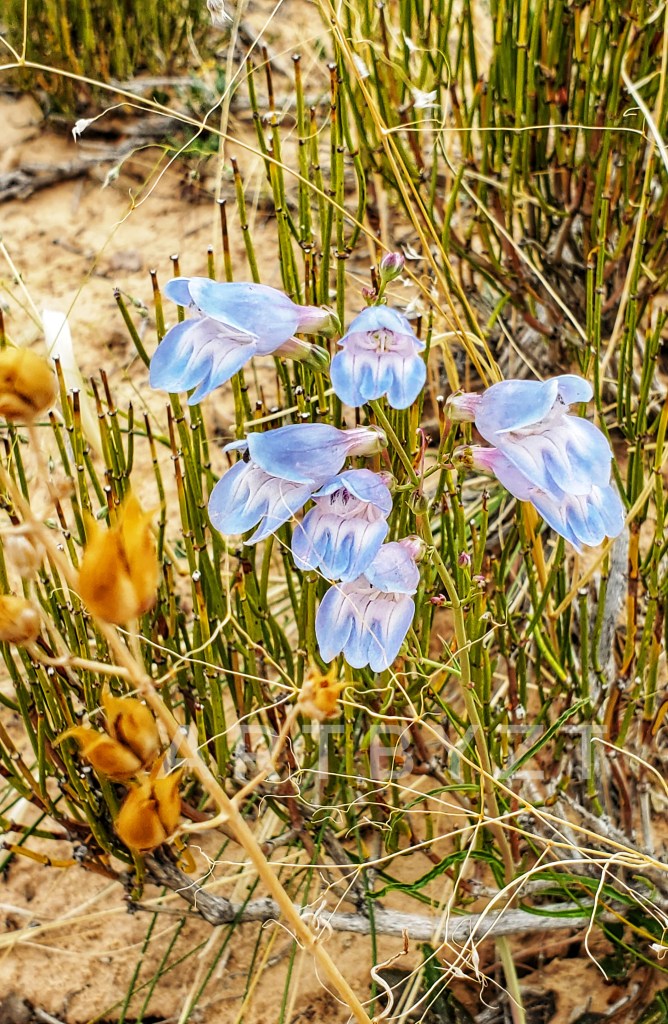
A desert wildflower. Photo by ZT.

The dirt road was part of a web of backcountry trails in Southeastern Utah, some of the most remote wilderness in the U.S, located near Capitol Reef National Park.  Dusty and washboarded, it had taken us parallel with the Swell and, if I can recall, toward the town of Hanksville.  

At one point we passed near the Muddy River, more of a creek actually, which meandered through a respectable pattern of hidden grottos and alluring canyons.  We’d spent the afternoon float-tubing here, at times walking on our hands while our legs trailed behind.      

I remember the water was cold (from June runoff) and sand went everywhere–up our shorts, between our toes and into our ears and hair.  We’d spent more time in the water than was probably smart, only crawling out when it seemed we were just short of hypothermia.  

Once out of the creek, however, we found sun-soaked boulders along the bank.  Lying on these, shivering and wet, it was possible to experience one of the greatest warming sensations known to man, enough to make us envy the lizards we’d sent scattering to get there.    

After drying off as much as possible, we were back on the road, singing songs, eating junk food and telling stories and jokes until we grew hoarse.  Sometimes we were forced back out of the van and compelled to ride our bikes ahead of it.  Something had been said among the adults about us needing fresh air and a “more direct experience with nature.”  

We complained, of course.  But any sense of punishment quickly vanished.  While riding our bikes, out from behind van windows, the spectacular views came to life.  

All along the plateau we could see the Swell–that long spine of cream-colored rock, rising up like a dragon from a desert ocean.  At times there were small groups of pronghorn antelope in the foreground, grazing on patches of grass between sagebrush.  Next to the road, we saw globemallow and sego lily and could hear the calls of meadowlarks nearby.  All of this was hard to capture in memory.  Yet one thing was certain: the Swell had caused my heart for the wilderness to swell.  

Pronghorn near the San Rafael Swell. Photo by ZT

Being the remnant of a giant rock dome some 75 miles long and 40 miles wide, the bulk of the Swell was formed by tremendous geologic pressure.  This upturned sandstone was then subjected to the subtle carvings of wind and water for millions of years.  

Because the region is more inaccessible than many of the national parks in Utah, the scenery is not just uniquely carved, but carries with it a real sense of solitude and distance.  Some of these wilderness areas are now more protected than they were back then, a contentious issue at times, but the reality of a world that is increasingly overrun.      

In 2019, Congress designated the San Rafael Swell Recreation Area (approximately 217,000 acres), as part of the John D. Dingell Jr. Conservation, Management and Recreation Act.  According to the BLM, the region features “magnificent badlands of brightly colored and wildly eroded sandstone formations, deep canyons, and giant plates of stone tilted upright through massive geological upheaval.”  (Bureau of Land Management, San Rafael Swell Recreation Area https://www.blm.gov/utso/grd/san-rafael-swell-rec-area )  

A few miles southeast of the Swell is a valley of hoodoos, called “goblins” because of the creature-like shapes they take under changing light.  It was here in Goblin Valley that we spent one of the last nights of the trip.   

Goblin Valley, Utah. Photo by ZT

After dinner, we played a game of “steal the flag.”  What could be wrong with eight boys turned loose into a labyrinth, guided only by the moon–to run through, climb over, fall from or even be crushed by boulders?  Despite the risks, this daring permission kept us running and hiding until well after sundown.     

When “quiet time” arrived in the park, we took a head count and then staggered and giggled our way back to camp–an open slab overlooking the valley.  From this moonlit viewpoint, I could see just how many goblins lived here, clustered together in a mass of gnarled stone like a geological mosh pit.  

Now that the party had died down, the stillness that descended was heavy and sublime.  Wearily, we unrolled our sleeping bags.  I was puzzled at first, maybe even troubled, to see that we didn’t have tents; I’d never slept out in the open before.  What about snakes, spiders, scorpions…thunderstorms?  

Too tired to care for long, I unzipped the sleeping bag and wedged myself inside.  Thankfully I rolled onto my back before finally closing my eyes.  And there it was, the night sky that would eventually send me into sleep and into dreams that could be no more vivid than all I had already seen.

King of the Borderlands

How a wandering jaguar changed my view of the wilderness

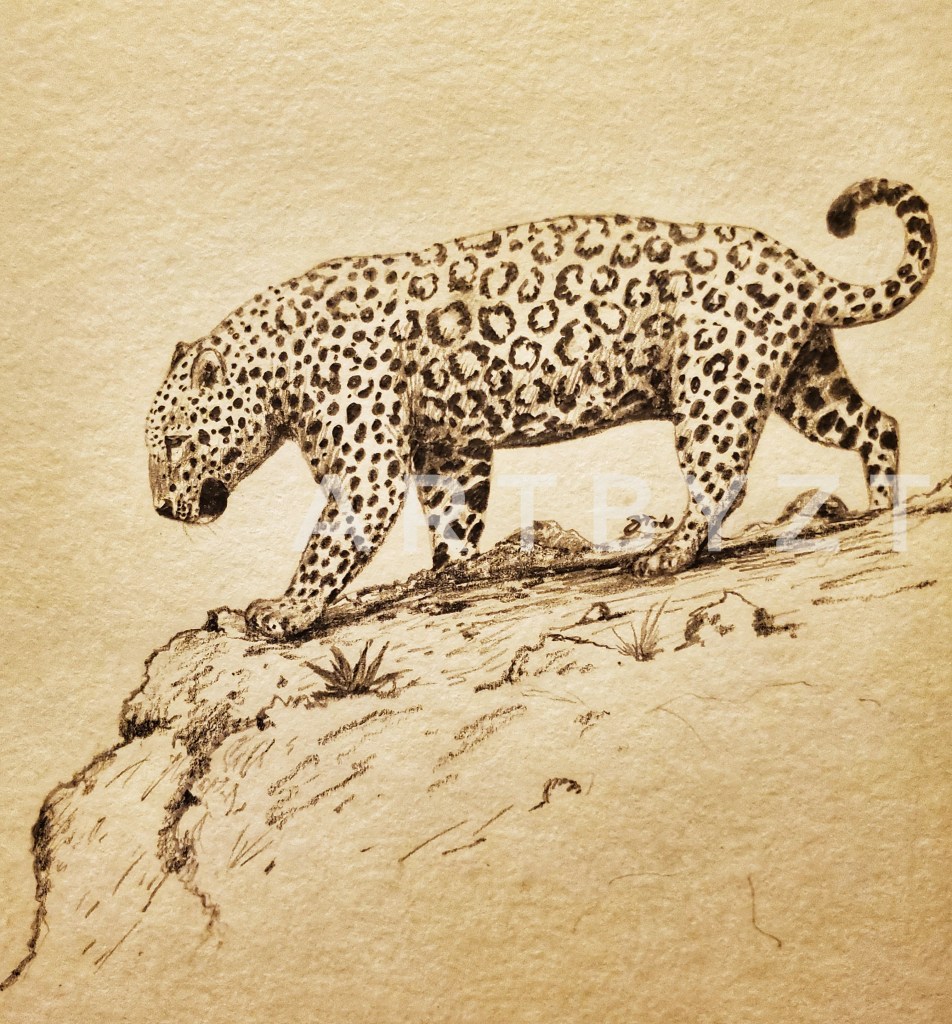
The desert jaguar…Artbyzt.

Natural history rarely turns on a dime, but the story of El Jefe the jaguar wasn’t fit for any stale museum halls.  It was hard to believe at first.  A jaguar.  In the mountains of southern Arizona.  The trail cam footage on the evening news was captivating, and quickly gained a wide audience.  

I’ve always been fascinated by big cats and the mystery and power they bring to the wilderness.  But while watching El Jefe, as he deftly crossed a creek bed in the Santa Rita Mountains, I realized my perception of big cat habitat was cliche and needing expansion.  It was no longer just about Indian jungles, African savannahs, or the Pantanal of South America–the kind of steamy, verdant, places that are the pride of National Geographic photographers.  It was time to consider places lonelier, drier, closer to home.

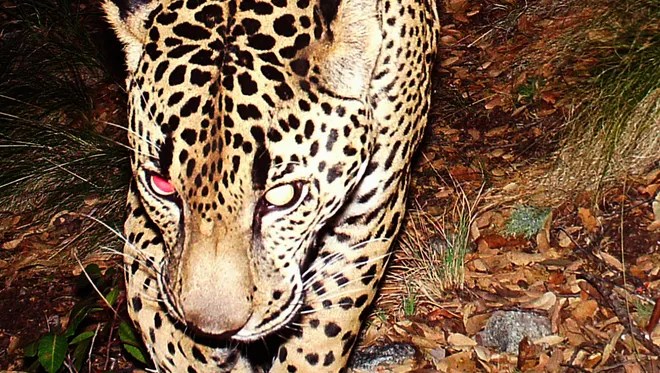
“He’s got swagger,” I thought, while watching the clip again.  “El Jefe…a perfect name for the boss of the desert.”  He was definitely going somewhere as he softly stepped over logs and scrubby branches–his eyes like fire and muscles rippling under amber, spotted fur. 

I’m not a frequent visitor, but the U.S. / Mexico border doesn’t seem like the place to hang out.  It’s troubled there by all accounts, a crossing place for desperate people and criminals–home to impassable walls, and surrounded by unforgiving, often deadly terrain.  Water is probably less than scarce, meaning food for any large predators would be scarce too. 

And (as was clear in the video) jaguars need room to roam and they need contiguous habitat, which means the border represents a significant obstacle to conservation efforts.   

Was he looking for a mate?  Escaping an enemy?  Or just on patrol, like a junkyard dog checking the edge of his lot?  What was his last meal?  What would be the next?  A javelina?  A bird?  A snake? 

For some time, after being spotted, treed and then photographed by a cougar hunter and his daughter in 2011, El Jefe was documented on trail cameras in the area, with the most public images being released in 2012 by the U.S. Fish and Wildlife Service.  He was given his name by students at a middle school in Tucson, and was believed to be part of the northernmost breeding population of jaguars in Mexico.  He was important scientifically because he represented one of the only known specimens of jaguar since the species was believed to have been extirpated in the United States.  El Jefe (jaguar), Wikipedia, 18 January 2023, https://en.wikipedia.org/wiki/El_Jefe_(jaguar))

There was another, less public, account of a jaguar named Macho B who had been haunting the area in the years prior.  And there have probably been others to cross since.  But it was El Jefe who became a kind of mascot for amplifying the possibility of jaguars someday living and thriving again in the U.S. 

El Jefe, Conservation CATalyst And Center For Biological Diversity. Arizona Sonora News, Posted 17 February 2017

It’s said that jaguars are the third largest of the big cat species, which added another layer of intrigue.  Desert climates rarely support large animals, let alone large carnivores.  When it comes to the desert, scarce resources usually account for slow, modest growth in plants and everything that depends on them.  

To be clear, there are other cats living in improbable places around the world.  There are lions on the beaches and dunes of Namibia, leopards on the high cliffs and in the seaside canyons of Oman, tigers in the cold forests of Siberia.  And, of course, there’s the snow leopard which seems to be on its own level of habitat utilization. 

Leopards, especially, are good at adapting to atypical habitats, as is the case with the urban leopards of New Delhi.  Since jaguars in Mexico are on the fringe of their habitat to begin with, Arizona could probably be considered ultra-fringe.  

But part of what makes El Jefe’s story so inspiring is that it only appears unnatural on a knee jerk level.  In reality, it’s a perfect story from a landscape where surprises are built in. 

It could also be said that the personality of the desert is inherently subdued, independent and resistant to categorization.  El Jefe, and the other jaguars who crossed the border before him, and undoubtedly since, mirror these traits.  Obviously, there won’t be a large population of them in the American desert anytime soon, if ever.  But, for now, just appreciating the outliers is good enough for me.      

Maybe I’ll travel there someday, to those remote southern mountains, knowing that my chances of seeing a wild jaguar will be next to nothing.  But at least I could get closer, and see some of where this story took place, all the while hoping for more to come. 

Then, as the fierce daylight fades into purple skies and sparkling stars, I could get goosebumps as I glance back into the scrub.  I could move closer to the fire, maybe sip on a mug, and picture that big, inspiring cat, making his rounds, out in the darkness and the rocks.