
How a wandering jaguar changed my view of the wilderness
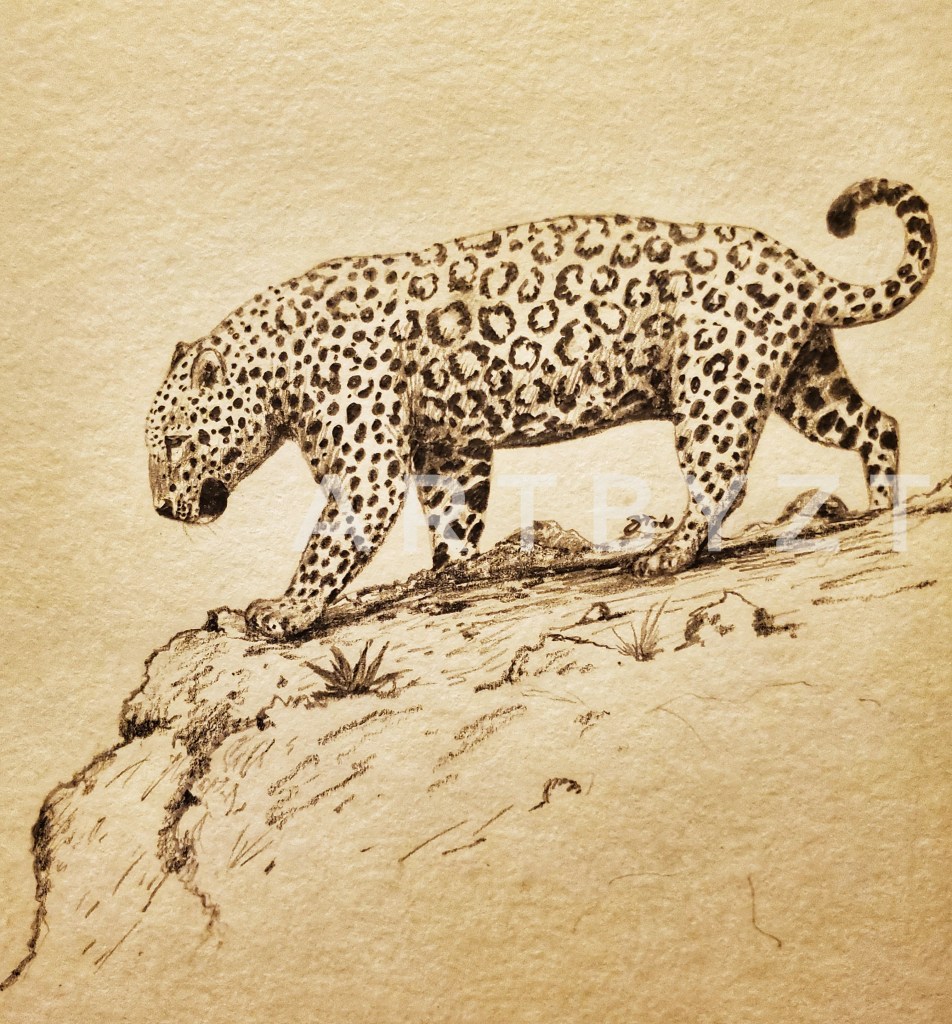
Natural history rarely turns on a dime, but the story of El Jefe the jaguar wasn’t fit for any stale museum halls. It was hard to believe at first. A jaguar. In the mountains of southern Arizona. The trail cam footage on the evening news was captivating, and quickly gained a wide audience.
I’ve always been fascinated by big cats and the mystery and power they bring to the wilderness. But while watching El Jefe, as he deftly crossed a creek bed in the Santa Rita Mountains, I realized my perception of big cat habitat was cliche and needing expansion. It was no longer just about Indian jungles, African savannahs, or the Pantanal of South America–the kind of steamy, verdant, places that are the pride of National Geographic photographers. It was time to consider places lonelier, drier, closer to home.
“He’s got swagger,” I thought, while watching the clip again. “El Jefe…a perfect name for the boss of the desert.” He was definitely going somewhere as he softly stepped over logs and scrubby branches–his eyes like fire and muscles rippling under amber, spotted fur.
I’m not a frequent visitor, but the U.S. / Mexico border doesn’t seem like the place to hang out. It’s troubled there by all accounts, a crossing place for desperate people and criminals–home to impassable walls, and surrounded by unforgiving, often deadly terrain. Water is probably less than scarce, meaning food for any large predators would be scarce too.
And (as was clear in the video) jaguars need room to roam and they need contiguous habitat, which means the border represents a significant obstacle to conservation efforts.
Was he looking for a mate? Escaping an enemy? Or just on patrol, like a junkyard dog checking the edge of his lot? What was his last meal? What would be the next? A javelina? A bird? A snake?
For some time, after being spotted, treed and then photographed by a cougar hunter and his daughter in 2011, El Jefe was documented on trail cameras in the area, with the most public images being released in 2012 by the U.S. Fish and Wildlife Service. He was given his name by students at a middle school in Tucson, and was believed to be part of the northernmost breeding population of jaguars in Mexico. He was important scientifically because he represented one of the only known specimens of jaguar since the species was believed to have been extirpated in the United States. El Jefe (jaguar), Wikipedia, 18 January 2023, https://en.wikipedia.org/wiki/El_Jefe_(jaguar))
There was another, less public, account of a jaguar named Macho B who had been haunting the area in the years prior. And there have probably been others to cross since. But it was El Jefe who became a kind of mascot for amplifying the possibility of jaguars someday living and thriving again in the U.S.
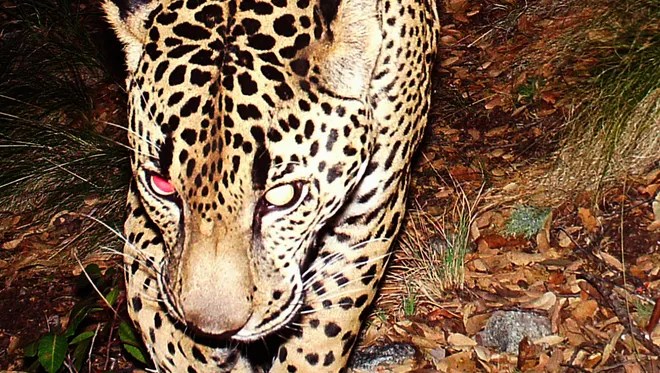
It’s said that jaguars are the third largest of the big cat species, which added another layer of intrigue. Desert climates rarely support large animals, let alone large carnivores. When it comes to the desert, scarce resources usually account for slow, modest growth in plants and everything that depends on them.
To be clear, there are other cats living in improbable places around the world. There are lions on the beaches and dunes of Namibia, leopards on the high cliffs and in the seaside canyons of Oman, tigers in the cold forests of Siberia. And, of course, there’s the snow leopard which seems to be on its own level of habitat utilization.
Leopards, especially, are good at adapting to atypical habitats, as is the case with the urban leopards of New Delhi. Since jaguars in Mexico are on the fringe of their habitat to begin with, Arizona could probably be considered ultra-fringe.
But part of what makes El Jefe’s story so inspiring is that it only appears unnatural on a knee jerk level. In reality, it’s a perfect story from a landscape where surprises are built in.
It could also be said that the personality of the desert is inherently subdued, independent and resistant to categorization. El Jefe, and the other jaguars who crossed the border before him, and undoubtedly since, mirror these traits. Obviously, there won’t be a large population of them in the American desert anytime soon, if ever. But, for now, just appreciating the outliers is good enough for me.
Maybe I’ll travel there someday, to those remote southern mountains, knowing that my chances of seeing a wild jaguar will be next to nothing. But at least I could get closer, and see some of where this story took place, all the while hoping for more to come.
Then, as the fierce daylight fades into purple skies and sparkling stars, I could get goosebumps as I glance back into the scrub. I could move closer to the fire, maybe sip on a mug, and picture that big, inspiring cat, making his rounds, out in the darkness and the rocks.
 The Desert Toad