Some Thoughts on Trail Running

Combining scenery and calculated self-torture

I was breathing hard, nearly gasping, when I reached the rim of the dry bluff, slowing a little after having powered up a steep hill for about 150 yards. Sweat was running down my forehead, into my eyes and down the sides of my face. It wasn’t even noon yet, but the red sandstone boulders had absorbed their fill of solar energy which was now radiating back into the sky and back at me. It felt like I was running on a stove top, and there was no shade in sight.
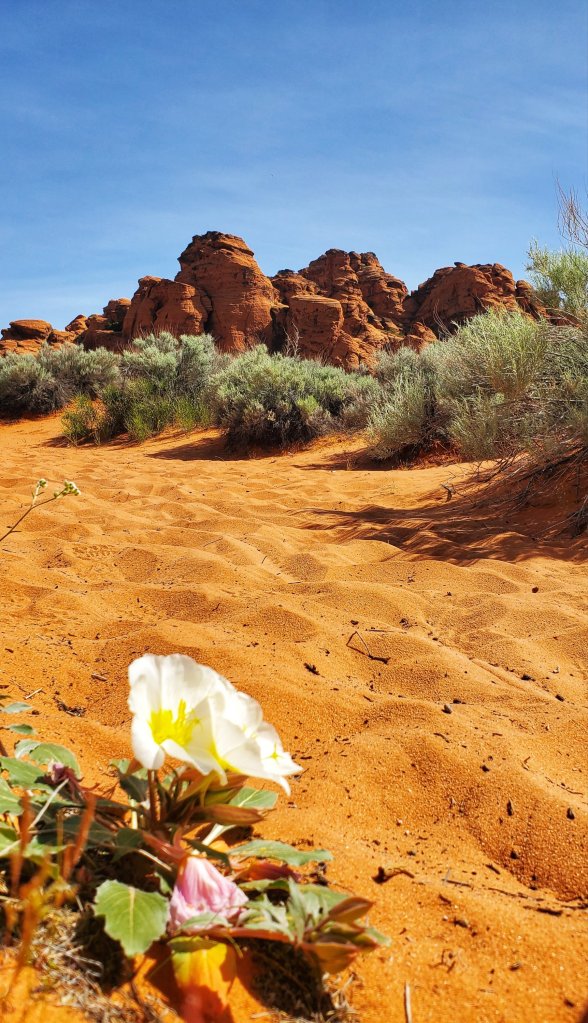
A Sandy Trail in Southern Utah. Photo by ZToad.

Under any other circumstance, the soft sand would have almost been fun to cross, but now it only dragged at my feet, sinking my strides instead of pushing them forward. My leg muscles were screaming. I began to feel a growing sense of futility and the bad kind of exhaustion.  

According to my All Trails app, the trail seemed like a good fit. The elevation gain was modest and the route was well-marked and straightforward. I had parked at the trailhead, tucked inside a well-to-do neighborhood on the northwest corner of the city, pausing for a moment to read the trailhead signs and adjust my CamelBak. I sucked a bit of water and started out at a mild trot to warm up the legs and knees. But as the trail began to dramatically steepen, I found myself with a choice: I could either slow to nearly a crawl, or I could try to power my way up, basically performing a series of box jumps on the boulders intermingled with sprints through loose sand. 

I’ve always believed that good fitness involves a certain determination to put oneself through controlled punishment, so of course I chose to power my way up the hill, thinking that it would probably level out soon. But by the time I reached the rim and found the conditions already described, my heart was pounding like crazy. While working my way through the sand, I came upon a group of mountain bikers who had paused for a view. One of them looked at me and smiled in a way that seemed out of admiration or pity, I couldn’t really tell. 

“Great Job,” she said. “You’re superman.” Unable to speak, I just smiled and gave a little wave with my right hand as I huffed my way past. Of course, I gave the sand hell for another half-mile or so, trying to hold in my mind the image of the Navy Seals running on the beach and telling myself that it was only making me stronger. It worked for a time, but when the rising heat and the sand combined their full powers against me it became more than just deciding not to quit. The little alarm bell that reminds you of your mortality began to sound. Finally, I slowed down and turned back, deciding to run back downhill and use the lowland trails to finish out my miles. 

This new plan worked for the most part, except now I was no longer familiar with the route. I soon got lost on the lower trails when they turned into a labyrinth. Finally, after a flash of panic, I found the trailhead again and went back to my car. I felt defeated. Yes, it was a crazy good workout, but there was something overarching that left me questioning.      

I used to think trail running was only what you did when you needed to get back to the car fast (for whatever reason, or for whatever might be chasing you). I was first introduced to the activity by an edition of Outside Magazine sometime in the 1990’s, which featured a trim-looking runner, smiling as he ran on a beautiful mountainside in Colorado. “What could be better or more brilliant than running in nature?” I thought.  

Hiking is, in and of itself, a great cardio workout, and my intention at the outset was not to replace hiking, but just to enhance the time I was already spending running by just doing it in nature. Afterall, one of the most unappealing aspects of running in general is how monotonous it can become. Slogging on a paved trail for mile after mile takes a considerable amount of mental focus and resistance to boredom. The adaptation to trail running seemed like a good solution. For the most part, it has been a good variation that has had some powerful fitness benefits. But, my experience on the bluff, among others, has taught me a few things that have kept me from thinking too highly about it.

So, if you’re considering incorporating more trail running into your routine, here are a few things I have learned: 

Disclaimer: Trail running is no joke. These are just ideas. I’m not a professional fitness expert. Consult your doctor first and use these tips at your own risk.

Have the right gear

First of all, it’s essential to have a good pair of running shoes that have already been broken in, preferably with sturdy soles and thicker padding on the sides and tops of the toes. Asics has some good options that meet this criteria. You should also consider purchasing compression sleeves or compression socks which add a circulation boost and can protect you from scrapes and scratches while passing quickly through shrubs and trees. If the weather is cooler, consider wearing running pants. 
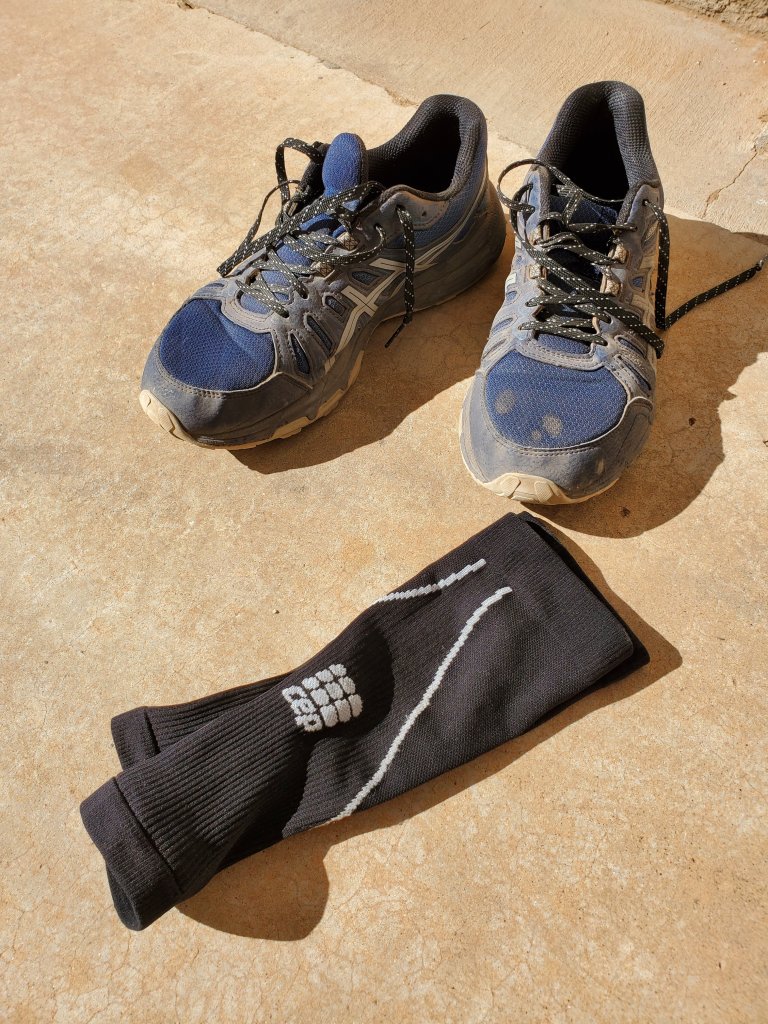
Good running shoes and compression sleeves or socks can make a big difference. The shoes should be sturdy but comfortable and already broken in.

Always carry your own water. A smaller CamelBak or similar product can help you stay hydrated, and the added weight is just enough resistance to support added gains. Most CamelBaks have pockets for carrying keys and cell phones which will otherwise bounce and jangle around in your shorts when you try to run, which is very annoying. 

Plan ahead

If possible, try to hike the trail beforehand on a separate day, so you’ll already know what it involves and you won’t have to think too much about navigation. Pick trails you’re familiar with. When you’re huffing and puffing, it’s easy to get carried away and forget where you’re going. Don’t rely only on trail apps or descriptions of elevation gains. Some trails seem straightforward online but they can actually get confusing very quickly, especially if you happen to miss any turn offs or cairns.

In general, avoid highly technical or rugged trails. Pick something with a considerable amount of flat land, gentle hills and smooth surfaces. Let’s face it, you just can’t run and scramble over rocks at the same time for very long. And even if you are in the amazing shape required to do so, the chance of injury will be high.   

Don’t forget to enjoy the scenery along the way. Photo by ZToad.

Be safe

Run with a friend, carry GPS or tell someone where you’re going in advance. Trail running can be more physically demanding than regular running and can put your heart, limbs and joints under more stress. Sometimes just being at higher elevations can stress the body. Having a medical emergency while alone on a trail can be life-threatening.

A special word of caution: If you choose to go running in bear country (not sure that I ever would), be especially vigilant. Go with a group, make almost constant noise and carry bear spray. A quiet, solo run through a forest is a great way to surprise a bear, or trigger a predatory response and end up in a really bad situation. Pick an area with good visibility for the most part. 

If you do decide to run alone, leave a note on your windshield telling rescuers where you’re headed. You can also leave a voicemail or send a text to a friend with a map of the trail. If you get lost, stop running. Try to wear bright clothing which makes it easier to find you in wild terrain. 

Know the weather and prepare accordingly, just like you would for hiking. In desert climates, you should avoid going out mid-day (heat exhaustion will not make you any tougher). Get up early, or go at sundown. Always wear sunglasses, sunscreen and bug spray. Nothing makes you feel like quitting quite like bugs in your eyes, or biting flies and mosquitoes on your arms and legs. I also carry a pocket knife and sometimes a short walking stick which can be used in defense and also gives your arms a good workout during the run. 

Take it easy

Trail running can get intense very quickly so you don’t need to add much to it. Always warm up first, especially your ankles and knees.

My favorite running technique is to hike the inclines and declines and run the flats. But you should know your own limits. It’s best not to run at maximum exertion. If you can still talk, you’re still getting a good workout but not overdoing it. If the trail gets rocky, slow down and pay attention to your feet. Don’t get sucked into the scenery while traversing rough terrain. It only takes a moment of looking away to end up with an ankle sprain or a trip and fall.

Pay attention to signs and be prepared for other hazards including slow hikers, fast mountain bikes and horse riders on blind curves. Stay aware of time. If you’re not running a loop, set a timer and give yourself equal time to get back. When you do reach your car, always take time to hydrate and stretch. Sitting in a driver seat right after running can make your muscles tighten and get you even more sore than you otherwise might have been.       
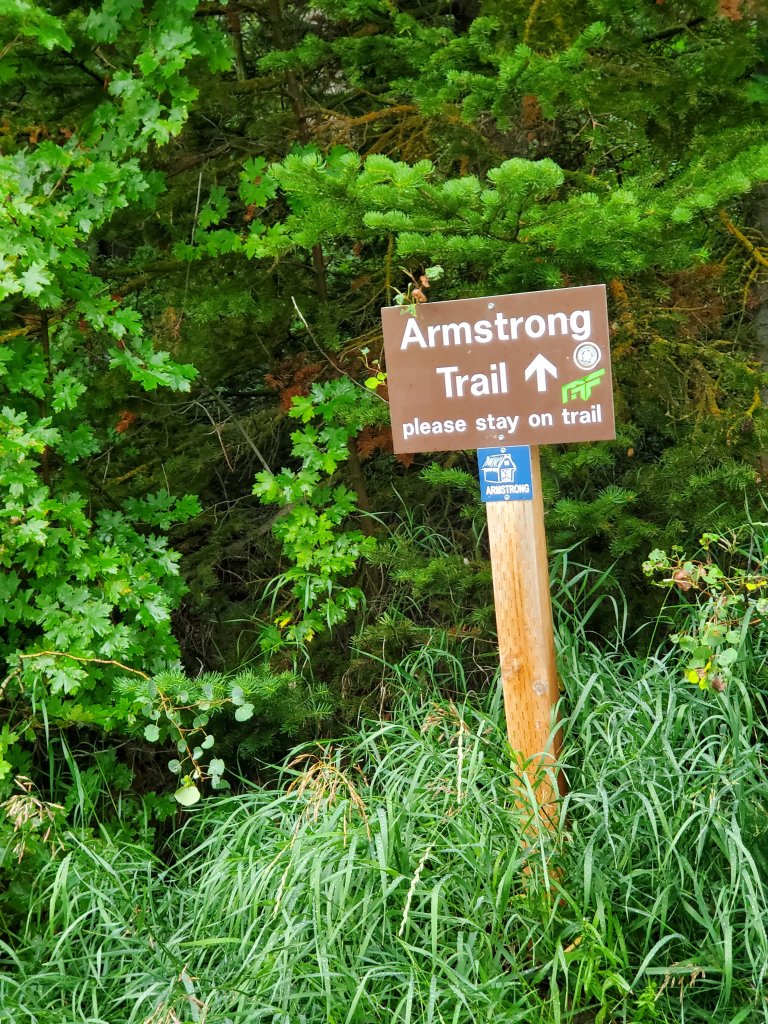
Trail signs can be easily overlooked while running. Don’t forget to look up.

Conclusion

Ultimately, trail running can be a fantastic exercise that can get you in pretty savage shape. But it’s not without real hazards and frustrations. No exercise goal is worth getting lost, broken, mauled, bitten or sick. A little pre-planning and preparedness will go a long way to make it a successful endeavor. And don’t forget to look up whenever you can to enjoy the scenery. Afterall, it’s really what makes trail running special. Whenever the punishment seems too much, it’s the view that just might keep you coming back.    

Hand Over Heart for Wildflower Season

Near Willow Beach, Arizona, along U.S. 93, the basin and range transforms into a series of rolling hills gently cascading to the Southwest.  In mid-March we found ourselves passing these hills, on a trip from Las Vegas to Phoenix, and were blessed to see the beginnings of one of the most amazing payoffs of a rainy season in the desert: yellow wildflowers were popping up all over, giving a rich accent to already green grasses.

It was like a scene from a Dr. Seuss book, a rare sight during these past few years of brutal drought.  As the rains have soaked deep, many long-dormant seeds have been revived.  The result has been a wildly more colorful desert landscape, with visuals that are exceptionally bold and captivating.

Petals and volcanic rock.  Photo by ZT.

When it comes to finding a scientific explanation for all this, however, the view starts to get a little more subdued, even dusty.  As if driven by some unspoken imperative, some have rushed to define it: 

“A superbloom is a rare desert botanical phenomenon in California and Arizona in which an unusually high proportion of wildflowers whose seed have lain dormant in desert soil germinate and blossom at roughly the same time.  The phenomenon is associated with an unusually wet rainy season.”

(https://en.wikipedia.org/wiki/Superbloom#:~:text=A%20superbloom%20is%20a%20rare,an%20unusually%20wet%20rainy%20season.)

These categorizations often seem too obvious and even hopelessly subjective.  So much of it depends on where you happen to be and when you happen to be there.  And there’s been a fair amount of debate as to whether this wildflower season actually constitutes a “super bloom” at all.  To be sure, it can be more “super” in some places than others.

Ultimately, any hard definitions fall short. The simple truth is there’s just a lot of wildflowers out in the desert right now, and every minute spent worrying about what the phenomenon is or isn’t, is a minute lost to see them while they last.  And they won’t last forever; that’s not how the desert works.   

Wildflowers at dusk. White Dome Nature Preserve. Photo by ZT.

Thankfully, the act of viewing wildflowers these days requires minimal effort.  Under usual conditions, they are subdued, often hidden between larger, less colorful plants.  Because of this, they aren’t always readily visible from roadways.  But this year, the volume is cranked up so much that it’s possible to get a good view, even while staring lazily out the windows of a car.  

To help matters even more, roadsides often provide even more water to the soil because rainwater runs off the edges of the pavement where it soaks into more concentrated areas of disturbed soil.  This is why some roads have thicker vegetation (wildflowers included) along pavement edges than might be growing even five or ten feet out into the landscape.     

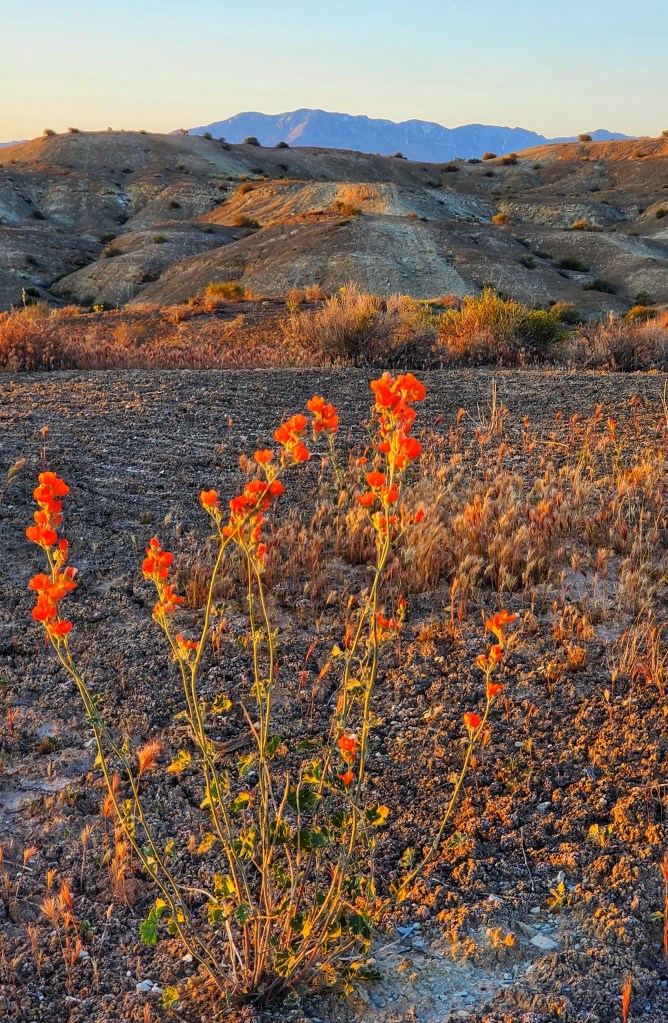
Globemallow, in particular, is making a solid showing along roadsides this year.  Of course, it’s equally at home between backcountry boulders, and along footpaths, with its delicate looking pale stems and orange, cup-shaped blossoms that close at night and open toward the rising sun.  Globemallow’s height, compared to other flowers, gives it more prominence on the landscape like a highway construction sign.  

Globemallow in the desert.  Photo by ZT.

Along U.S. 191, near Canyonlands National Park, there are currently great fields of globemallow, stretching across the horizon like orange reflections on a sea of green.  Try as you might, casual photos won’t do it justice.  You can only hope to enjoy the scenery in the moment and maybe, if you’re lucky, capture some of it in memory.

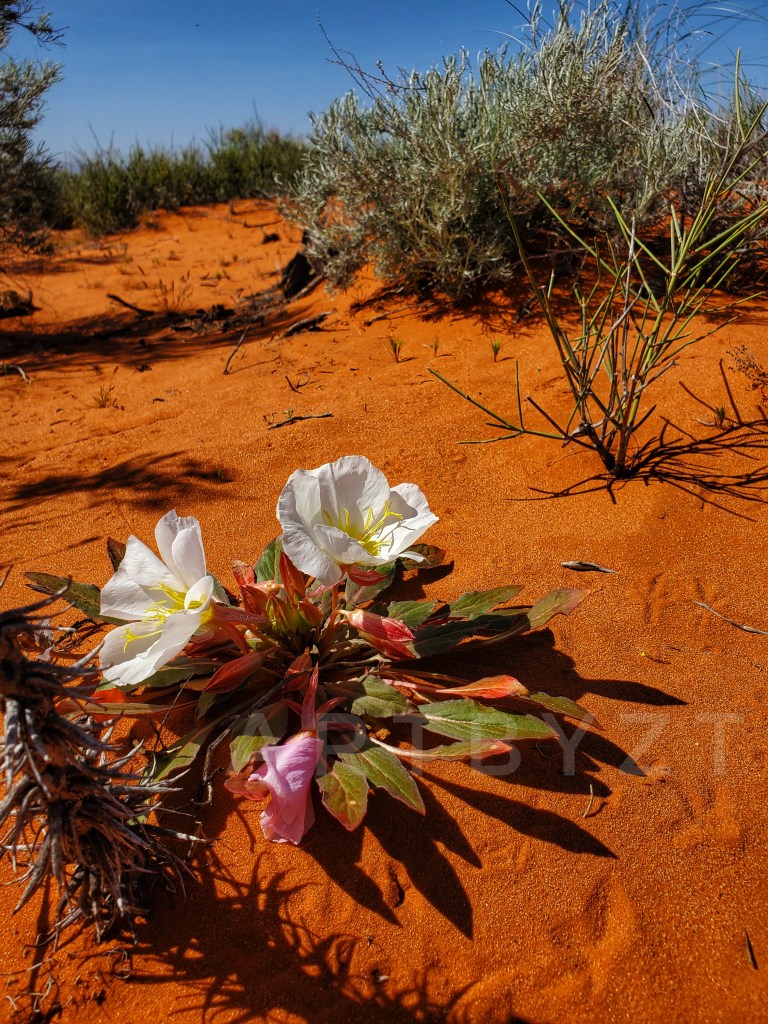
As for the hiking trails, it’s easier to spot shorter specimens like the evening primrose which stands out like a champ–showing white blossoms that look more like they belong in grandma’s garden than on the slopes of any canyon rim or sand dune.  The primrose is a dignified, important looking flower that won’t easily be ignored.  

Evening Primrose.  Photo by ZT.

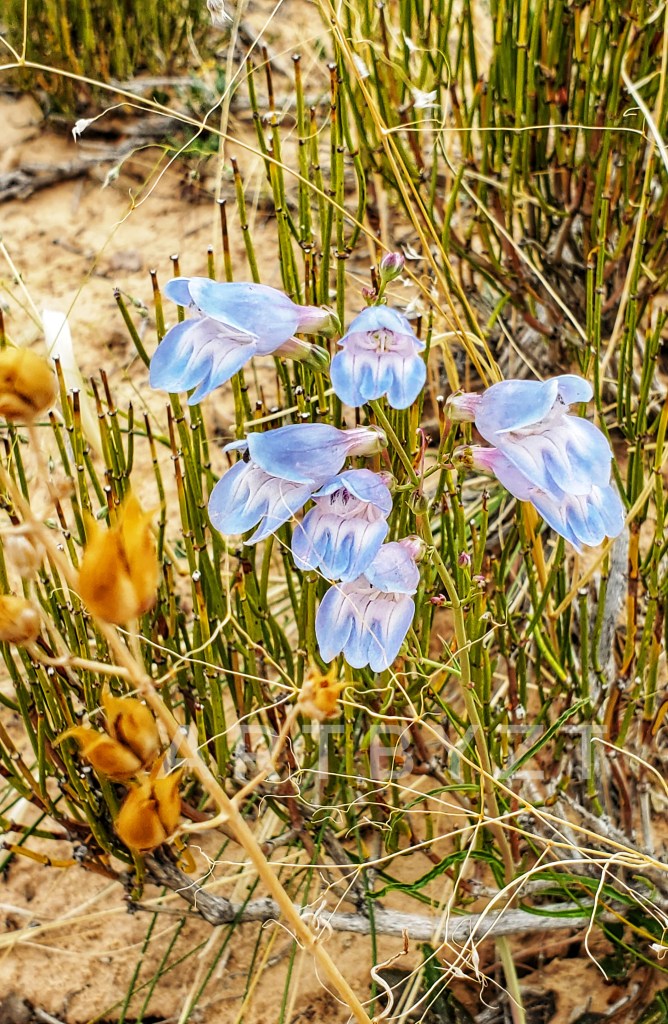
Picking a favorite among all these is tough, but there are few wildflowers more admirable to me than the California Blue Bell, Phacelia campanularia.  This little annual has rich, brightly colored blue buttons fixed on an attractive array of military green foliage.  Like the globemallow, it has rounded petals, but they splay out more than globemallow, giving the blossoms a star-like rather than cup-shaped form.  The blue bell is much shorter than globemallow and has a bushier outline, but it can brave some of the toughest soils in either the wilds or the garden.         

California Blue Bell. Photo by ZT.

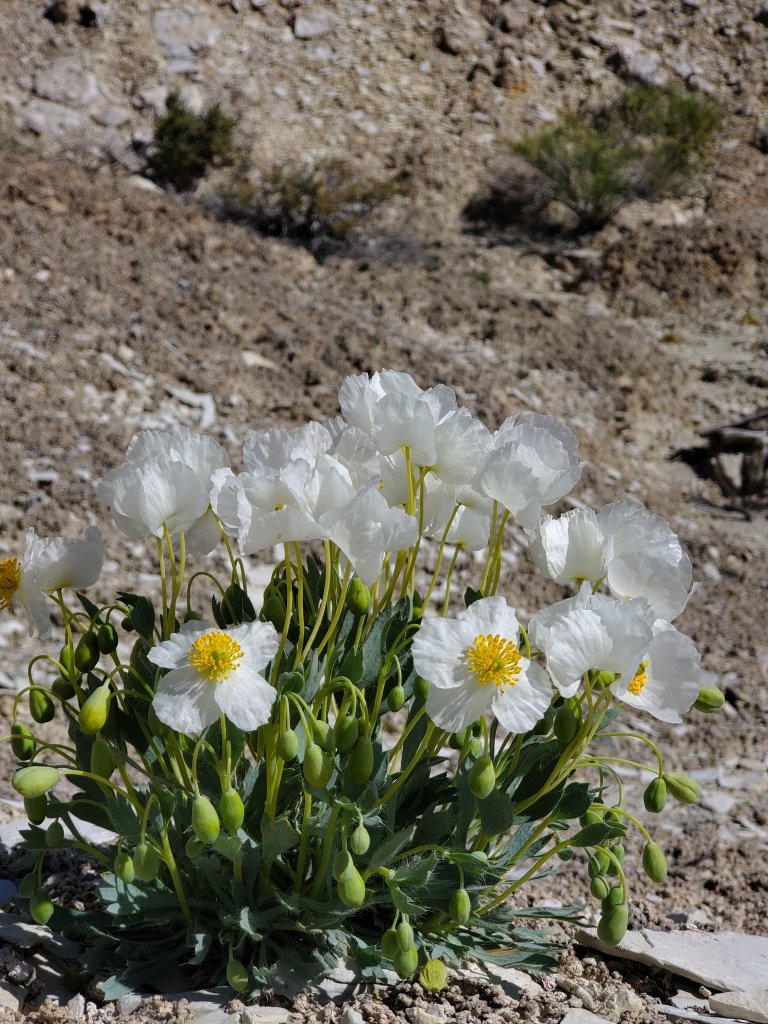
Near the border of Utah and Arizona, there’s a place operated by the Nature Conservancy called the White Dome Nature Preserve.  Here is the home of a special wildflower called the dwarf bear poppy and it’s the only place in the world where it can be found in the wild.  The dwarf bear poppy stands out magnificently on the harsh landscape, conjuring up the closest thing to what it might look like if there were flowers on the moon.  

Dwarf Bear Poppy. Photo by ZT.

I took a short hike through the preserve a few weeks ago.  Small patches of poppies could be seen here and there, not in large quantities and spreads, but metered out, with each plant having its own generous amount of personal space.  As I walked, the white blossoms and bright green stems seemed to both complement and contradict the surrounding gypsum hills.  And the rains had brought blessings here too, with more poppies on display than I had ever seen.    

Once again I was grateful for this melding of contrast and consistency so common in nature.  It was another landscape paradox, with the poppy as a defining feature–a kind of mascot for what makes wildflower season so special. 

Longing for Goblin Land

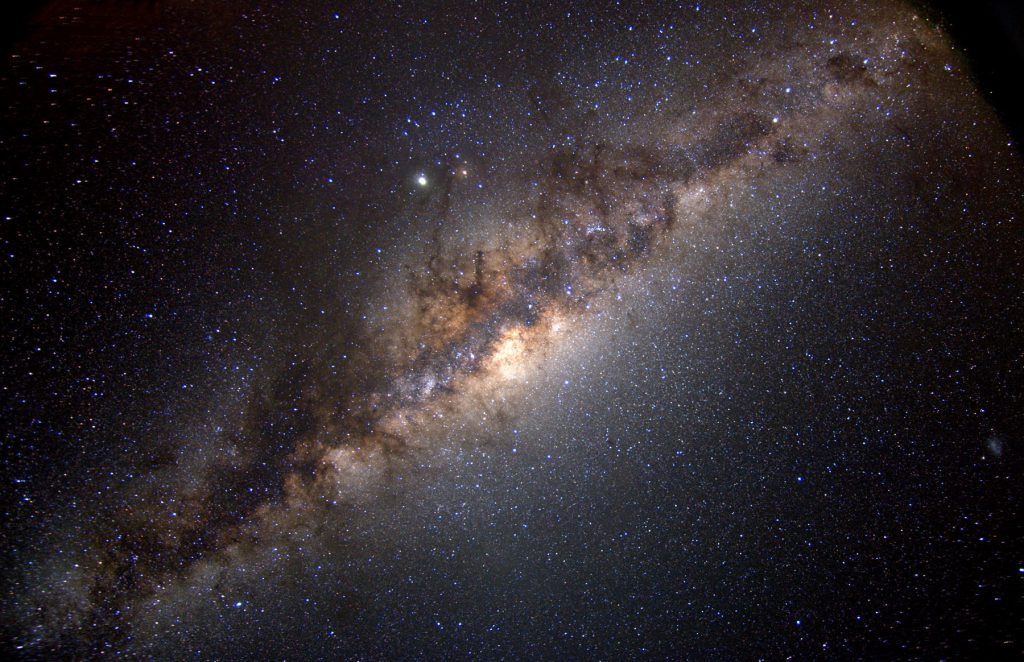
The stars never shined so bright as they did on that summer night more than 30 years ago.  Lying on my back in a sleeping bag, on the sandstone and without a tent, I stared up into a vast black sea, with floating diamonds, and for the first time felt hopelessly small in the universe and yet somehow still important.  

I was exhausted but couldn’t let myself fall asleep just yet–not with The Milky Way, Orion’s Belt, Ursa Major, the Big Dipper, hovering over me like an open book.    

While never much of an astronomer, I could still appreciate a sky without light pollution, especially compared to the washed out skies I knew from the big city.  I had learned about the constellations during field trips to Hansen Planetarium in Salt Lake.  But that dark, domed theater, made for city-slickers, was just a figment compared to the view of the galaxy before me now–layer upon layer in 3D.    

Milky Way, astronomy.com/news. NASA

Our Boy Scout troop had stopped here as part of a week-long trip to the San Rafael Swell in Southeastern Utah.  For dinner we had chili and salad, significant because, like the night sky, it was the first time I had truly appreciated vegetables.  It wasn’t easy for a teenage boy to admit, but that crisp lettuce, straight out of the cooler, was the remedy to a long day of parched travel. 

We’d been riding in a white Ford passenger van, pulling a trailer of float-tubes, mountain-bikes, Cheetos and sodas for about two days.  The van looked similar to the one neighborhood moms had warned us about back home–always driven by some scraggly, bearded man looking to lure kids with candy and then whisk them away forever.  But the stranger probably would’ve jumped out of this van at highway speeds, because it was already overloaded with loud and dusty boys, tweaked out on sugar.  

Looking back, I marvel at the planning and logistics that must’ve gone into this trip.  The real ones driving the van–those beleaguered scout leaders–had done a lot of thinking.  They were just part-time adventurers, willing to leave desk jobs in the city to take unruly boys into potential danger.  They’d have to endure terrible scrutiny these days to even try it.  Maybe rightly so.  

Of course none of it could’ve been considered “high adventure,” but such travel shouldn’t be underestimated.  Although I was young and naive, I questioned the trip myself.  Was there a plan to keep gas in the van when service stations were so few and far between?  Was there a medical plan?  Did we have enough water?  And, probably the most important question, did anyone really know where we were going out in this vast and fiery place?  

One of the leaders had experience traveling the area–something about riding around in a Jeep with his father, a geologist for the Bureau of Land Management.  I took comfort in this, but also considered how badly the rest of us would suffer without him.  What if he fell off a cliff or was taken by a rattlesnake?  No one had phones back then.  We could be stranded for days before someone found us.  In some ways I feared it.  In other ways I hoped for it…          

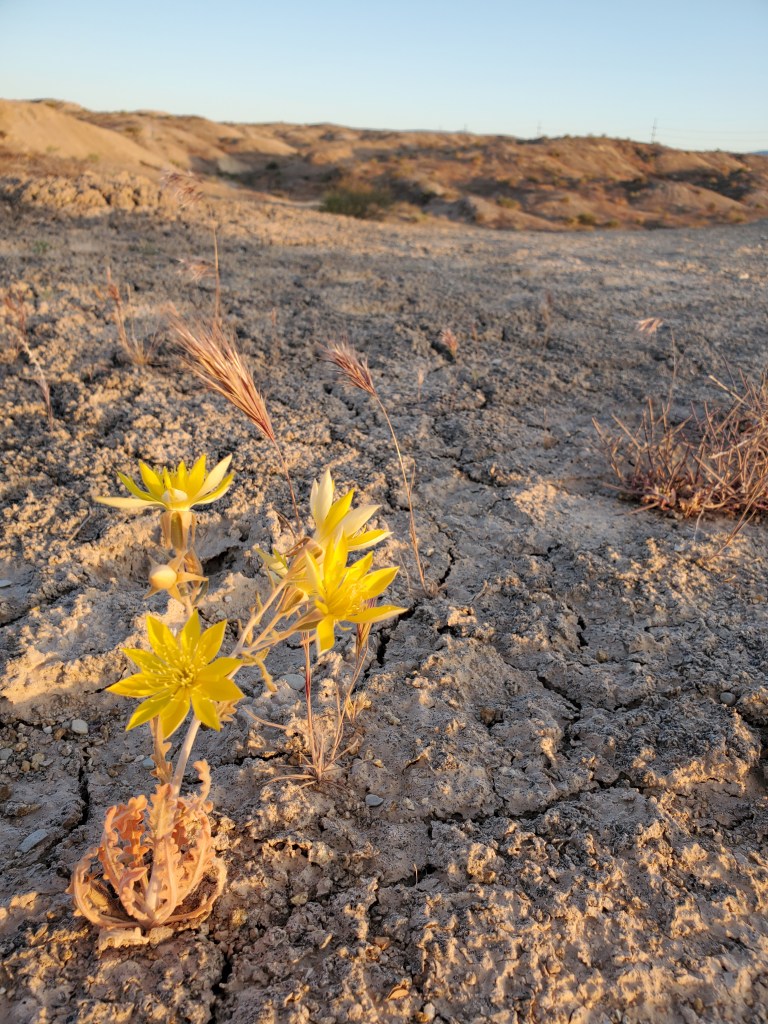
A desert wildflower. Photo by ZT.

The dirt road was part of a web of backcountry trails in Southeastern Utah, some of the most remote wilderness in the U.S, located near Capitol Reef National Park.  Dusty and washboarded, it had taken us parallel with the Swell and, if I can recall, toward the town of Hanksville.  

At one point we passed near the Muddy River, more of a creek actually, which meandered through a respectable pattern of hidden grottos and alluring canyons.  We’d spent the afternoon float-tubing here, at times walking on our hands while our legs trailed behind.      

I remember the water was cold (from June runoff) and sand went everywhere–up our shorts, between our toes and into our ears and hair.  We’d spent more time in the water than was probably smart, only crawling out when it seemed we were just short of hypothermia.  

Once out of the creek, however, we found sun-soaked boulders along the bank.  Lying on these, shivering and wet, it was possible to experience one of the greatest warming sensations known to man, enough to make us envy the lizards we’d sent scattering to get there.    

After drying off as much as possible, we were back on the road, singing songs, eating junk food and telling stories and jokes until we grew hoarse.  Sometimes we were forced back out of the van and compelled to ride our bikes ahead of it.  Something had been said among the adults about us needing fresh air and a “more direct experience with nature.”  

We complained, of course.  But any sense of punishment quickly vanished.  While riding our bikes, out from behind van windows, the spectacular views came to life.  

All along the plateau we could see the Swell–that long spine of cream-colored rock, rising up like a dragon from a desert ocean.  At times there were small groups of pronghorn antelope in the foreground, grazing on patches of grass between sagebrush.  Next to the road, we saw globemallow and sego lily and could hear the calls of meadowlarks nearby.  All of this was hard to capture in memory.  Yet one thing was certain: the Swell had caused my heart for the wilderness to swell.  

Pronghorn near the San Rafael Swell. Photo by ZT

Being the remnant of a giant rock dome some 75 miles long and 40 miles wide, the bulk of the Swell was formed by tremendous geologic pressure.  This upturned sandstone was then subjected to the subtle carvings of wind and water for millions of years.  

Because the region is more inaccessible than many of the national parks in Utah, the scenery is not just uniquely carved, but carries with it a real sense of solitude and distance.  Some of these wilderness areas are now more protected than they were back then, a contentious issue at times, but the reality of a world that is increasingly overrun.      

In 2019, Congress designated the San Rafael Swell Recreation Area (approximately 217,000 acres), as part of the John D. Dingell Jr. Conservation, Management and Recreation Act.  According to the BLM, the region features “magnificent badlands of brightly colored and wildly eroded sandstone formations, deep canyons, and giant plates of stone tilted upright through massive geological upheaval.”  (Bureau of Land Management, San Rafael Swell Recreation Area https://www.blm.gov/utso/grd/san-rafael-swell-rec-area )  

A few miles southeast of the Swell is a valley of hoodoos, called “goblins” because of the creature-like shapes they take under changing light.  It was here in Goblin Valley that we spent one of the last nights of the trip.   

Goblin Valley, Utah. Photo by ZT

After dinner, we played a game of “steal the flag.”  What could be wrong with eight boys turned loose into a labyrinth, guided only by the moon–to run through, climb over, fall from or even be crushed by boulders?  Despite the risks, this daring permission kept us running and hiding until well after sundown.     

When “quiet time” arrived in the park, we took a head count and then staggered and giggled our way back to camp–an open slab overlooking the valley.  From this moonlit viewpoint, I could see just how many goblins lived here, clustered together in a mass of gnarled stone like a geological mosh pit.  

Now that the party had died down, the stillness that descended was heavy and sublime.  Wearily, we unrolled our sleeping bags.  I was puzzled at first, maybe even troubled, to see that we didn’t have tents; I’d never slept out in the open before.  What about snakes, spiders, scorpions…thunderstorms?  

Too tired to care for long, I unzipped the sleeping bag and wedged myself inside.  Thankfully I rolled onto my back before finally closing my eyes.  And there it was, the night sky that would eventually send me into sleep and into dreams that could be no more vivid than all I had already seen.