
Combining scenery and calculated self-torture
I was breathing hard, nearly gasping, when I reached the rim of the dry bluff, slowing a little after having powered up a steep hill for about 150 yards. Sweat was running down my forehead, into my eyes and down the sides of my face. It wasn’t even noon yet, but the red sandstone boulders had absorbed their fill of solar energy which was now radiating back into the sky and back at me. It felt like I was running on a stove top, and there was no shade in sight.
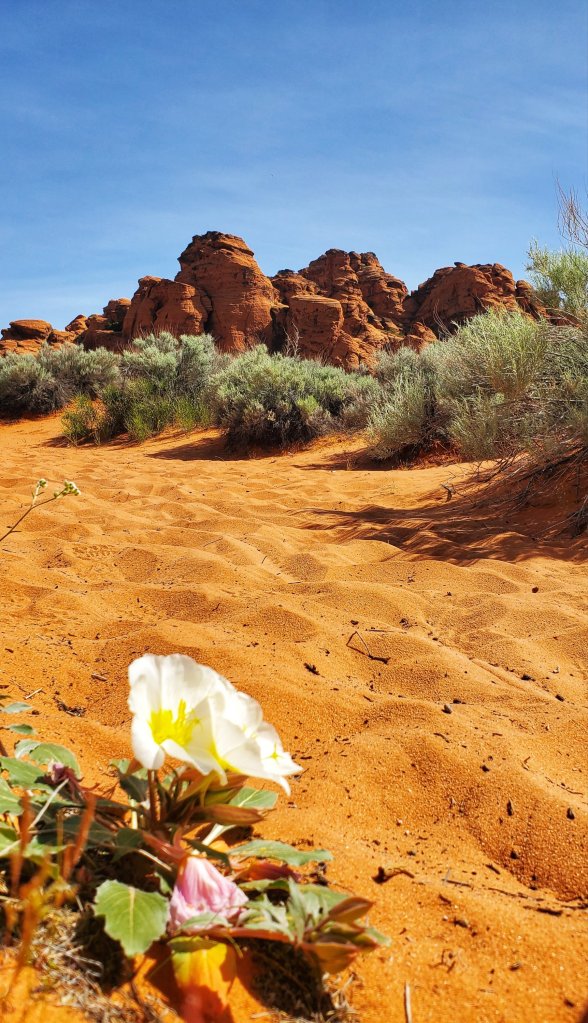
Under any other circumstance, the soft sand would have almost been fun to cross, but now it only dragged at my feet, sinking my strides instead of pushing them forward. My leg muscles were screaming. I began to feel a growing sense of futility and the bad kind of exhaustion.
According to my All Trails app, the trail seemed like a good fit. The elevation gain was modest and the route was well-marked and straightforward. I had parked at the trailhead, tucked inside a well-to-do neighborhood on the northwest corner of the city, pausing for a moment to read the trailhead signs and adjust my CamelBak. I sucked a bit of water and started out at a mild trot to warm up the legs and knees. But as the trail began to dramatically steepen, I found myself with a choice: I could either slow to nearly a crawl, or I could try to power my way up, basically performing a series of box jumps on the boulders intermingled with sprints through loose sand.
I’ve always believed that good fitness involves a certain determination to put oneself through controlled punishment, so of course I chose to power my way up the hill, thinking that it would probably level out soon. But by the time I reached the rim and found the conditions already described, my heart was pounding like crazy. While working my way through the sand, I came upon a group of mountain bikers who had paused for a view. One of them looked at me and smiled in a way that seemed out of admiration or pity, I couldn’t really tell.
“Great Job,” she said. “You’re superman.” Unable to speak, I just smiled and gave a little wave with my right hand as I huffed my way past. Of course, I gave the sand hell for another half-mile or so, trying to hold in my mind the image of the Navy Seals running on the beach and telling myself that it was only making me stronger. It worked for a time, but when the rising heat and the sand combined their full powers against me it became more than just deciding not to quit. The little alarm bell that reminds you of your mortality began to sound. Finally, I slowed down and turned back, deciding to run back downhill and use the lowland trails to finish out my miles.
This new plan worked for the most part, except now I was no longer familiar with the route. I soon got lost on the lower trails when they turned into a labyrinth. Finally, after a flash of panic, I found the trailhead again and went back to my car. I felt defeated. Yes, it was a crazy good workout, but there was something overarching that left me questioning.
I used to think trail running was only what you did when you needed to get back to the car fast (for whatever reason, or for whatever might be chasing you). I was first introduced to the activity by an edition of Outside Magazine sometime in the 1990’s, which featured a trim-looking runner, smiling as he ran on a beautiful mountainside in Colorado. “What could be better or more brilliant than running in nature?” I thought.
Hiking is, in and of itself, a great cardio workout, and my intention at the outset was not to replace hiking, but just to enhance the time I was already spending running by just doing it in nature. Afterall, one of the most unappealing aspects of running in general is how monotonous it can become. Slogging on a paved trail for mile after mile takes a considerable amount of mental focus and resistance to boredom. The adaptation to trail running seemed like a good solution. For the most part, it has been a good variation that has had some powerful fitness benefits. But, my experience on the bluff, among others, has taught me a few things that have kept me from thinking too highly about it.
So, if you’re considering incorporating more trail running into your routine, here are a few things I have learned:
Disclaimer: Trail running is no joke. These are just ideas. I’m not a professional fitness expert. Consult your doctor first and use these tips at your own risk.
Have the right gear
First of all, it’s essential to have a good pair of running shoes that have already been broken in, preferably with sturdy soles and thicker padding on the sides and tops of the toes. Asics has some good options that meet this criteria. You should also consider purchasing compression sleeves or compression socks which add a circulation boost and can protect you from scrapes and scratches while passing quickly through shrubs and trees. If the weather is cooler, consider wearing running pants.
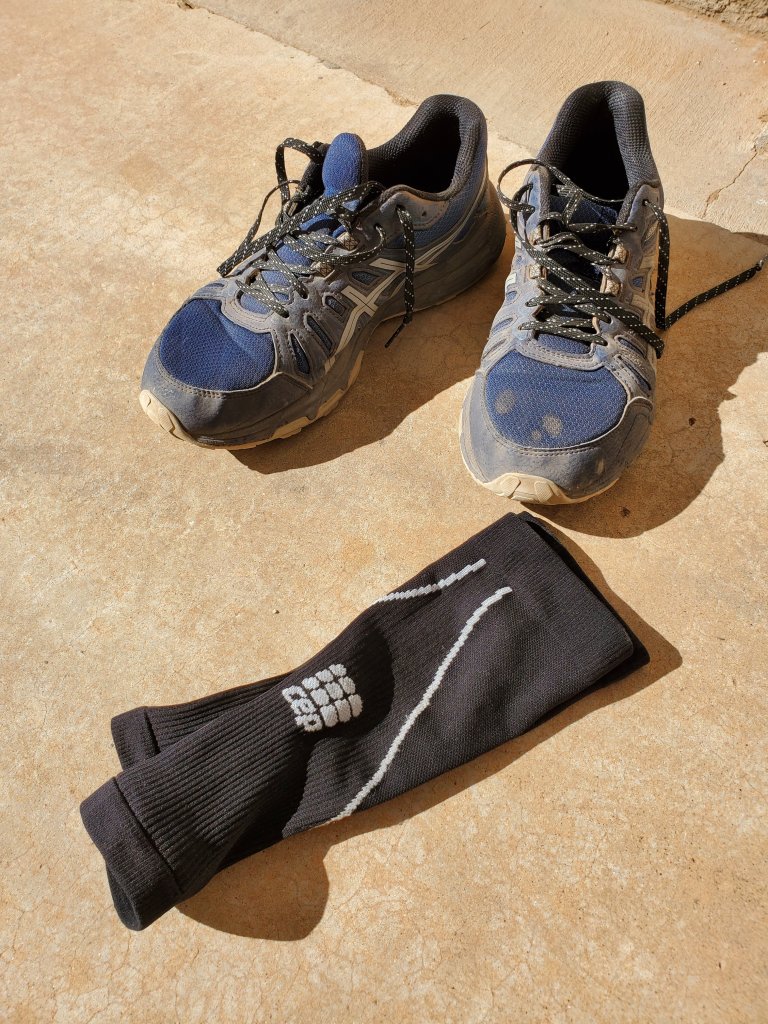
Always carry your own water. A smaller CamelBak or similar product can help you stay hydrated, and the added weight is just enough resistance to support added gains. Most CamelBaks have pockets for carrying keys and cell phones which will otherwise bounce and jangle around in your shorts when you try to run, which is very annoying.
Plan ahead
If possible, try to hike the trail beforehand on a separate day, so you’ll already know what it involves and you won’t have to think too much about navigation. Pick trails you’re familiar with. When you’re huffing and puffing, it’s easy to get carried away and forget where you’re going. Don’t rely only on trail apps or descriptions of elevation gains. Some trails seem straightforward online but they can actually get confusing very quickly, especially if you happen to miss any turn offs or cairns.
In general, avoid highly technical or rugged trails. Pick something with a considerable amount of flat land, gentle hills and smooth surfaces. Let’s face it, you just can’t run and scramble over rocks at the same time for very long. And even if you are in the amazing shape required to do so, the chance of injury will be high.

Be safe
Run with a friend, carry GPS or tell someone where you’re going in advance. Trail running can be more physically demanding than regular running and can put your heart, limbs and joints under more stress. Sometimes just being at higher elevations can stress the body. Having a medical emergency while alone on a trail can be life-threatening.
A special word of caution: If you choose to go running in bear country (not sure that I ever would), be especially vigilant. Go with a group, make almost constant noise and carry bear spray. A quiet, solo run through a forest is a great way to surprise a bear, or trigger a predatory response and end up in a really bad situation. Pick an area with good visibility for the most part.
If you do decide to run alone, leave a note on your windshield telling rescuers where you’re headed. You can also leave a voicemail or send a text to a friend with a map of the trail. If you get lost, stop running. Try to wear bright clothing which makes it easier to find you in wild terrain.
Know the weather and prepare accordingly, just like you would for hiking. In desert climates, you should avoid going out mid-day (heat exhaustion will not make you any tougher). Get up early, or go at sundown. Always wear sunglasses, sunscreen and bug spray. Nothing makes you feel like quitting quite like bugs in your eyes, or biting flies and mosquitoes on your arms and legs. I also carry a pocket knife and sometimes a short walking stick which can be used in defense and also gives your arms a good workout during the run.
Take it easy
Trail running can get intense very quickly so you don’t need to add much to it. Always warm up first, especially your ankles and knees.
My favorite running technique is to hike the inclines and declines and run the flats. But you should know your own limits. It’s best not to run at maximum exertion. If you can still talk, you’re still getting a good workout but not overdoing it. If the trail gets rocky, slow down and pay attention to your feet. Don’t get sucked into the scenery while traversing rough terrain. It only takes a moment of looking away to end up with an ankle sprain or a trip and fall.
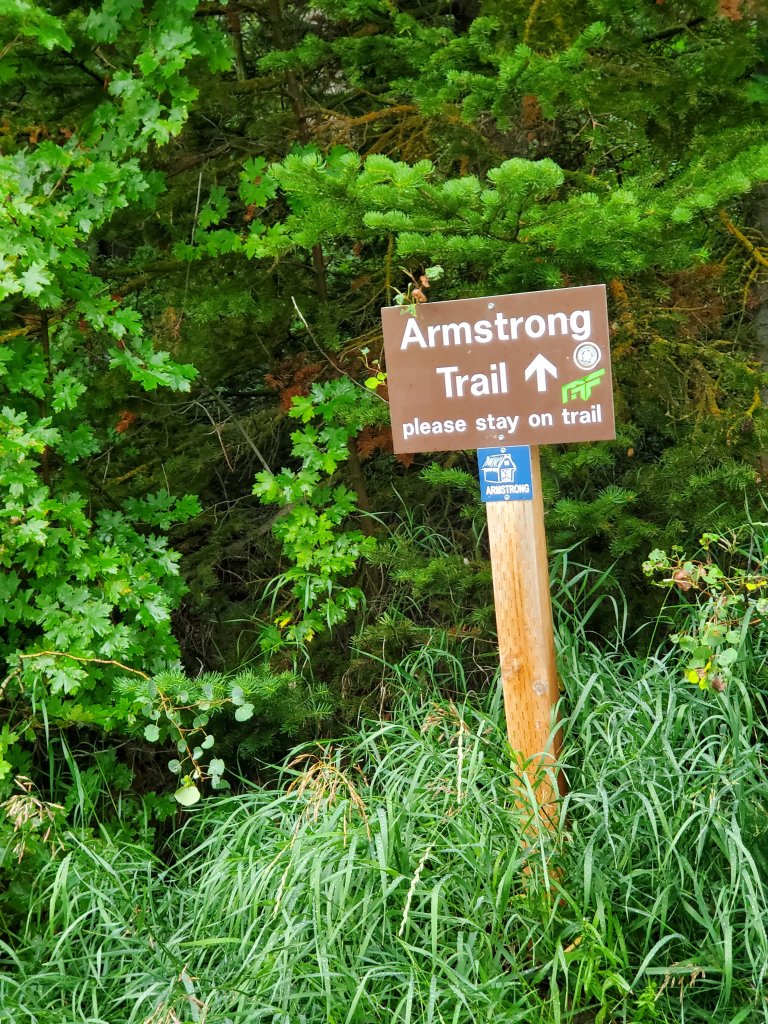
Pay attention to signs and be prepared for other hazards including slow hikers, fast mountain bikes and horse riders on blind curves. Stay aware of time. If you’re not running a loop, set a timer and give yourself equal time to get back. When you do reach your car, always take time to hydrate and stretch. Sitting in a driver seat right after running can make your muscles tighten and get you even more sore than you otherwise might have been.
Conclusion
Ultimately, trail running can be a fantastic exercise that can get you in pretty savage shape. But it’s not without real hazards and frustrations. No exercise goal is worth getting lost, broken, mauled, bitten or sick. A little pre-planning and preparedness will go a long way to make it a successful endeavor. And don’t forget to look up whenever you can to enjoy the scenery. Afterall, it’s really what makes trail running special. Whenever the punishment seems too much, it’s the view that just might keep you coming back.
 The Desert Toad